

The bones had been in a museum display for over eighty years. The skull was restored with resin and glue. Ochre covered every surface. Researchers had described the remains, referenced them, incorporated them into the literature. But no one had examined the crushed clavicle under a macro lens until a team led by Vitale Stefano Sparacello did so in a study published in 2025.1
What they found changes what we thought we knew about the Gravettian adolescent buried at Arene Candide Cave in Liguria, northwestern Italy.
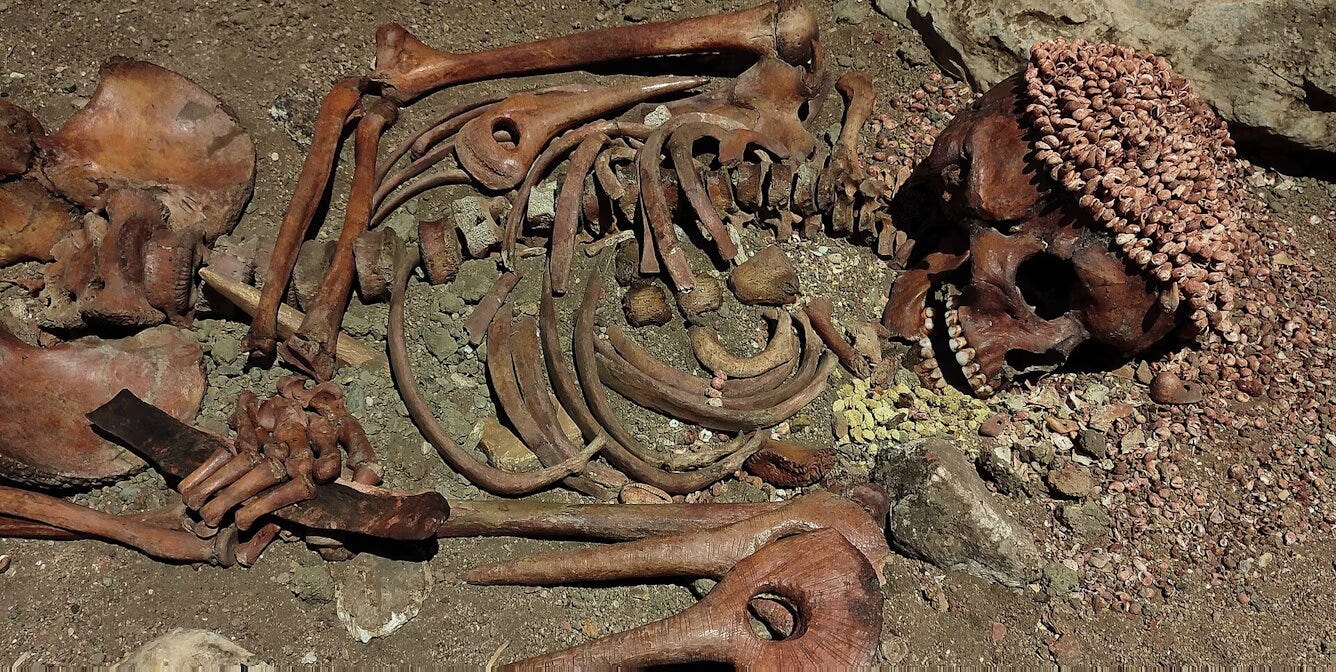
He had been excavated in May 1942 during a campaign led by Luigi Cardini. From the moment the burial came out of the ground, it was clear something violent had happened to him. Portions of the left mandible were missing. Half the left clavicle was gone. The neck and shoulder showed damage. A large lump of yellow ochre had been packed precisely into the vacant space where bone should have been. In his field diary, Cardini speculated that the ochre had been placed there to “cover the vast lesion that must have horribly disfigured the deceased” — or to exploit its cauterizing properties. Then the bones were reassembled with glue, displayed, and the question of exactly how he died settled into a general narrative of a hunting accident involving some large animal.
The adolescent, nicknamed il Principe for the extravagance of his burial goods, lay supine on a bed of red ochre. Hundreds of perforated shells and deer canines formed a headdress. Mammoth ivory pendants. Four decorated antler batons. A large flint blade, still in his right hand. He was probably fourteen to sixteen years old. The date is approximately 27,900 to 27,300 calibrated years before present.


