

Twenty-four meters above the Söğütlü Creek, in a valley that climbs south from Trabzon toward 1,030 meters of elevation, there is a cave that people used at the tail end of the last Ice Age. They built a fire there. The ash and burnt sediment from that fire are still in the ground, along with fractured flint that shows the heat’s signature, in a layer 20 to 40 centimeters thick. Radiocarbon dates on bone and charcoal from that layer place it at roughly 12,900 to 12,000 cal BC, right at the hinge point between the Late Pleistocene and the Early Holocene.
That’s the find.1 What makes it worth writing about is where it sits.
Koskarlı Cave was first noted in 2019 and only systematically excavated starting in 2024, under the joint direction of the Trabzon Museum and Karadeniz Technical University. A single season of digging opened 16 square meters in the cave’s main chamber, plus a lateral trench and a runoff deposit outside that had already been picked over by looters. That’s a modest footprint for a site the excavators are calling, without much hedging, the first systematic investigation of this time period anywhere on the eastern Black Sea coast.
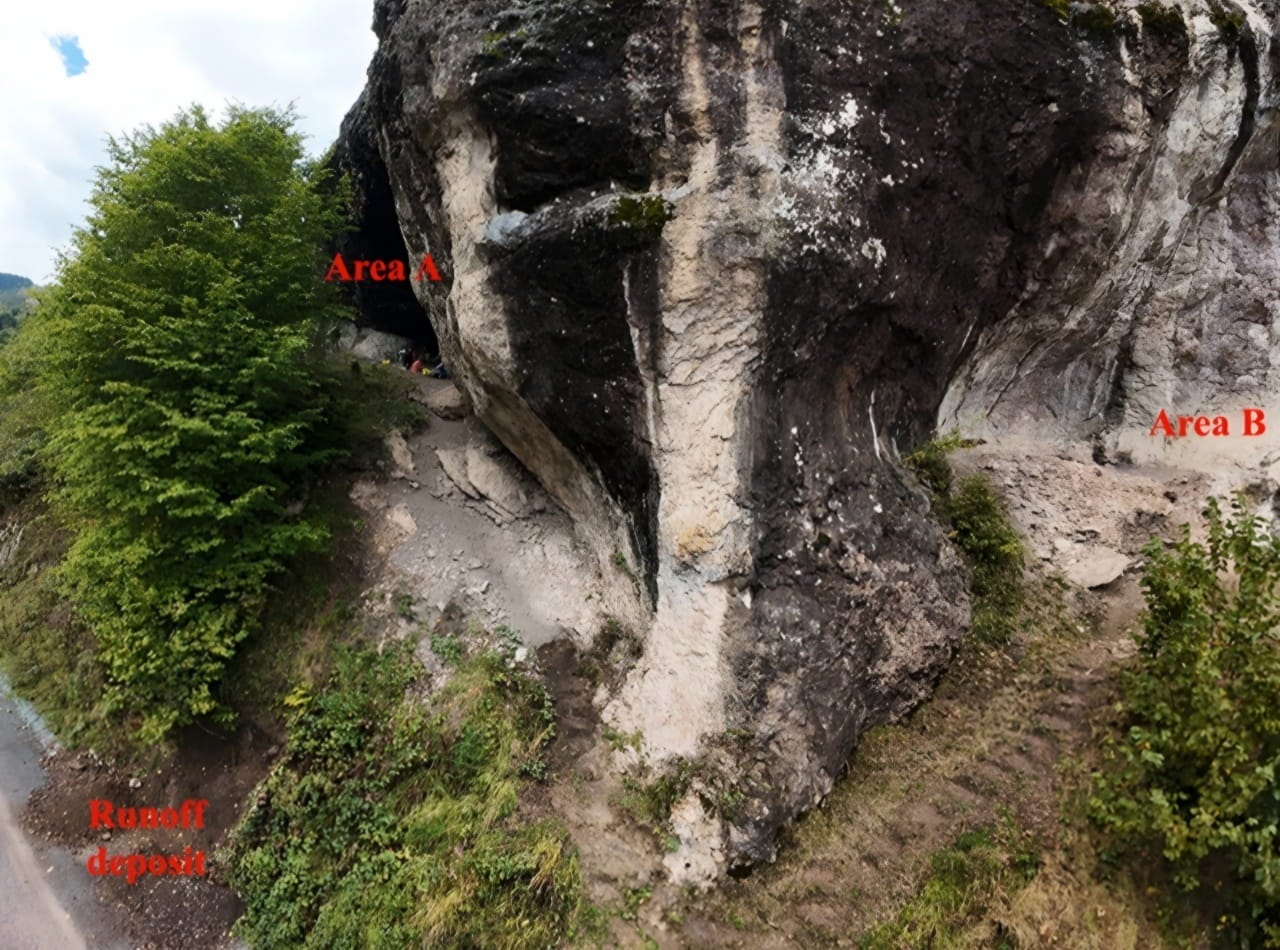
The claim holds up because of where Epipalaeolithic research in Anatolia has actually happened, which is almost entirely in the south. Öküzini Cave near Antalya has functioned for decades as the reference sequence for the period. Sites like Direkli Cave and Pınarbaşı B have filled out the picture of how people organized space during this stretch of the Late Pleistocene. All of that evidence clusters south of the Anatolian plateau. The northern coast, the strip of mountainous terrain running along the Black Sea, has been essentially blank on the Epipalaeolithic map. Not because nobody thought people were there. Because nobody had found a stratified, dated site to check.
Koskarlı is that site now, and the stratigraphy tells its own small story of disturbance and survival. The upper deposit in the main trench is a mess in the literal, technical sense: stony debris, dung, modern refuse, and a scramble of stone tools spanning two entirely different eras, from Epipalaeolithic pieces down to material consistent with the Middle Palaeolithic, roughly 200,000 to 45,000 years old. That mixing is almost certainly the product of later disturbance, not evidence that people occupied the cave continuously across 150,000 years. It’s the layer beneath it, undisturbed and internally consistent, that gives the site its date and its argument.


