

Every time a human cell divides, it has to solve a problem that sounds trivial and isn’t: split 46 chromosomes evenly between two daughter cells, with zero tolerance for error. The part of the chromosome that makes this possible is the centromere, a pinched region that serves as the attachment point for the molecular machinery that pulls chromosomes apart during division. Get it wrong and you get aneuploidy, the wrong number of chromosomes in a cell, which is the leading genetic cause of miscarriage and a hallmark of many cancers.
Given how much rides on centromeres working correctly, it’s strange how little anyone actually knew about them until recently. They’re built from long stretches of a repeating DNA unit called alpha-satellite, arranged in nearly identical tandem copies. Genome sequencing technology has spent decades getting very good at reading unique sequence and very bad at reading a region that looks, to a machine, like the same paragraph typed out ten thousand times in a row. Centromeres were the genome’s blind spot, not because they didn’t matter, but because nobody could actually see them clearly enough to ask questions.
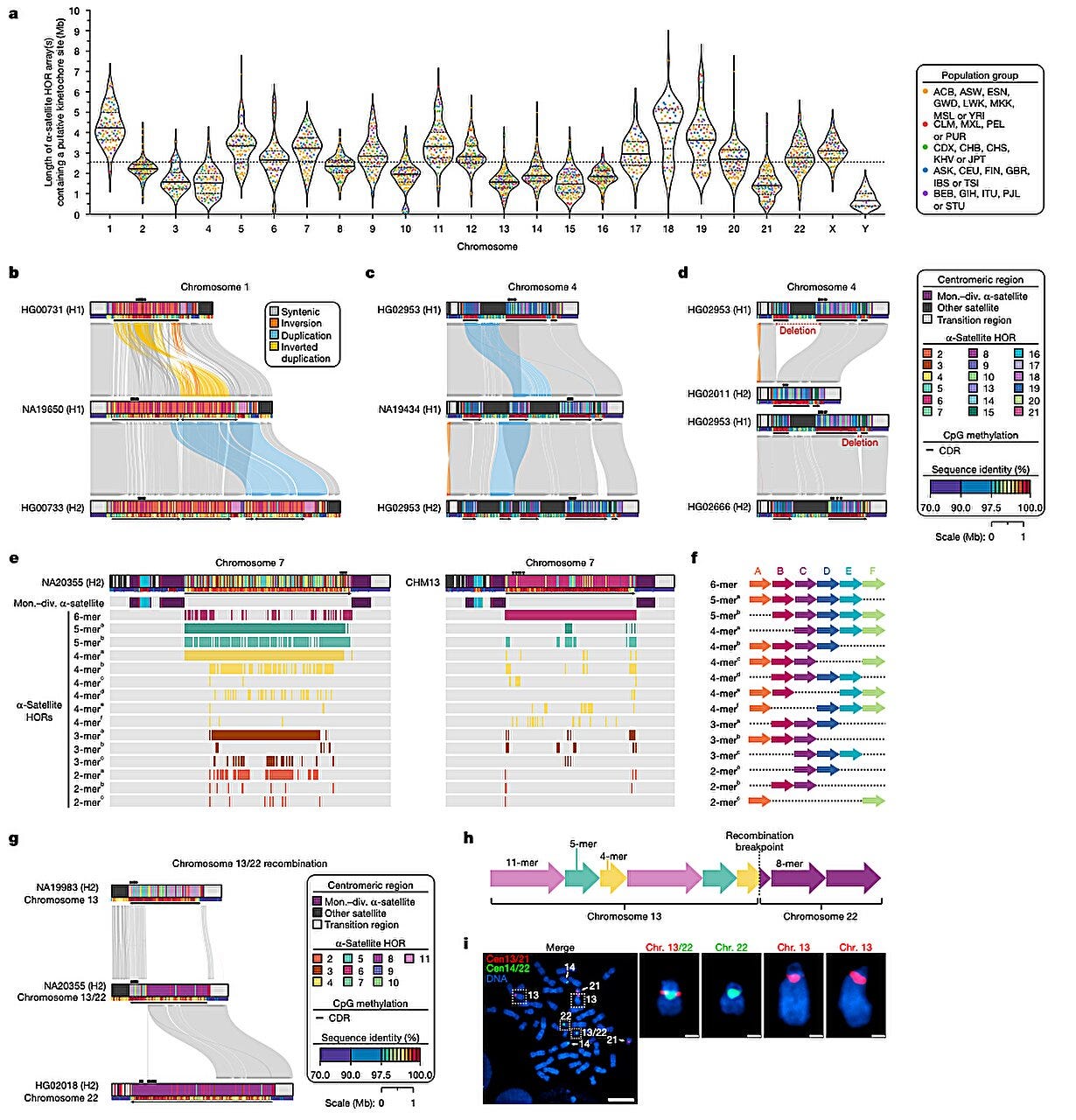
A team led by researchers at the University of Pennsylvania, in collaboration with the Human Genome Structural Variation Consortium and the Human Pangenome Reference Consortium, has now assembled1 2,110 complete centromeres from 65 people spanning 28 population groups on five continents, then checked those results against 5,747 more centromeres from a separate reference panel. The accuracy of the assemblies runs above 99.9999%, verified independently with several computational tools built for this purpose, including one called AssemblyRepairer that patches errors in one sequencing method’s output using a second, independently generated assembly of the same region. The result is the largest and most complete map of centromere diversity in humans yet built, and it overturns a few assumptions that had gone unquestioned simply because nobody had the data to test them.


