
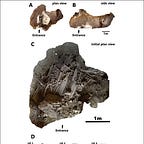
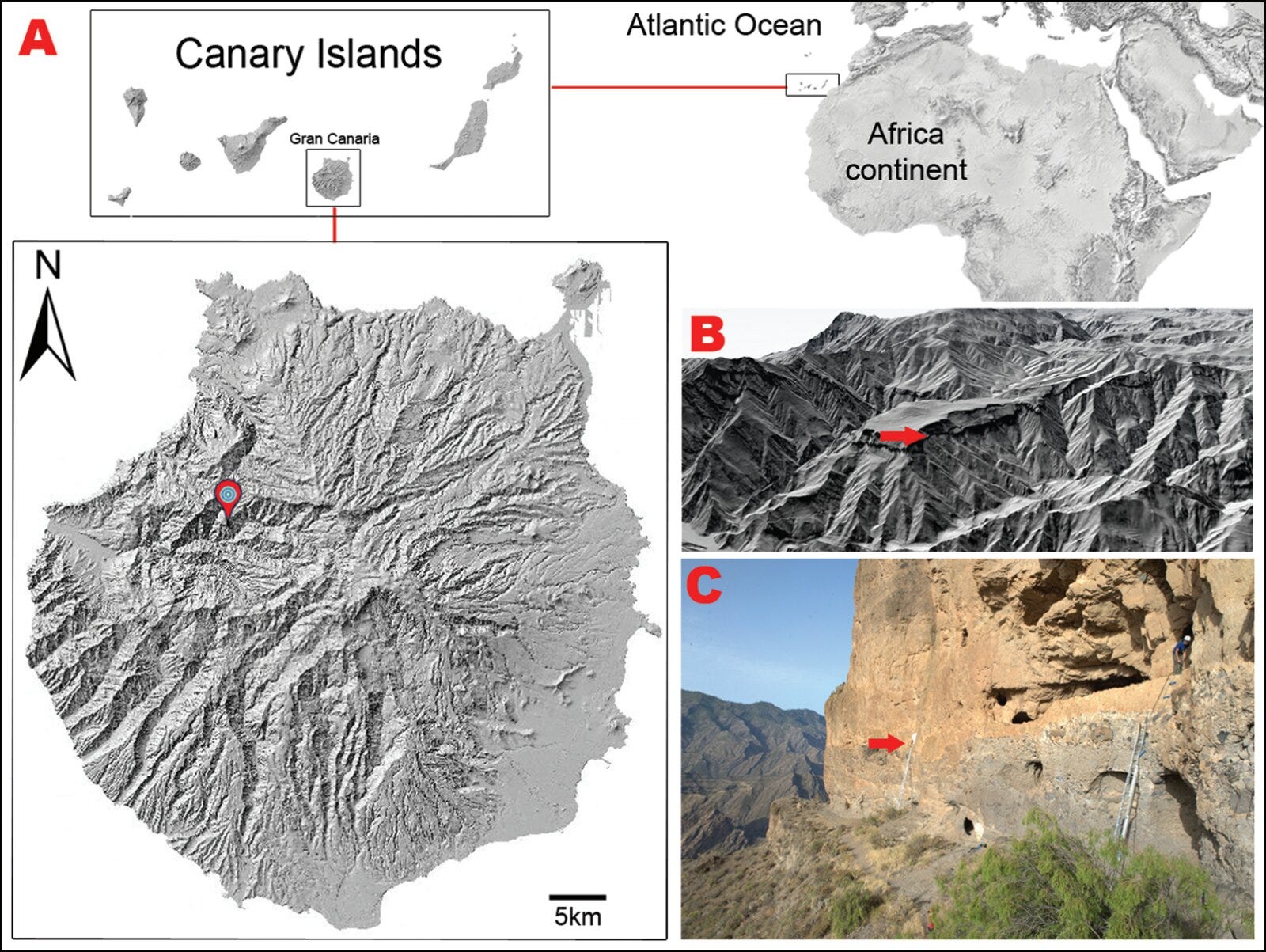
On the south-eastern ridge of the Acusa plateau, 990 meters above sea level in the municipality of Artenara on Gran Canaria, a burial cave cut into a wall of volcanic tuff holds a floor of wooden planks where the dead were laid, and from the dust beneath those planks archaeologists sieved 932 fragments of the granary weevil, Sitophilus granarius, from at least 388 beetles. The weevil is a pest of stored cereal. Its larvae grow inside single grains, hollowing out the starchy endosperm, and in the temperate places where it thrives it ranks among the most destructive insects a grain store can have.
Anyone who has seen the leather-wrapped bundles of Gran Canaria’s pre-Hispanic dead is likely to carry two assumptions about the caves they came from: that a burial cave in the Canary Islands was made for burial, and that the bodies inside had been dried before anyone carried them up the rock. The second assumption was recently given a specific form. In a 2025 chapter on the first human settlement of Gran Canaria, the archaeologist J. Velasco-Vázquez, working from historical accounts and from museum insect specimens with no record of where in a grave they had been found, proposed that corpses were left in the sun before burial. A study published this year in Antiquity,1 led by Pedro Henríquez-Valido of the University of Alcalá with colleagues in Bordeaux and Las Palmas, uses the insects of this one cave to argue that its dead went in soon after death, onto a platform built over what was left of somebody’s grain.
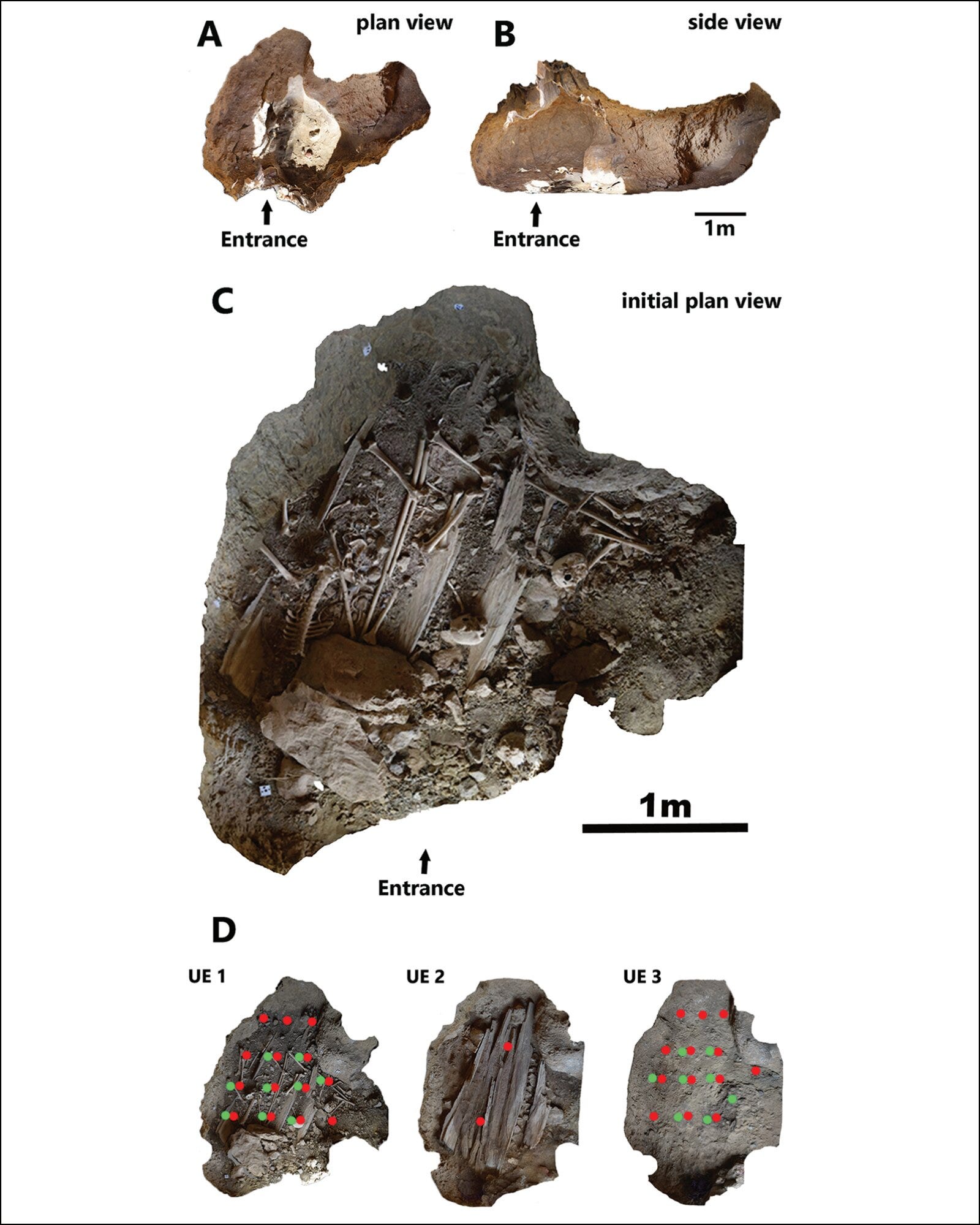
The name Cruz de la Esquina belongs both to that burial cave and to the complex of about twenty artificial caves around it, and the bones alone could not settle how the dead were handled. When a survey found the cave in 2001, most of the skeletal remains lay loose on the floor, apart from a few vertebrae and ribs from one person that disease had fused, so that they held together after everything around them had come apart. Archaeothanatology, which reconstructs a funeral from the order in which a body’s joints give way, had very little still joined to work with. Scraps of rope, rush fabric and hide survived, and better-preserved burials elsewhere on the island suggest the dead were wrapped in bundles. But the time between death and wrapping decides something basic about how these people treated a corpse, whether it was dried first or put into the rock while still decaying. Study of the skeletons is still under way; the paper gives no count of the dead, though three individuals have been radiocarbon dated.


