

For much of the twentieth century, East Asia was cast as a technological backwater in human evolution. Textbooks contrasted the elaborate prepared-core technologies of Africa and western Eurasia with what were often described as conservative, simple stone tool traditions in China. That contrast is now under serious strain.
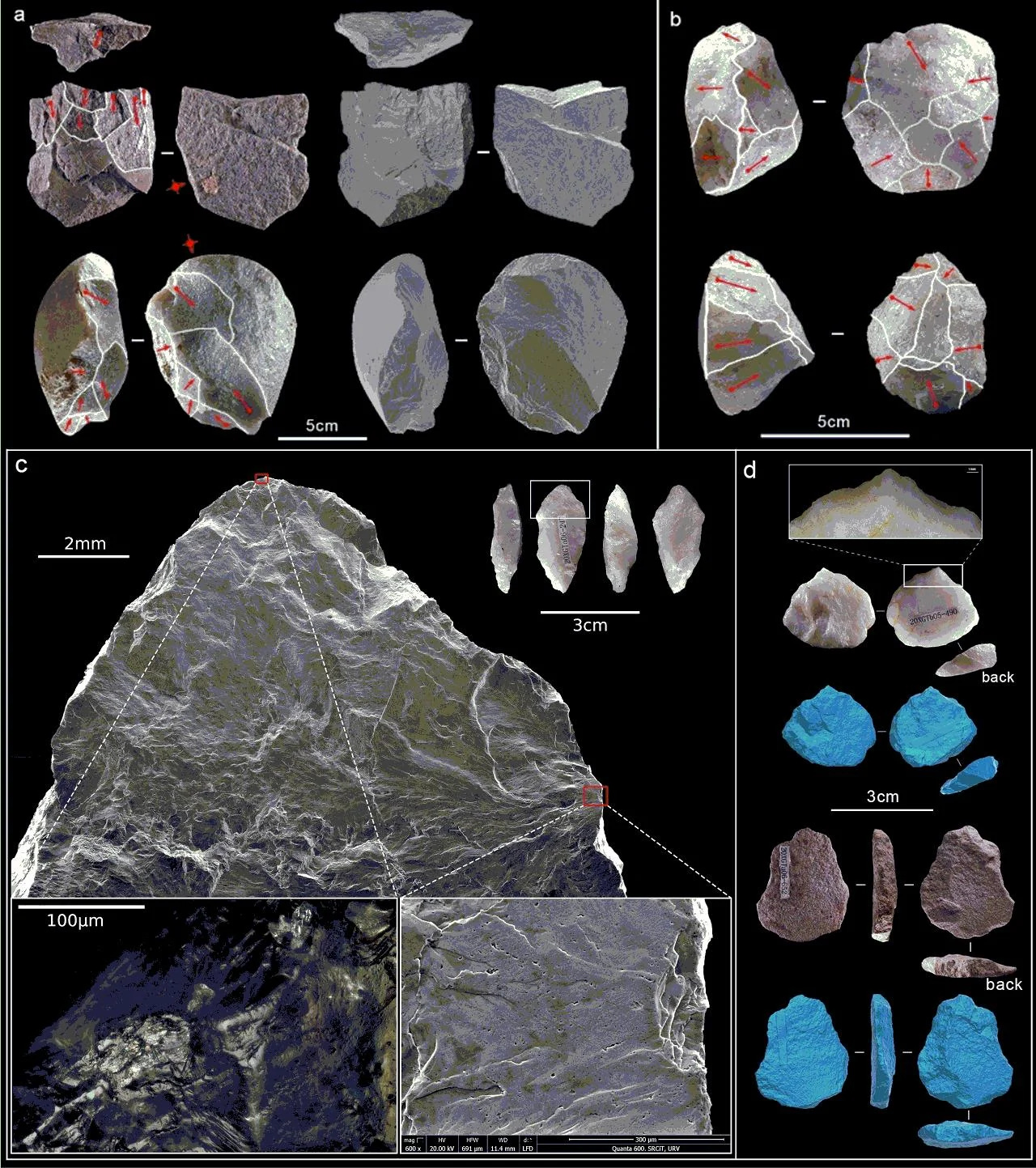
At a site called Xigou, in China’s Henan Province, archaeologists have uncovered evidence that hominins were making and using hafted stone tools between about 160,000 and 72,000 years ago. These tools were not just flakes picked up and used on the spot. They were parts of composite implements, stone pieces carefully shaped to fit into wooden or bone handles, bound and possibly glued in place. The findings, reported by Yue and colleagues in Nature Communications,1 add East Asia to the growing list of regions where early humans engineered tools that combined multiple materials into a single working unit.
The story that emerges from Xigou is not one of isolated cleverness. It is a record of long-term technological traditions, passed down over nearly 90,000 years, in a landscape inhabited by diverse hominin populations.


