

The assumption was tidy, and it held for decades. The cave paintings of the Dordogne, including those at Lascaux, were made with mineral pigments: iron oxides for reds and yellows, manganese oxides for blacks. No carbon. That meant no radiocarbon dating. If you wanted to know how old these images were, you had to rely on the style of the figures, the geology of calcite layers that might have grown over them, or comparisons with dated sites elsewhere. Indirect methods. Educated guesses dressed up in calibration curves.
No study had ever actually confirmed the absence of carbon. The assumption was just that: an assumption.
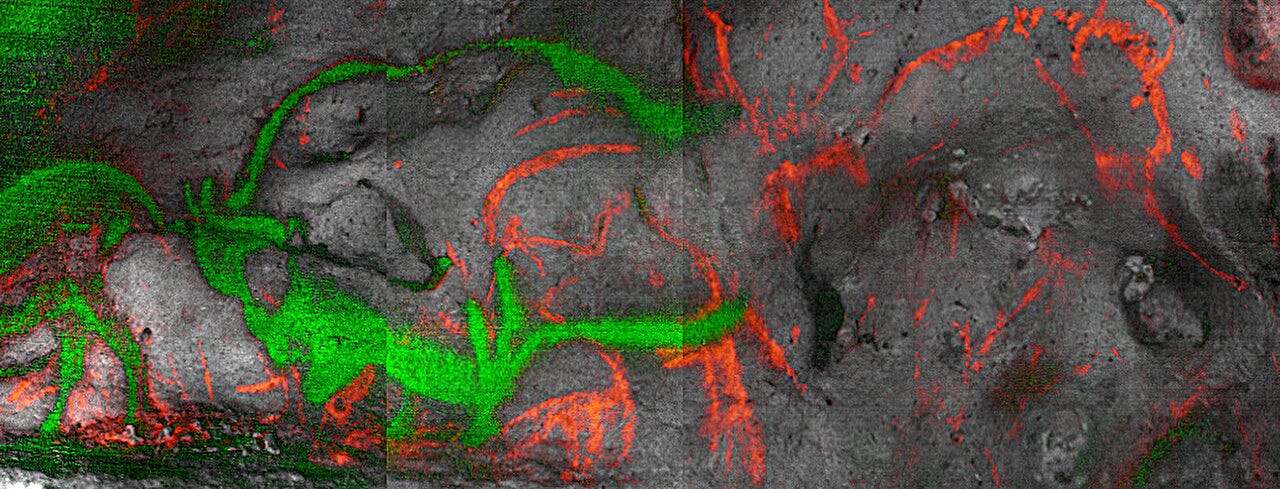
A team led by CNRS researcher Ina Reiche decided to check.1 What they found at Font-de-Gaume, a cave in Les Eyzies that has been a UNESCO World Heritage Site since 1979, was charcoal, hidden in plain sight inside the black lines of paintings that had been studied for more than a century.


