

At some point during their second loan cycle, members of a small borrowing group in Sierra Leone started dragging their feet. They had successfully repaid their first loan together. The rules hadn’t changed. Their businesses were running. But something had shifted. One member later described it plainly: in the early months everything was fine, no problems at all, but by the last two months people had become very lethargic about paying.
That phrase — lethargic — turns out to carry more explanatory weight than most economic theories of cooperation would predict.
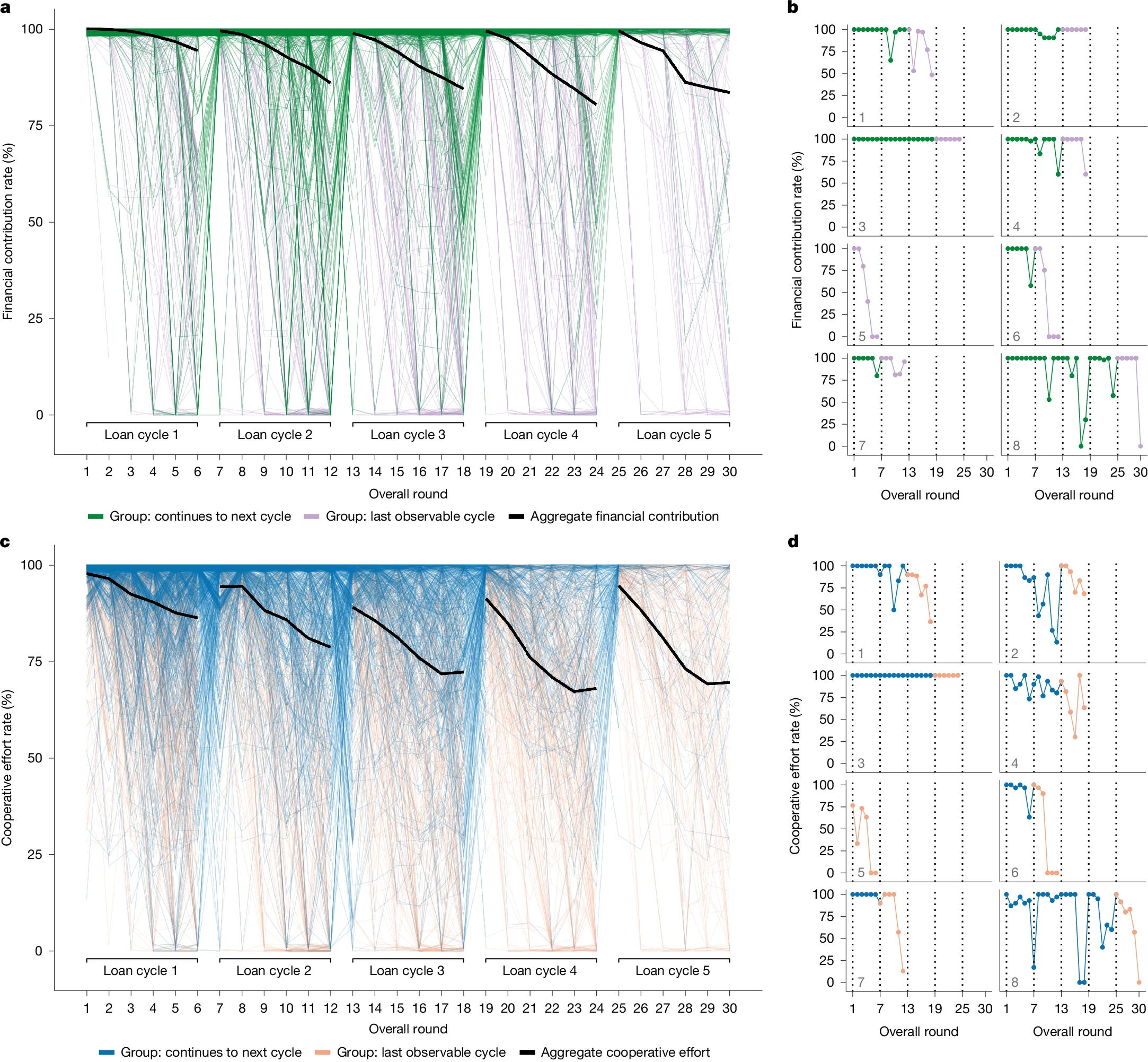
A study published this month in Nature1 tracked nearly 7,000 borrowers across 1,589 groups at a microfinance institution in Sierra Leone over five years, analyzing 47,931 individual payments alongside 73 hours of in-depth interviews. The question the researchers — Nicholas Sabin, David Klinowski, and Felix Reed-Tsochas — set out to answer was deceptively simple: why does cooperation decline even when everyone stands to benefit from sustaining it? Their answer is not about rationality, strategy, or poverty. It is about something more mundane and, in some ways, more unsettling: motivation just runs out.


