

Somewhere around 41,000 years ago, Homo neanderthalensis vanished from the European archaeological record. The standard explanations — killed off by cold, outcompeted by anatomically modern humans — have never quite fit the evidence. H. neanderthalensis had survived previous glacial cycles. Their technological repertoire was more sophisticated than older accounts acknowledged. And the genetic record shows they interbred with H. sapiens, which suggests at least some populations were in contact long enough to produce viable offspring.
So the question remains genuinely open: what combination of pressures pushed them over the edge during Marine Isotope Stage 3, roughly 60,000 to 34,000 years ago, when they had survived worse before?
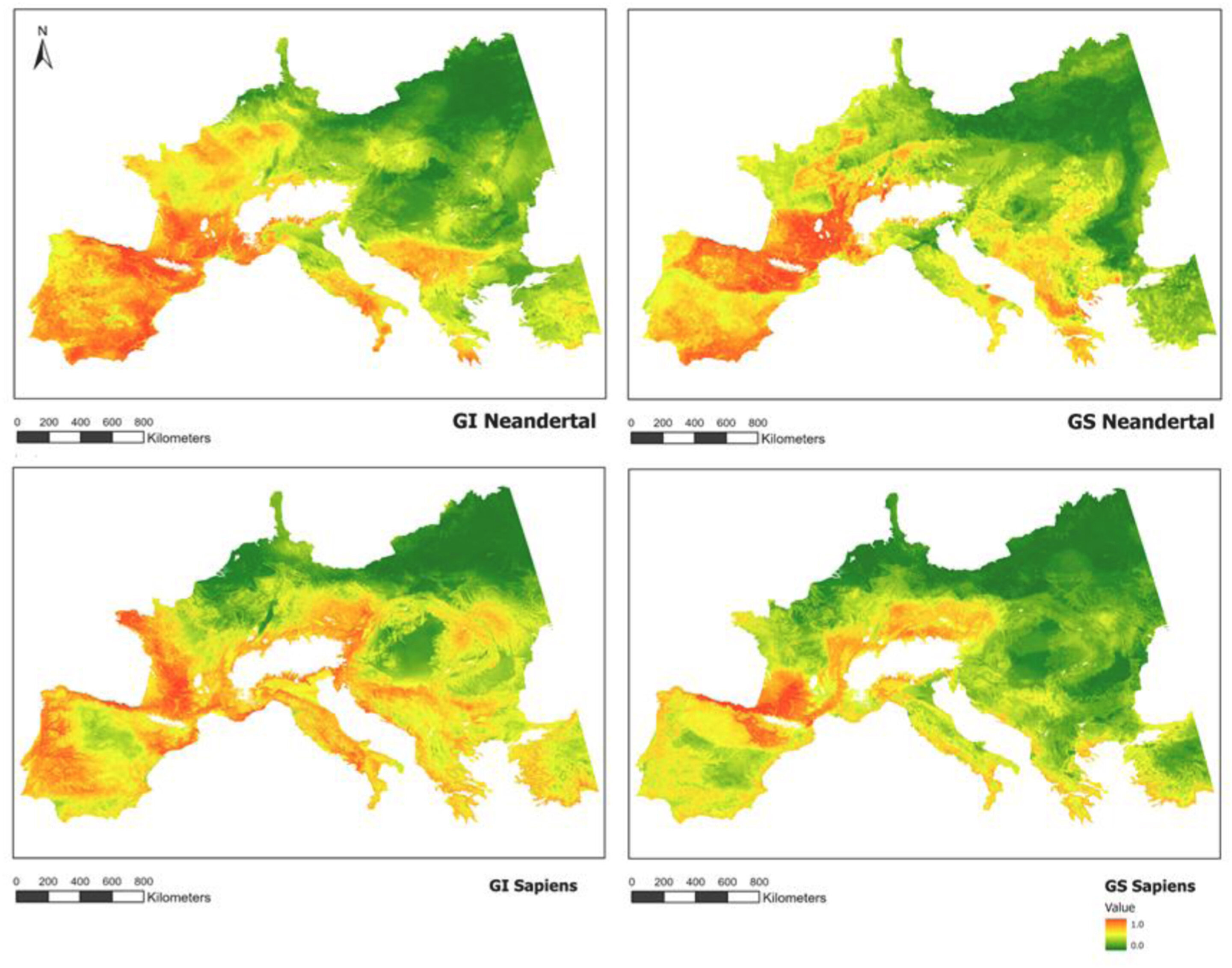
A new study led by Ariane Burke at the Université de Montréal takes a different approach to this problem, one borrowed from conservation biology. Rather than asking what killed the Neanderthals, it asks what kind of landscape they were working with — how their optimal habitat was distributed, how persistent it was across warming and cooling cycles, and how well connected the best patches were to one another. The results, published in Quaternary Science Reviews,1 suggest that the issue wasn’t habitat loss. The habitat was largely there. The problem was the topology of the network it formed.


