

The most recognizable pottery of the Kura-Araxes culture is hard to mistake. Red-Black Burnished ware, with its distinctive two-tone surface achieved through controlled firing, appears across an enormous arc of the ancient world — from the South Caucasus to Anatolia, the Levant, and beyond. It has long served archaeologists as a cultural fingerprint, a diagnostic marker tracing the spread of Kura-Araxes communities across Southwest Asia during the early third millennium BCE. What those pots were actually used for has been a harder question to answer.
A new study1 of 52 ceramic vessels from Qaraçinar, a Kura-Araxes settlement in Azerbaijan dated to roughly 2800–2600 BCE, now offers something close to an answer. The short version: the Red-Black Burnished ware appears to have been reserved for consuming grape- and dairy-based beverages. Cooking happened in the plainer, more utilitarian Monochrome ware. The iconic pots weren’t kitchen workhorses. They were, in a functional sense, the good dishes.
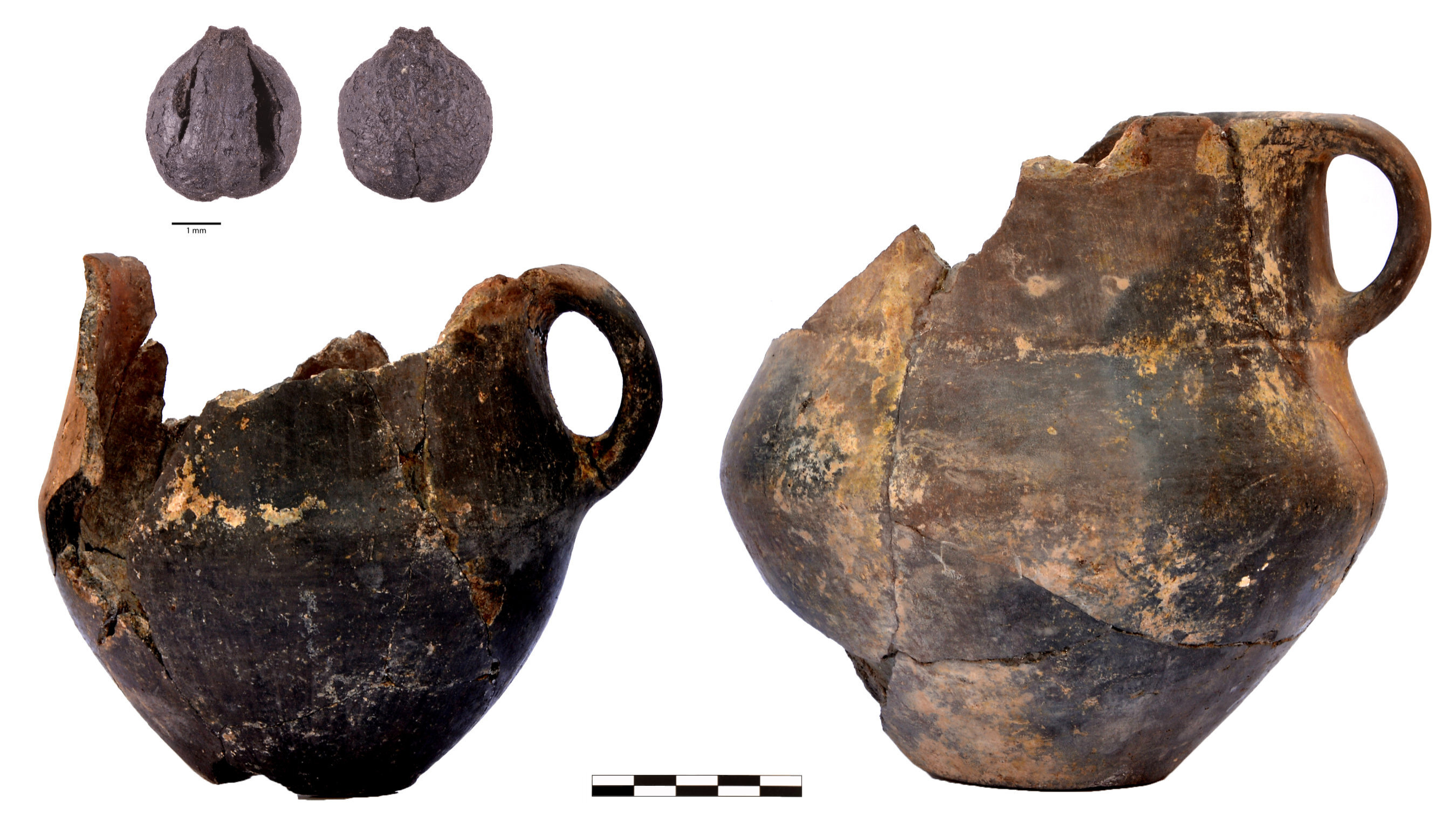
That distinction matters beyond ceramic typology. It suggests that Kura-Araxes communities organized their material culture around specific consumptive practices — that certain vessels carried cultural weight, that drinking wine or eating raw dairy products warranted particular containers. This wasn’t purely pragmatic. It looks like codified behavior.
The research team, led by biomolecular archaeologist Maxime Rageot of the University of Bonn and prehistoric archaeologist Giulio Palumbi of the University of Bari and the CNRS, combined technological and morphological analysis of the ceramics with use-wear studies and biomolecular residue analysis. Organic chemistry preserved in vessel walls and bases yielded an unusually complete picture of what Qaraçinar’s inhabitants were producing, processing, and eating.


