

Here is the finding that stops you cold: a set of regulatory sequences comprising less than one tenth of a percent of the human genome predicts more variance in spoken language ability than the other 99.9 percent combined. Not marginally more. Substantially more. A single genetic marker in these regions carries, on average, 188 times more predictive weight for language than a random marker drawn from anywhere else in the genome.
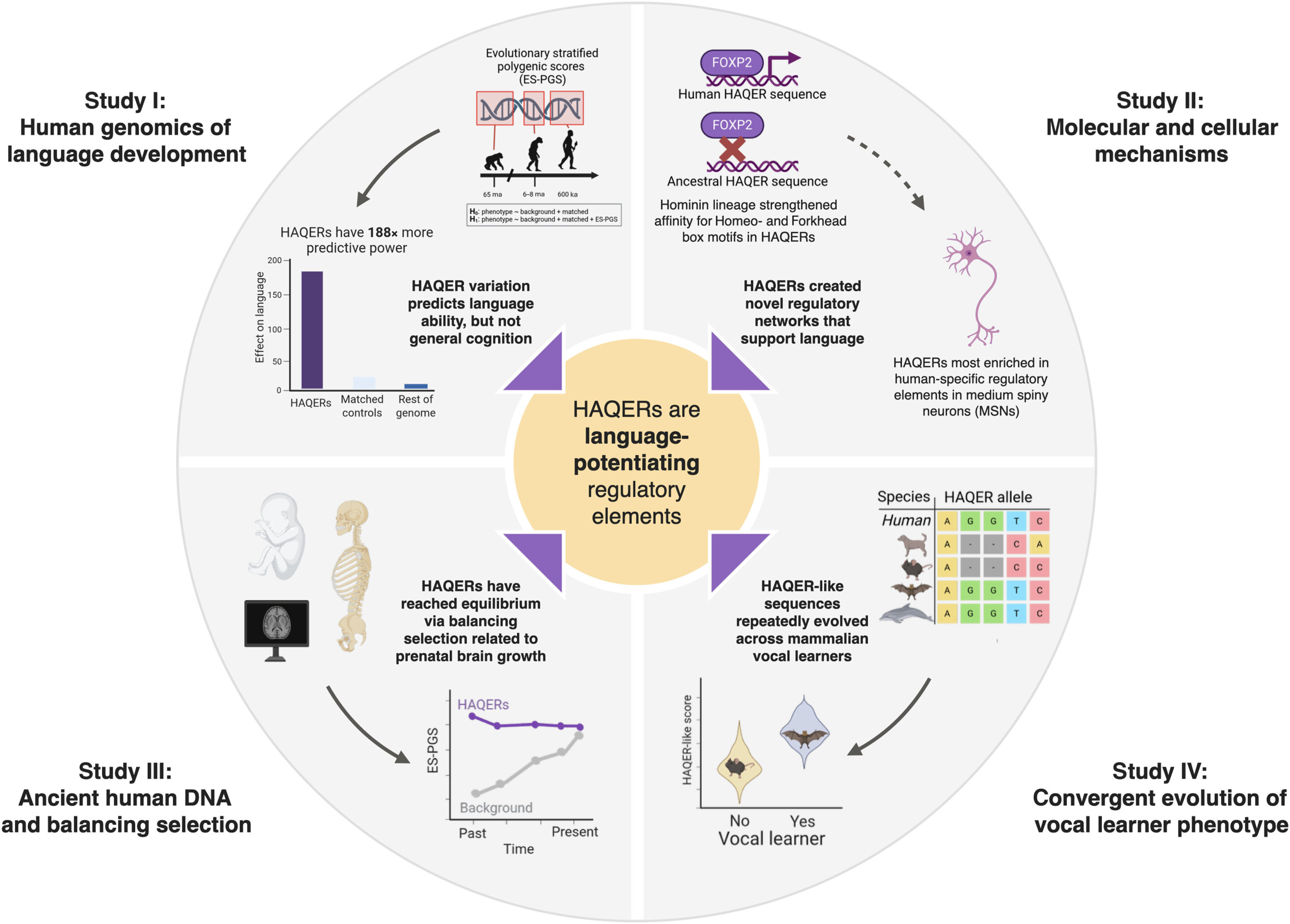
The regions are called HAQERs, short for human ancestor quickly evolved regions. They are mostly noncoding. They don’t build proteins. What they do is regulate genes, and a study published this week in Science Advances1 by Lucas Casten, Tanner Koomar, and colleagues at the University of Iowa argues that the story of how they came to matter for language is stranger than anyone expected.
Stranger partly because of when they evolved. And stranger still because of what happened to them afterward.


