

Pull a bird bone from a two-thousand-year-old Korean site and you have a problem. The bone might belong to a domestic chicken. It might belong to a common pheasant. If it’s fragmented — and it almost certainly is — morphology alone probably won’t tell you which. The two species are close enough in size and skeletal structure that even intact specimens require expert comparison, and intact specimens are rare. What you usually get is a shard.
For decades, this has meant that the history of domestic chickens on the Korean Peninsula has been written in hedged language, qualified assessments, and contested identifications. Historical texts mention them. Founding myths from early Korean states describe rulers born from eggs, with chickens woven into the symbolism of divine kingship. Chinese records from the era note chickens kept in the southwestern Korean polity of Mahan. But the bones themselves kept their secrets.
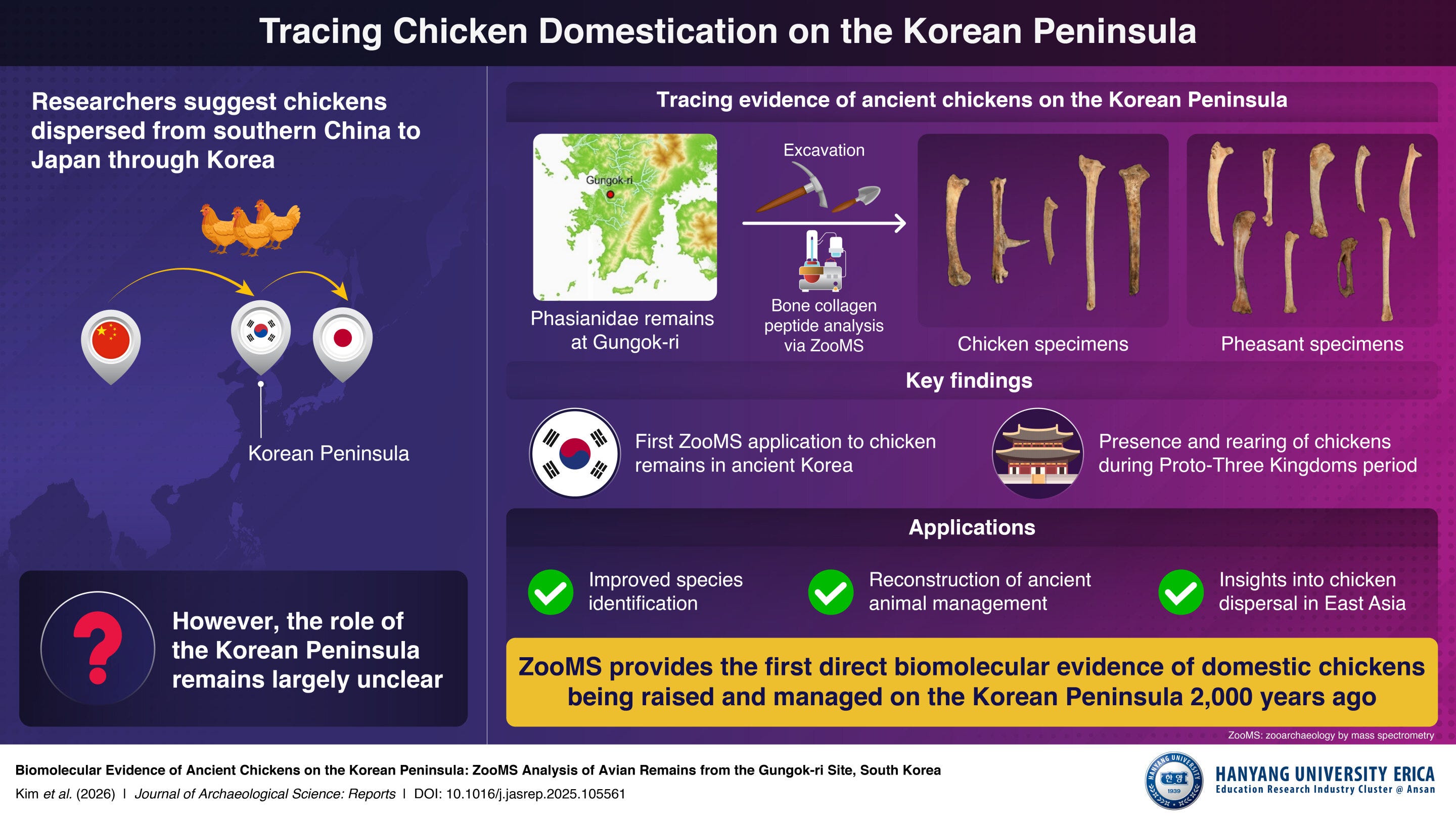
A team led by Kyungcheol Choy at Hanyang University ERICA recently applied a different approach to fourteen Phasianidae remains from the Gungok-ri site in southwestern Korea. Their results, published in Journal of Archaeological Science: Reports,1 provide the first biomolecular confirmation of domestic Gallus gallus on the Korean Peninsula.


