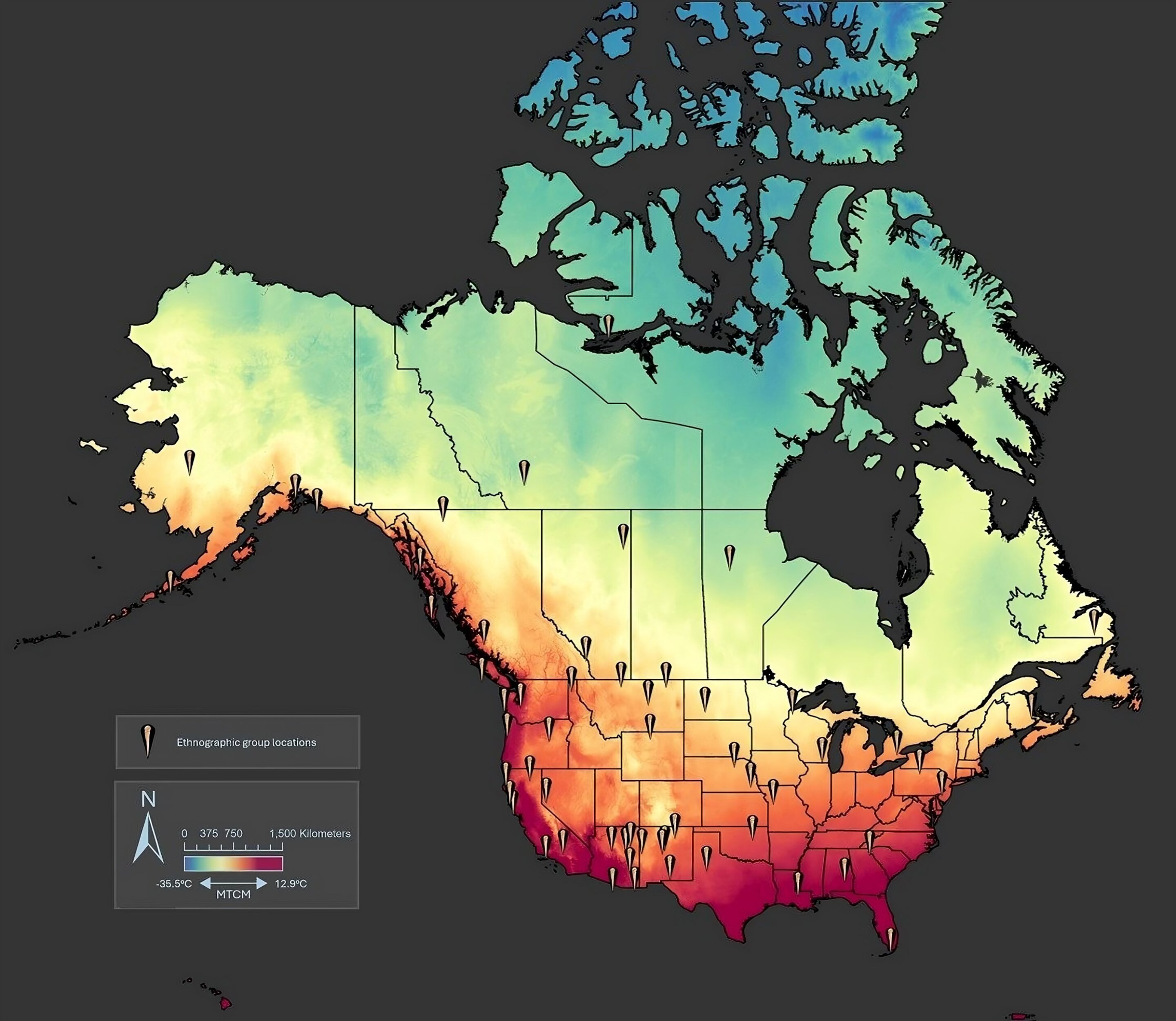
There is a tidy story about the bone needle, and it goes like this: sometime around 45,000 years ago, someone figured out how to push a thin splinter of bone through animal hide with enough control to stitch pieces together. That skill, modest as it sounds, unlocked the planet. Tailored clothing meant that Homo sapiens could push into the frozen north, survive the deep cold of the Pleistocene, and keep going until they had spread to nearly every corner of the earth. The needle was, on this reading, one of the foundational technologies of our species’ success.

The story is compelling. It is also, a new study1 suggests, incomplete.
The needle did help people survive the cold. That part holds up. But when researchers at the University of Wyoming systematically went through hundreds of ethnographic records describing how Indigenous North American groups actually used needles and awls, they found something that complicates the tidy version: most of the time, these tools had nothing to do with keeping warm.
Clothing production turned out to be the single most commonly recorded use. But it accounted for only 14% of all observations. The other 86% was something else entirely.
Tattooing
Medical suturing
Basketry. Ceremonies
Piercing. Storytelling
Trading. Fishing
Tools passed down as gifts
Tools used in rituals.
Tools that seem to have accumulated meaning far beyond their original function. When you look at the full picture, the needle is less like a survival device and more like a Swiss Army knife that cultures kept finding new reasons to carry.