

Cranium 17 is a Middle Pleistocene skull from the Sima de los Huesos site in northern Spain, dated to roughly 430,000 years ago. It has two localized fractures on the frontal bone, close together, consistent with two separate blows delivered by the same object. That’s not an accident pattern. It’s the oldest well-documented case of interpersonal violence in the human fossil record.
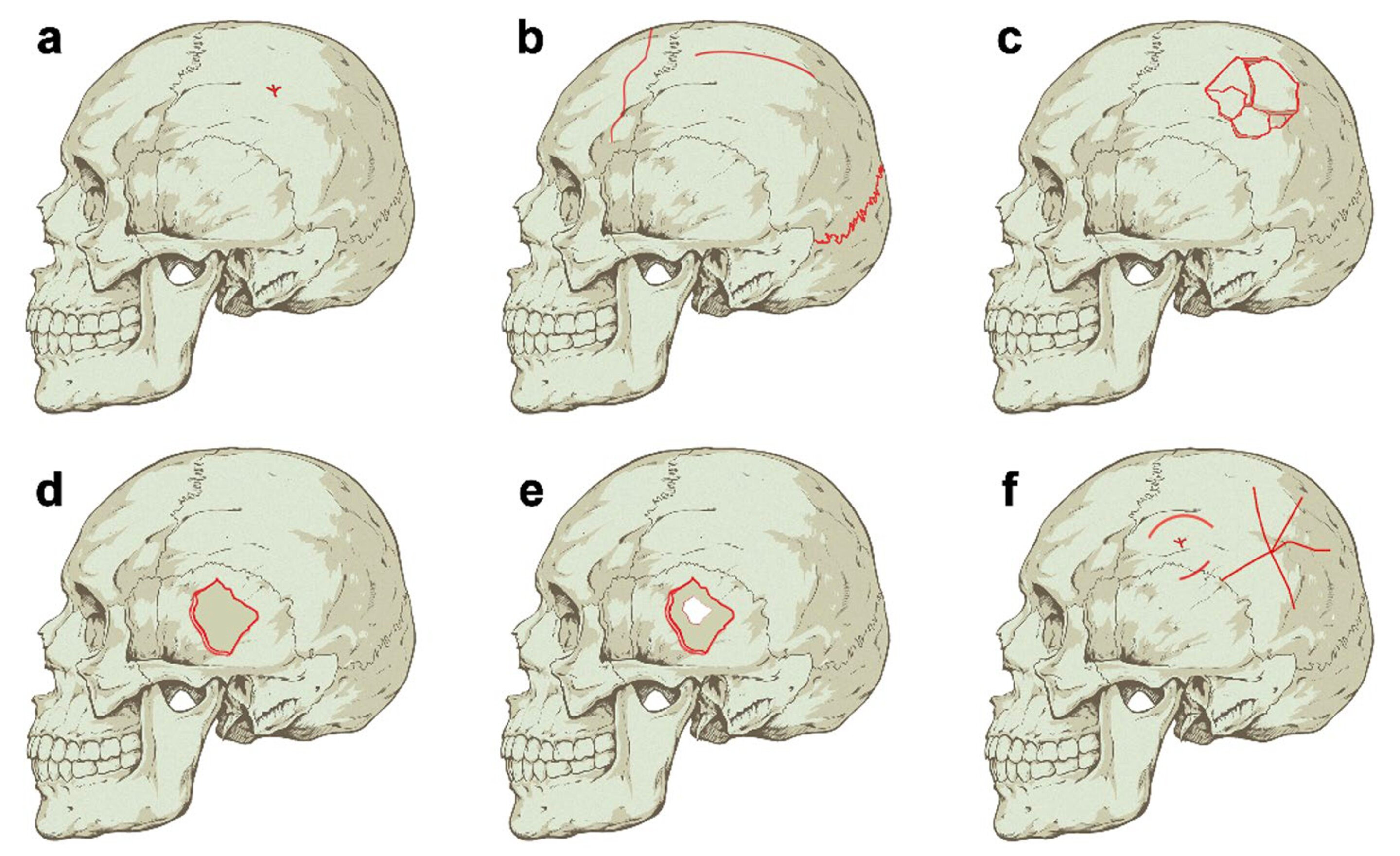
The interpretation of those fractures required more than observation. It required knowing what those particular fracture shapes actually mean — which is harder than it sounds, because a skull that’s been hit, a skull that’s been dropped, and a skull that’s been compressed under sediment for hundreds of millennia can all look damaged in ways that superficially resemble each other. Distinguishing between them is the problem at the center of a new study by Rodríguez-Iglesias and colleagues, published in Scientific Reports1 in early 2026.
Their approach was to pull together experimental data from bioengineering and forensic medicine: 329 controlled blunt-force impacts on 234 human cadavers, drawn from studies that had been accumulating since the 1960s and 70s. Drop towers, pneumatic impactors, pendulum rigs. Forces ranging from around 1,340 N to 17,000 N. The team analyzed how the physical variables — energy, force, velocity, impactor weight — correlated with each other and with fracture outcomes, and then asked what any of that could tell an archaeologist looking at old bone.


