

Wood should not survive a thousand years in a tropical rainforest. The heat, the moisture, the fungi and insects working around the clock — they reduce organic material to nothing, often within decades. This is one reason the ancient Maya are so thoroughly associated with stone. Temples, stelae, plazas. We know the monumental record because stone endures. Everything else is mostly gone.
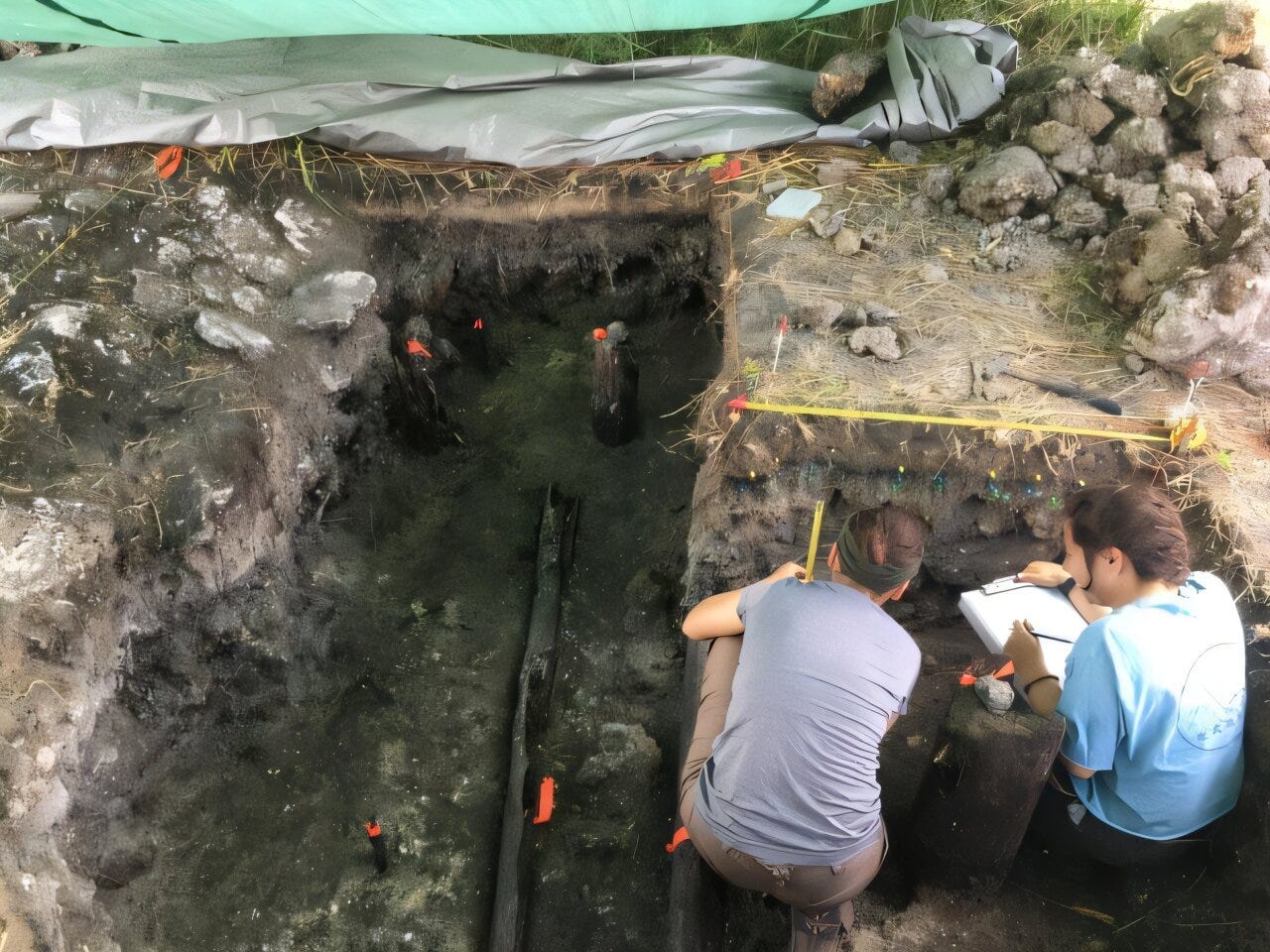
Which is part of what makes the Birds of Paradise wetland site in northwestern Belize so strange.
When Lara Sánchez-Morales, Timothy Beach, and their colleagues began excavating a settlement they call BOP-N, they found wooden posts still standing.1 Not just scraps of carbonized wood in a hearth — structural posts, some nearly two meters long, driven into the ground and preserved in the anoxic muck of a perennially saturated wetland. Nine posts in a single platform structure. More wood in a nearby mound. The finds represent the largest assemblage of preserved architectural wood from an ancient Maya site outside the coastal salt works at Paynes Creek in southern Belize. In the interior Maya lowlands, there is essentially nothing else like it.
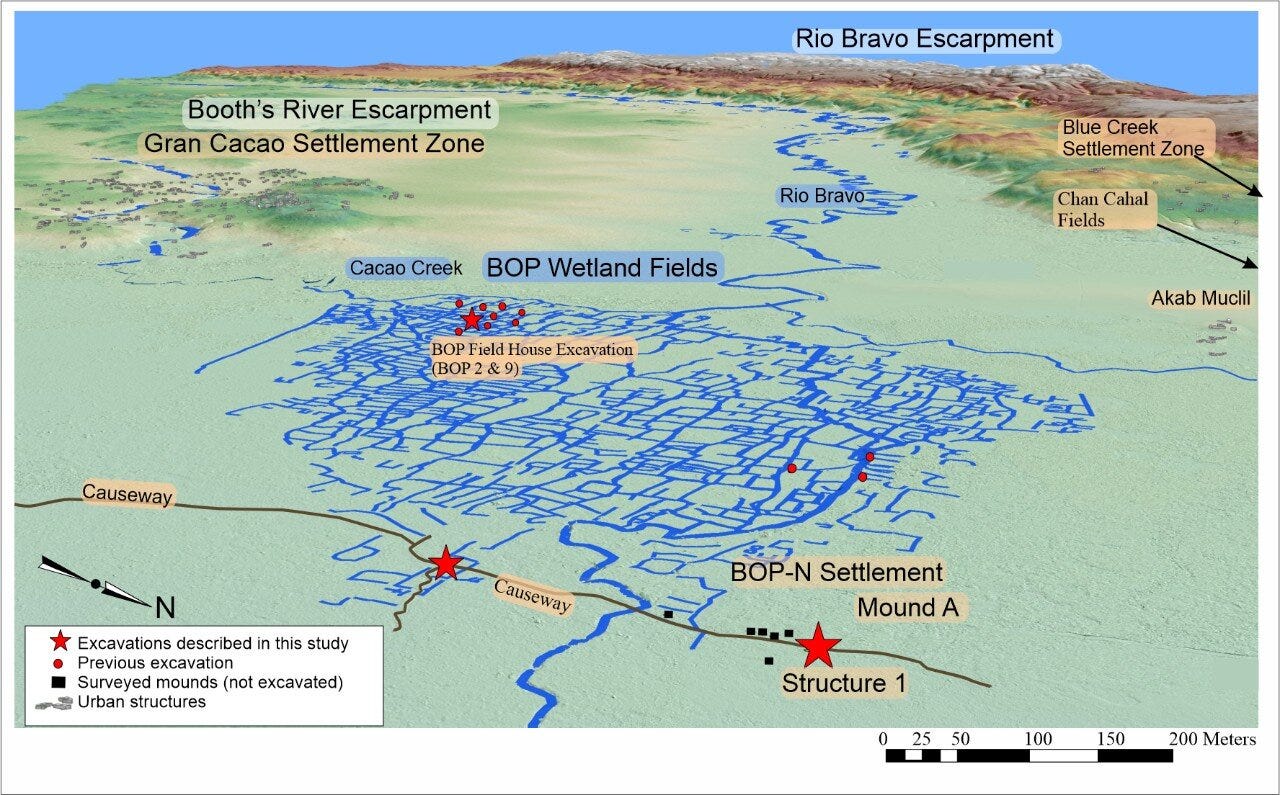
But the wood is almost a side story. What the site actually documents is something the archaeological record of the Maya has been frustratingly vague about: what happened to ordinary people during and after the Terminal Classic, when the great urban centers of the interior were being abandoned.


