

The building was enormous by any reasonable prehistoric standard. Roughly 350 square meters, constructed from heavy timber posts sunk into foundation ditches, with a thick clay floor that has survived six millennia underground. When researchers working at Stăuceni-Holm in Romania’s Botoșani County first saw its outline in geomagnetic survey data, it stood apart from everything else at the site. Not just in scale. In position. It sat near the outer ditch that bounded the settlement, at the edge of things, which is rarely where you put a house.
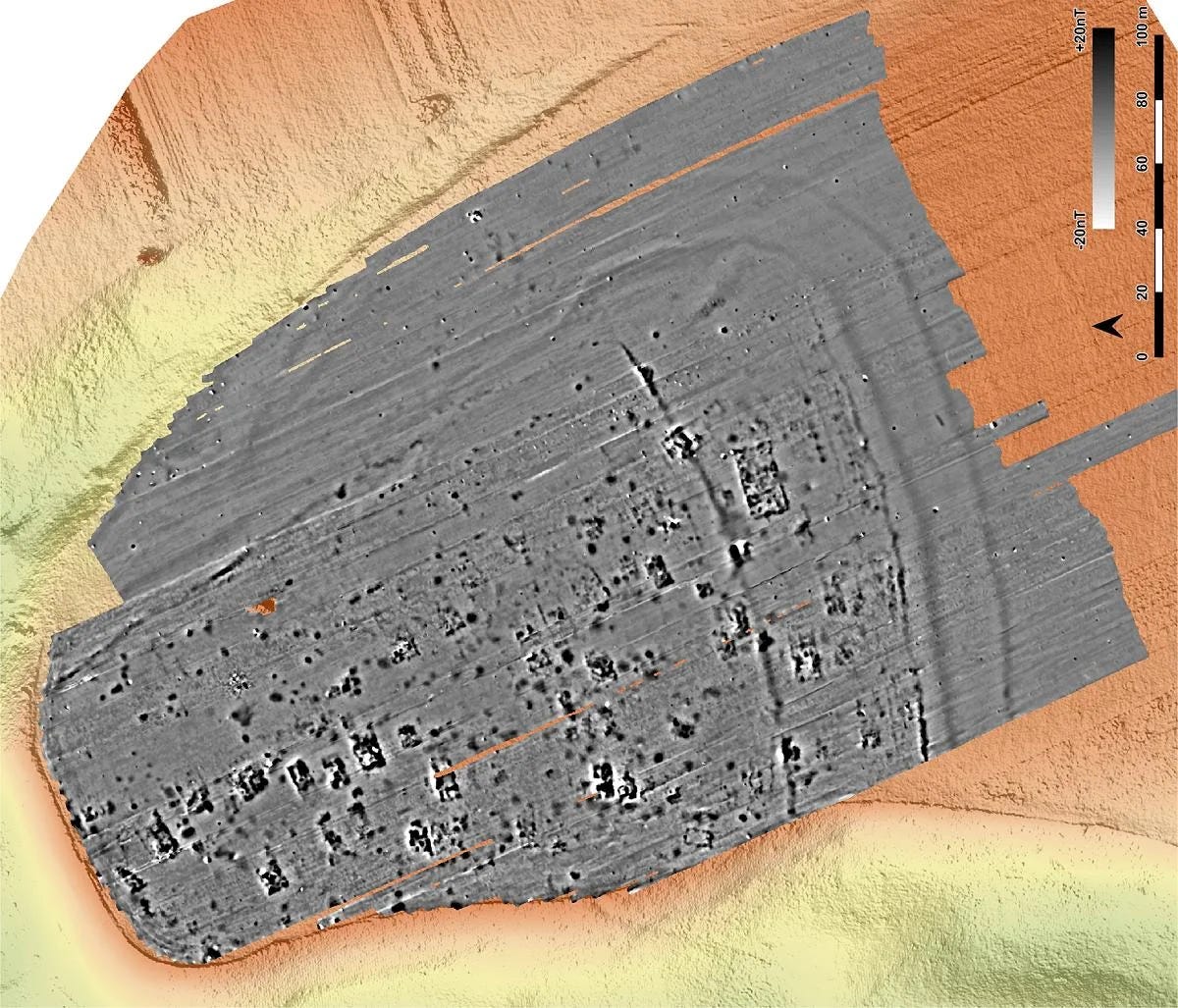
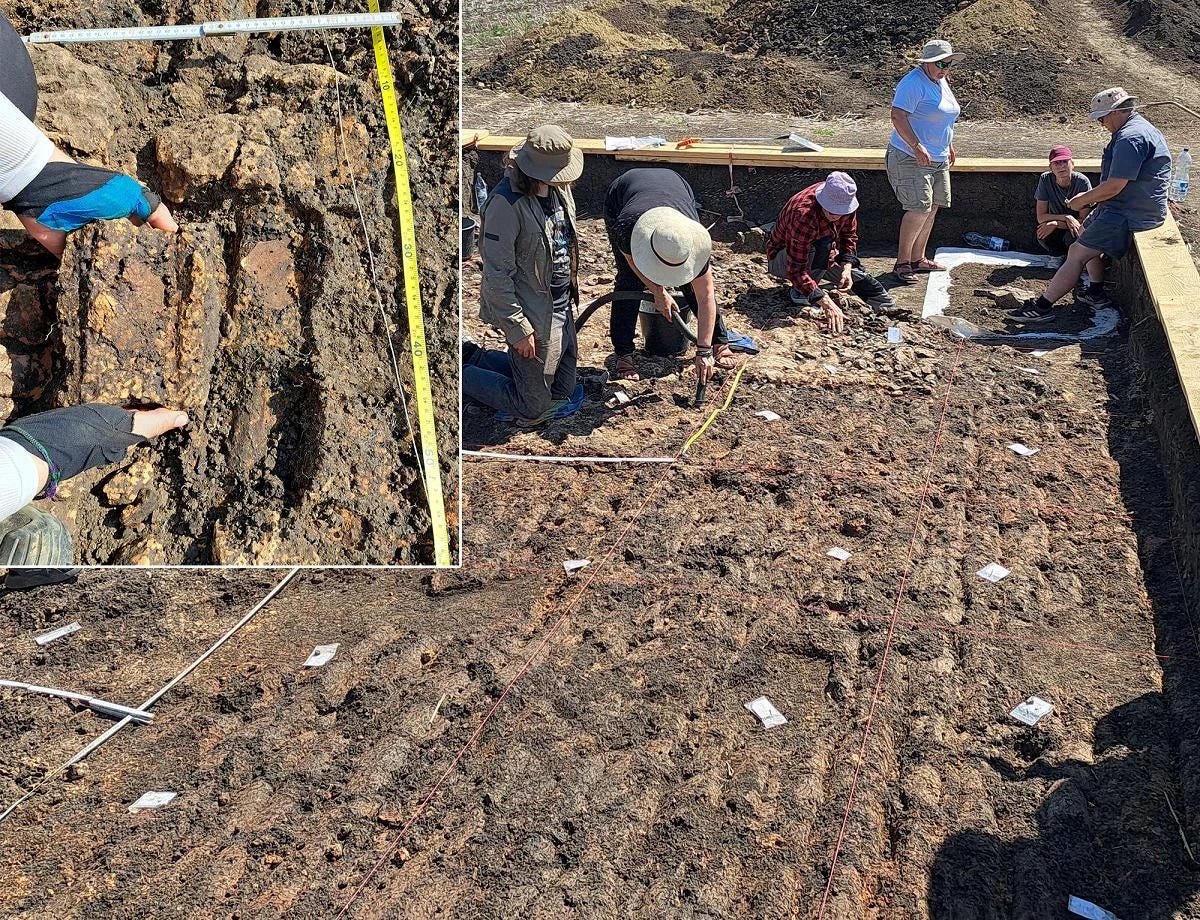
When excavation trenches opened across the feature during the 2023 and 2024 field seasons, what the team found inside was almost as telling as the structure itself. There was very little in the way of cooking equipment, storage vessels, or the accumulated debris of domestic life. A building this large, this centrally constructed, with almost no evidence that anyone ate, slept, or kept their belongings there. The Romanian and German research team, led by Doris Mischka and colleagues, interpreted1 this absence directly: the structure functioned as a communal space rather than a residence.
What people actually did inside remains an open question. Meetings, ceremonies, collective planning sessions, rituals tied to the agricultural calendar. The record doesn’t specify. But the category of the building is increasingly clear. Archaeologists now call these mega-structures, and Stăuceni-Holm is not the first place one has turned up.


