

The story of human evolution is often told as a tale of pursuit. Spears flying. Herds scattering. Clever primates turning into apex predators. It is a compelling narrative. It is also incomplete.
For much of our deep past, meat did not always come from animals brought down by human hands. Often, it came from animals already dead. Leftovers from lion kills. Carcasses abandoned by hyenas. Bodies claimed by drought, disease, or injury. What earlier generations of researchers once treated as desperation food now looks more like a reliable, strategically exploited resource.
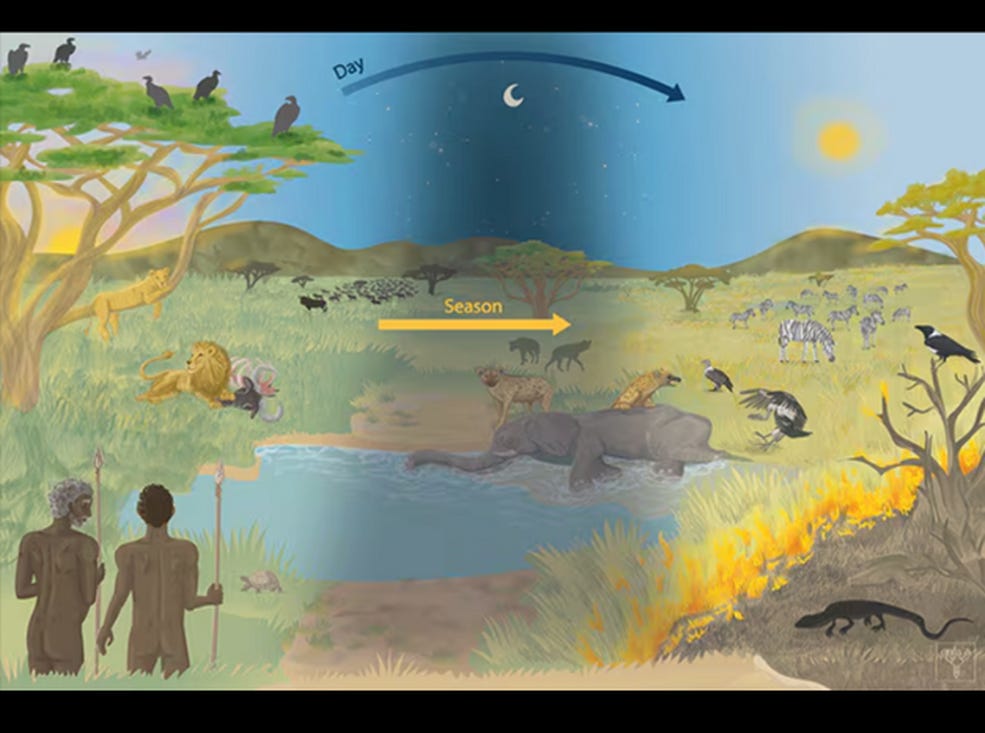
A new synthesis in the Journal of Human Evolution1 argues that scavenging was not a brief or embarrassing prelude to “real” hunting. It was a long-standing, adaptive strategy shaped by ecological logic and human biology. When viewed through the framework of optimal foraging theory, scavenging emerges as an energetically efficient way to acquire calories and fat, one that may have helped stabilize hominin diets across fluctuating climates and landscapes.
Rather than replacing hunting, scavenging often worked alongside it. The result is a more flexible, opportunistic picture of early human subsistence, one less about heroic kills and more about reading landscapes, tracking predators, and capitalizing on what nature left behind.


