

A burial that never fit expectations
In a limestone cave in southern Italy, two bodies lay entwined for more than twelve millennia. Since their discovery in 1963 at Grotta del Romito, the pair have unsettled tidy narratives of Ice Age life. One was strikingly small, with shortened limbs. The other was also shorter than average, though less extreme. Their posture suggested intimacy and care. Their bones raised questions that anatomy alone could not answer.
For decades, archaeologists debated their identities, their relationship, and the cause of their stature. Were they siblings. A parent and child. Two unrelated individuals sharing a rare condition. Or something else entirely. Now, with tools that blend paleogenomics and clinical medicine, researchers have given these individuals names of a different sort: mother and daughter, linked by a specific mutation in a gene that regulates bone growth.
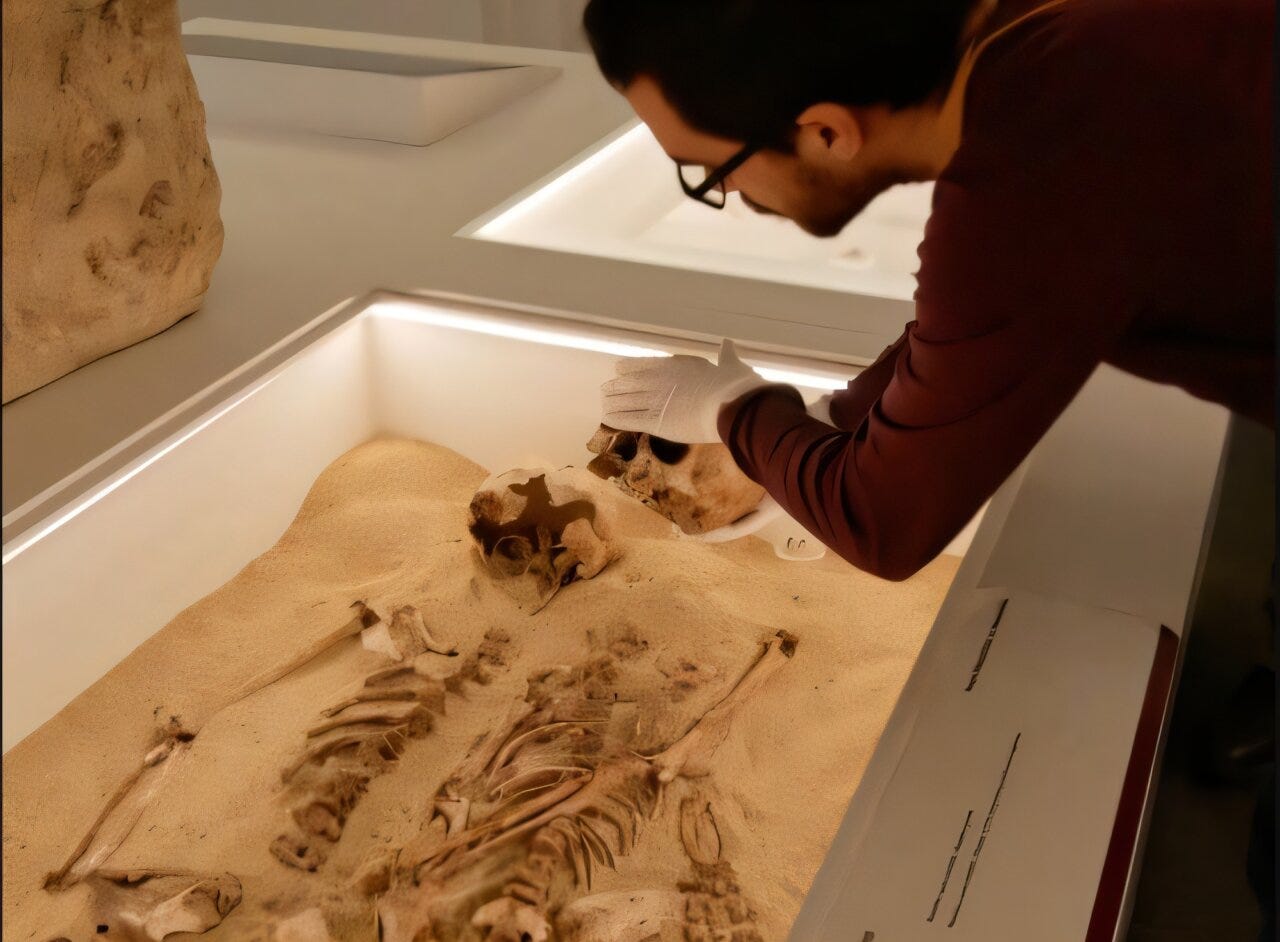
The study, published in The New England Journal of Medicine,1 represents the earliest confirmed genetic diagnosis of a rare inherited skeletal disorder in human history. It also reframes a famous burial as a family case study that bridges prehistory and modern medicine.


