

Traditional ancestry reports often provide a static snapshot, indicating, for example, that an individual is "50% Irish." While informative, this perspective oversimplifies the intricate tapestry of human ancestry, which is more akin to a dynamic film than a still photograph. Recognizing this complexity, researchers from the University of Michigan have developed a statistical method1 that offers a more comprehensive view of our ancestral origins and migrations over time.
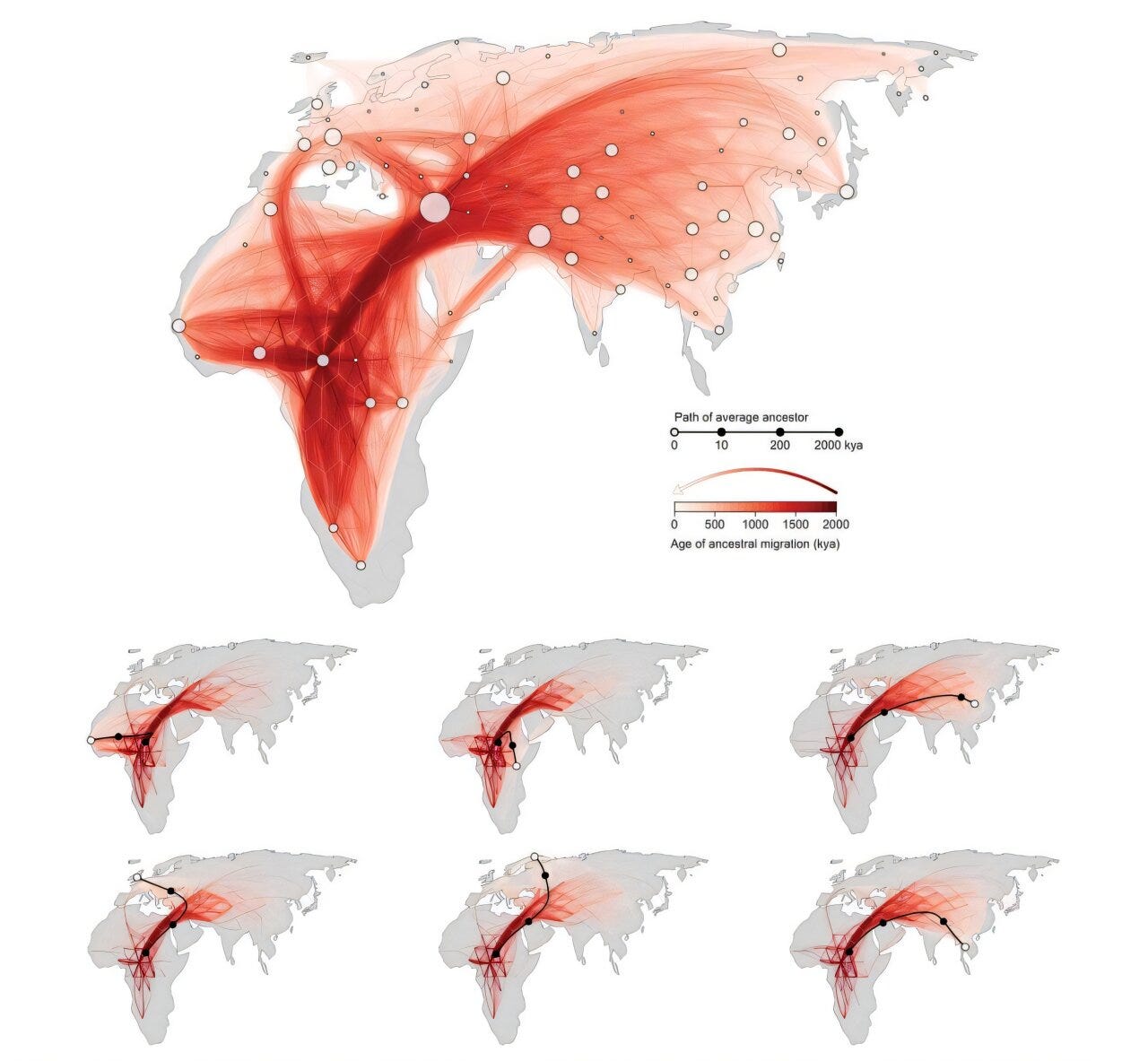
The Gaia Algorithm: Mapping Ancestral Movements
The Geographic Ancestry Inference Algorithm (Gaia) is a parsimony-based method designed to infer the geographic locations of shared genetic ancestors within a tree sequence. By analyzing modern genetic sequences, Gaia estimates the locations of an individual's genetic forebears, tracking their movements across generations. This approach transforms our understanding of ancestry from a static representation to a dynamic narrative, illustrating how ancestral populations migrated and interacted over centuries.
According to the developers, Gaia works by fitting a minimum migration cost function to each genomic position in an ancestral haplotype using the generalized parsimony algorithm and the local gene genealogy relating the sampled genomes at the given position.


