

Someone dug a small pit, laid down a woven mat, and placed a young dog inside as if sleeping. The dog was female, probably brown and white based on surviving fur, and she was not yet a year old. Around her body, evidence suggests twine. The pit fit her snugly. That was around AD 900, in a farming village called Rio Muerto in Peru’s Moquegua Valley, during the height of Tiwanaku’s expansion across the south-central Andes. She stayed there for over a millennium.
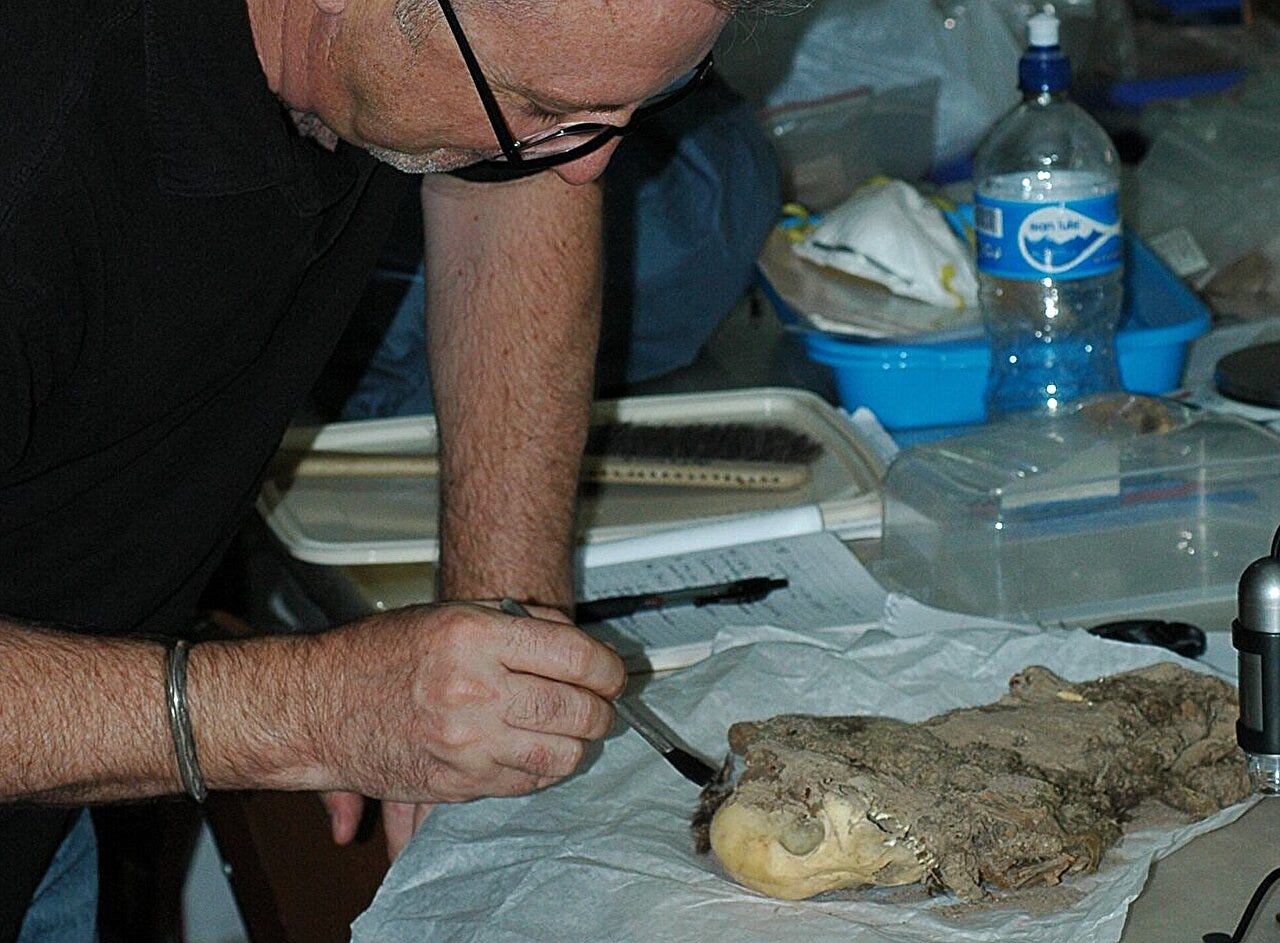
She and a second dog, a puppy no older than three months recovered from the nearby ceremonial site of Omo, are the subjects of a new study in Latin American Antiquity1 led by Susan D. deFrance of the University of Florida. Together they represent only two intentionally buried, naturally mummified dogs known from Tiwanaku contexts. The fur that survived on both animals is what makes them definitive. Dog bones at Tiwanaku sites are notoriously ambiguous, frequently mixed with the bones of Andean foxes (Lycalopex culpaeus), and difficult to tell apart once decomposition has done its work. With fur, there is no ambiguity.
The two animals are an unusual window into something the archaeological record rarely captures at this scale of specificity: the relationship between ordinary people and their dogs in a Middle Horizon Andean state.


