

The sediment at the bottom of a drained reservoir is a strange kind of archive. It holds whatever washed in over centuries: soil, pollen, organic matter, the chemical residue of everything people did nearby. If the city above used red pigment on its buildings, traces of that pigment eventually ended up in the water. If residents disposed of waste carelessly, the molecular signature of that waste would be there too, preserved in the muck.
Ucanal was a Maya city in what is now the Petén region of northern Guatemala. It wasn’t the largest city in the Maya Lowlands, not remotely close to Tikal or Calakmul, but it was a significant one, with an estimated population between 8,000 and 11,000 people at its peak during the Terminal Classic period, roughly 810 to 950 CE. The site had a sophisticated water infrastructure: monumental reservoirs, drainage canals, filtration channels. The kind of hydraulic engineering that implies someone was thinking carefully about where water came from and where it went.
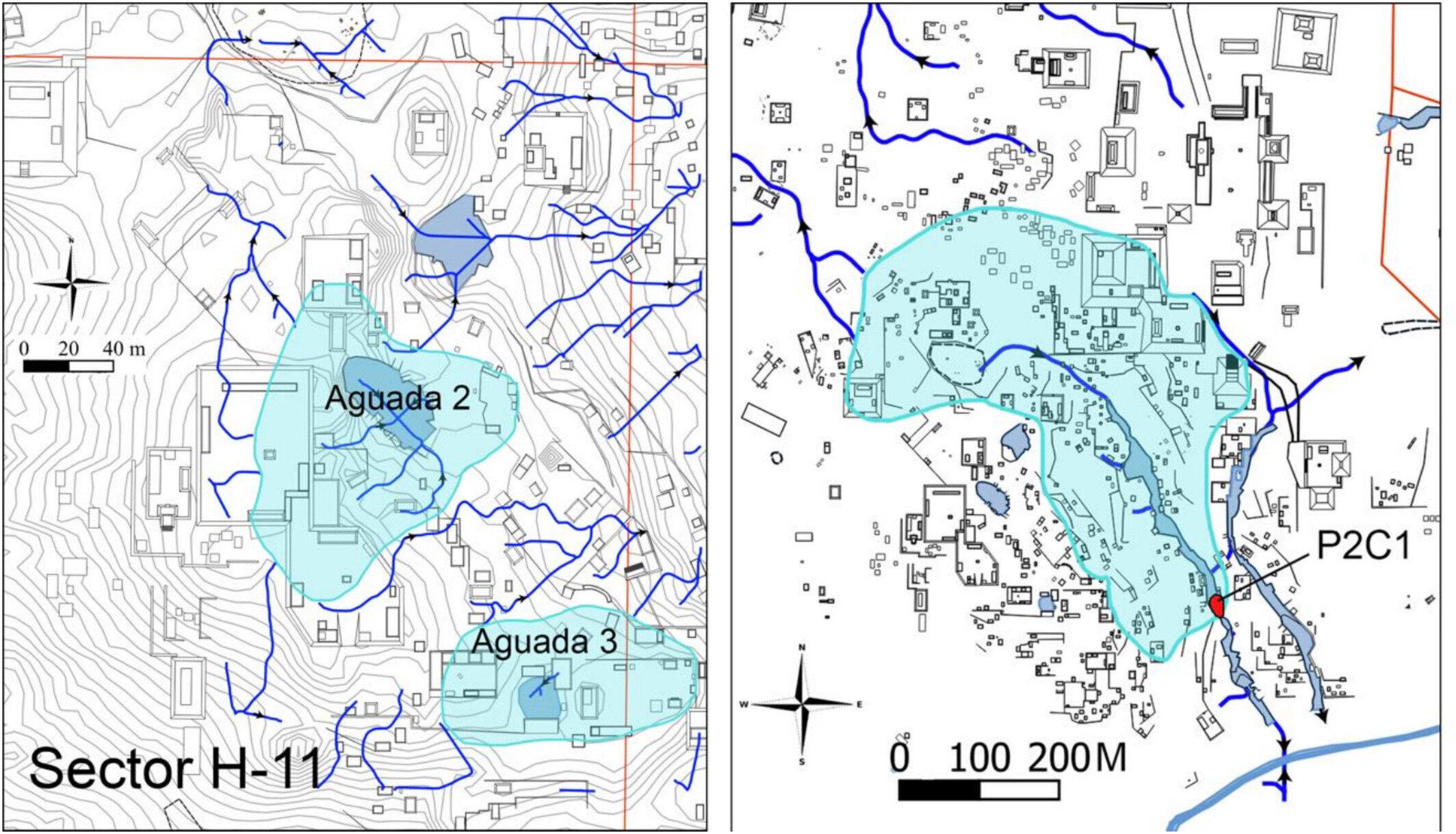
A research team led by Jean D. Tremblay at the Université de Montréal spent years pulling sediment cores from three of Ucanal’s reservoirs and asking what those sediments actually contained. The answers1 were not entirely2 what you’d expect.3
Two of the reservoirs, it turns out, were remarkably clean. One was not. And all three were saturated with mercury.


