

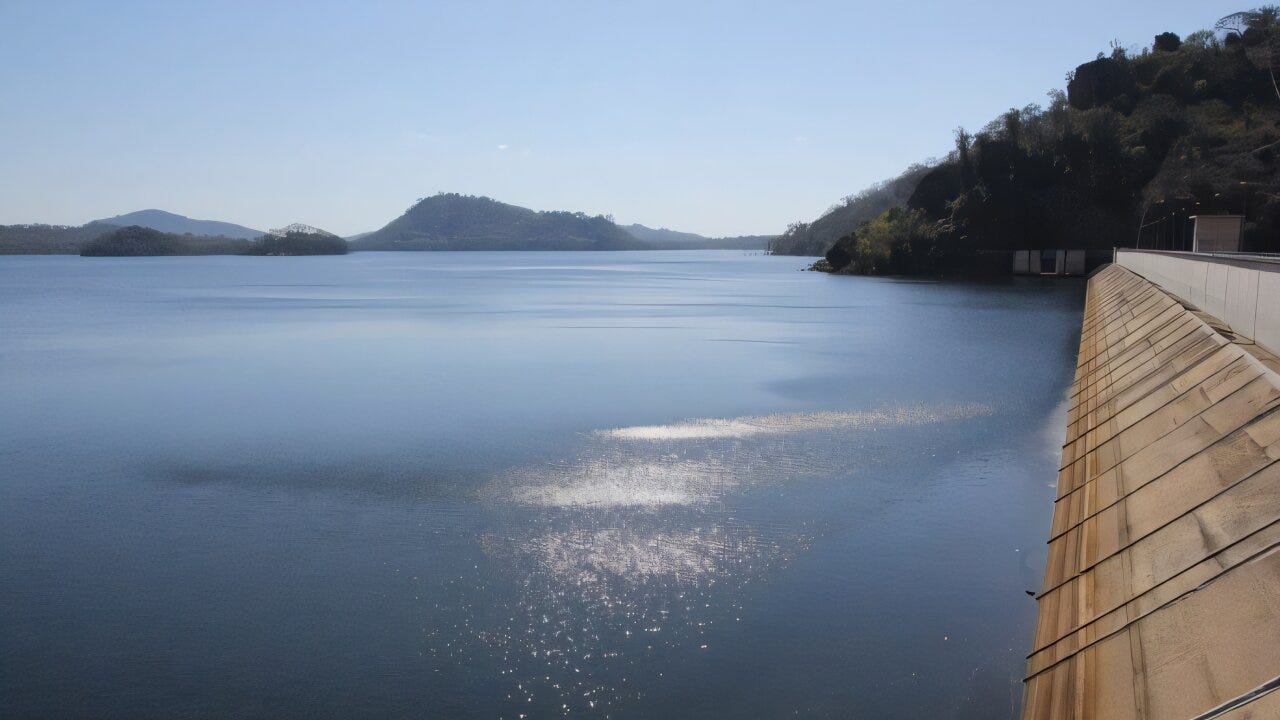
In February 2014, the Tokwe-Mukosi Dam, still under construction in southern Zimbabwe, flooded. More than 20,000 people were displaced. Families who had farmed the same land for generations were moved first to a transit camp on the government-controlled Nuanetsi Ranch, roughly 150 kilometers from the dam, then pushed onto allocated plots barely one hectare each. They had been promised five.
The difference between five hectares and one hectare is not just agricultural. It is the difference between a future and a holding pattern.
This is where archaeologists Per Ditlef Fredriksen (University of Oslo / University of Cape Town) and Foreman Bandama (Field Museum of Natural History / University of Illinois at Chicago) went to do fieldwork, in 2019 and then again in 2022–23, as part of a Norwegian Research Council project called ARCREATE. Their paper, published this year in Cambridge Archaeological Journal,1 reports what they found. It is framed as contemporary archaeology, which means the methods are the same ones archaeologists use on Iron Age ceramics or medieval construction sites. The subject is the present.
What they found was not simply a story of survival. It was something more structurally interesting: a displaced community had developed a coherent set of material strategies, ways of building, making, sourcing raw materials, and moving through a landscape, that simultaneously expressed defiance toward the authorities who uprooted them and maintained active connection to the dead.
The ranch where the third-wave flood victims now lived had already received two earlier waves of settlers. The first arrived in the early 2000s, Tsonga-speakers displaced under Mugabe’s land reform programme, mostly from 40–50 kilometers away. They had occupied vacant land and over time received plots of around eight hectares each. A second wave followed around 2010, predominantly Shona-speakers who relocated voluntarily before the dam finished filling. They received four-hectare plots. Then came the flood victims of 2014, also mostly Shona-speakers but with almost no political leverage, packed into one-hectare plots in a newly cleared section called Chingwizi, physically separate from where the first two waves had settled.
Sections A through D for the first two waves. Section E for the flood victims. Firstcomers and latecomers, with a sharp material gradient between them.
The authorities told the third wave not to build permanent structures. They were designated temporary residents. The infrastructure eventually planned around their tiny plots was the worst possible confirmation of that temporariness: not that they would be moved on, but that they might stay stuck in a barely functional holding space indefinitely. A community member put it plainly by 2022:
“Now they tell us we will get irrigation, so we are not going to be moved. We try to remain hopeful, but it is way overdue. We were much better off where we were.”
They had ignored the directive about permanent structures. They built in stone.


