
The burnt crust at the bottom of a cooking pot is not glamorous evidence. It is easy to overlook, difficult to analyze, and has spent most of archaeology’s history being scraped off and discarded. But a new study published in PLOS One1 by Lara González Carretero and colleagues at the University of York and the British Museum has spent considerable effort looking very closely at exactly these crusts, and what they found is harder to explain away than anyone expected.
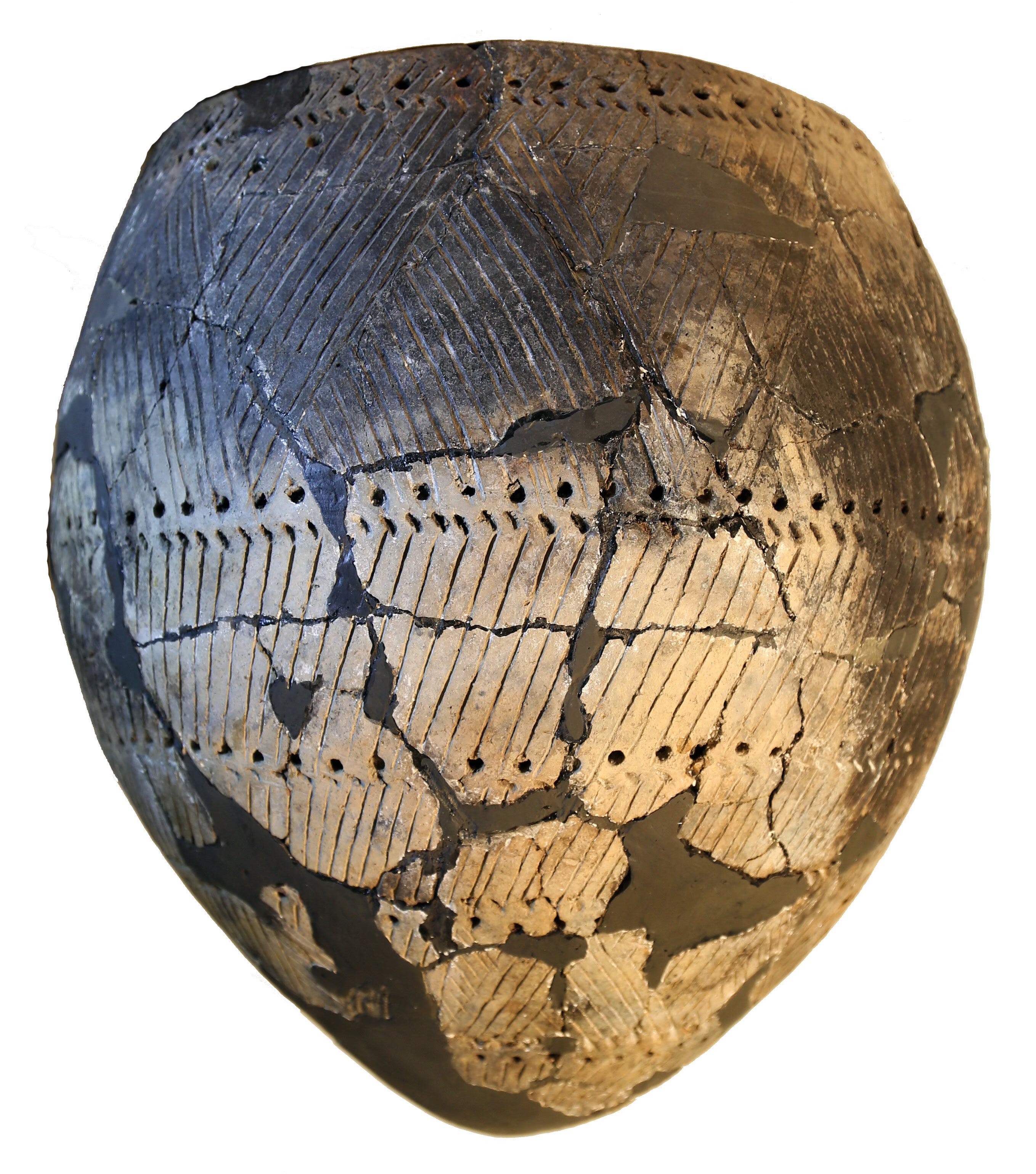
The short version: prehistoric hunter-gatherer-fishers living across Northern and Eastern Europe between roughly 5900 and 3000 BC were not just boiling fish. They were combining specific plants with specific animals into preparations that varied predictably by region. Guelder rose berries with freshwater fish at sites along the Upper Volga and Baltic coasts. Wild grasses and legumes with cyprinids in the Don River basin. Amaranthaceae leaves, stems, and inflorescences alongside fish at Serteya II and Zamostje 2. The patterning is too consistent to be coincidence. These were recipes, or at least something close to them.
That claim needs unpacking, because the way we usually study prehistoric diet makes plants almost invisible.
The fat problem
Lipid residue analysis has been the workhorse of pottery-based dietary reconstruction for decades. The technique works by extracting fatty acids absorbed into ceramic walls and identifying them chemically. It is effective, but it has a strong bias: animal fats absorb readily into pottery and persist well. Plant lipids, by contrast, either don’t survive, don’t absorb in the first place, or produce signals so diffuse they’re hard to attribute to anything specific. The result is that the standard chemical toolkit for studying what prehistoric people cooked has been generating a picture of their diet that is almost entirely made up of fish, mammals, and dairy.
This is not wrong, exactly. It just isn’t complete. And the new study makes that incompleteness very concrete.
González Carretero and colleagues took 85 pottery sherds with substantial preserved food crusts from 13 sites across a broad swath of Northern and Eastern Europe, from the circum-Baltic coast east through Lithuania and Poland into the Upper Volga and down through the Don basin into what is now southern Russia. They ran standard lipid residue analysis. They also looked at the crusts directly, under digital microscopes and scanning electron microscopes, hunting for plant tissue that had been carbonized but not destroyed: cell walls, seed coats, pericarp layers, the waxy epidermis of a berry, the distinctive vascular bundles of a root. In 58 of the 85 vessels, they found something identifiable.
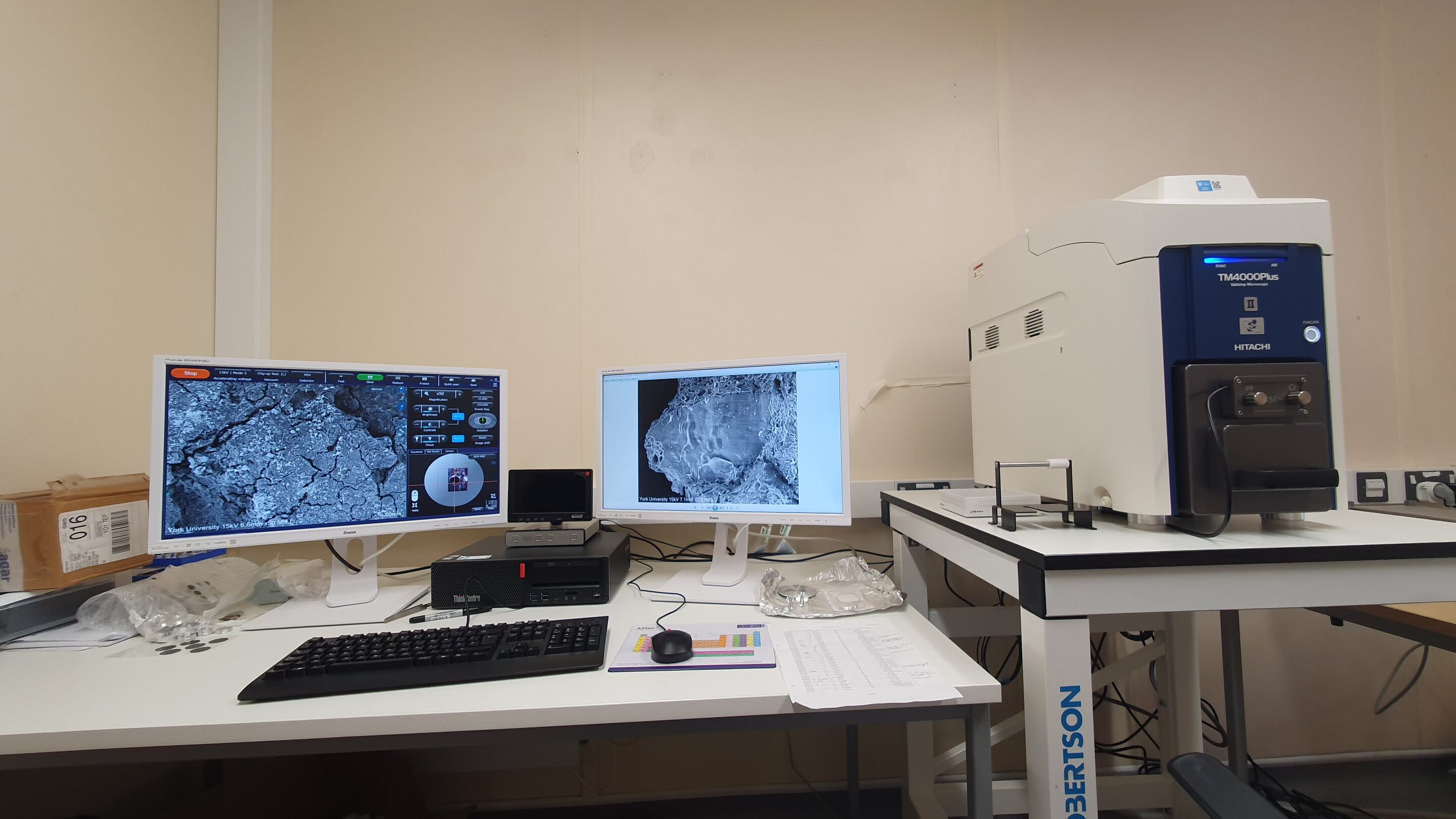
The lipids told one story. The microscopy told a different, richer one. Fatty acid isotope values clustered heavily around aquatic sources, as expected. But sitting in the same blackened crust, visible under the electron microscope, were Viburnum opulus berries, seeds from the Amaranthaceae family, fragments of wild grass husks, what appears to be sea beet root tissue, and what may be tubers from sea club-rush (Bolboschoenus maritimus). The two lines of evidence are not contradictory. They’re complementary. Animal fats dominated the lipid signal. But plants were there too, woven into the matrix, preserved as structure rather than chemistry.
The team points out that this has methodological implications beyond this particular study. If plant use is this consistent and this widespread, and yet lipid analysis alone misses most of it, then decades of dietary reconstruction based on pottery residues have been systematically underestimating how much plants mattered to these communities.
What was actually in the pot
The site-by-site results are worth slowing down to examine.
At the Lithuanian lake sites of Daktariškė 5 and Kretuonas 1B, as well as the Pomeranian coastal site of Dąbki in Poland, the pattern is consistent: freshwater fish dominate the lipid signal, and microscopy reveals fragments of Poaceae seeds alongside. At Dąbki specifically, Viburnum berries appear frequently in the crusts, co-occurring with high concentrations of freshwater fish biomarkers. What makes this interesting is that Viburnum berries are essentially absent from the broader archaeobotanical record at Dąbki. The site’s flotation samples show starch-rich roots and rhizomes, not berries. The team’s interpretation is that the berries weren’t just being eaten casually; they were being brought specifically to the pot, deliberately combined with fish, for a culinary purpose that required a vessel to accomplish.
Viburnum opulus, known as kalyna in Ukraine and Russia, is mildly toxic when raw. The berries taste bitter, smell strongly when heated, and need processing to become palatable. Cooking them with fish would have both reduced the bitterness and, presumably, created a flavor combination that people in this region had decided they wanted. The plant persists in Eastern European food traditions to this day. There’s a dish called Mos’, recorded among the Nivkh people of the Russian Far East, made from pulverized dried fish mixed with fish skin, various berries, and occasionally tubers. The parallel isn’t evidence of continuity across that geographic distance, but it suggests that the general idea of combining fatty fish with acidic, astringent fruit has deep roots in foraging cuisines that developed around cold northern rivers.
At Zamostje 2 and Serteya II in the Upper Volga and Dnieper-Dvina regions, a different pattern emerges. Here the crusts are full of Amaranthaceae: seeds, stems, calyces, leaf tissue. The team identified the likely species as small-seeded varieties such as Chenopodium glaucum/rubrum and Atriplex prostrata, not the larger-seeded fat hen (Chenopodium album) that typically dominates macrobotanical assemblages at these sites. The macrobotany and the pottery residues are again telling different stories, but in this case it’s not that plants were absent from the diet. It’s that the plants in the pot were different from the plants being processed or discarded elsewhere at the same site.
One detail from this region is particularly striking. The Amaranthaceae remains in the crusts included both green, underdeveloped calyces, which appear in May and June, and ripe calyces with embedded seeds, which ripen from July through August. That range of developmental stages in a single residue type implies that people at these sites were gathering and cooking these plants across several months of the spring and summer growing season, not just harvesting them at peak ripeness. That’s a level of sustained, intentional plant engagement that goes well beyond opportunistic foraging.
At Syltholm II in southern Denmark, the analysis produces the most complex picture. Pottery here contained root and rhizome tissue consistent with Amaranthaceae family plants, possibly sea beet (Beta vulgaris ssp. maritima), alongside what appear to be sea club-rush tubers identified by their distinctive solid parenchyma with randomly distributed vascular bundles. There were also Amaranthaceae inflorescences and seeds, freshwater fish, and traces of dairy products that lipid analysis suggests were obtained from neighboring farming communities. A pot that contained fish, foraged tubers, greens from a saltmarsh plant, and perhaps some milk or butter from a nearby Neolithic group is a lot more than forager subsistence. It’s a cuisine that drew on multiple food worlds.
The pottery and the practice
There’s a statistical dimension to this study that goes beyond identifying what was in any given pot. The team ran a Mantel test comparing the similarity of food remains across vessels against the geographic distance between sites and the technological similarity of the pottery itself. Geographic distance produced a weak but real correlation (r = 0.25). More interestingly, pottery technology produced a stronger one (r = 0.48), and that correlation remained significant even after controlling for location. Vessels that were made similarly tended to be used similarly. Vessels that were technically distinct tended to contain distinct food combinations.
That finding is cautious, and the team is careful about overinterpreting it. But it points toward something genuinely hard to explain as pure ecology. If culinary practice were solely a function of what happened to grow nearby, you’d expect geography to dominate the signal. The fact that pottery technology tracks food use as well or better than geography suggests that how pots were made and what they were used for were linked by something cultural, not just environmental. Knowledge about pot-making and knowledge about cooking may have traveled together, been taught together, been part of the same set of practices people transmitted across generations and, presumably, across communities.


This is not a claim that Mesolithic or Early Neolithic foragers in Eastern Europe had cuisine in any high-culture sense. But it does mean they had something more structured than opportunistic eating. They selected specific plants, ignored others that were equally available. They combined ingredients in ways that were consistent across time and across some geographic areas. They used pottery not merely to extract oil from fish for use as fuel or lubricant, a hypothesis the team is now comfortable rejecting for this assemblage, but to create food preparations that required a vessel: things that needed to be boiled, blended, softened, made edible through heat and mixing.
Whether the Viburnum and fish combination tasted good to anyone outside the communities that made it is unknowable. But that someone was making it consistently, across multiple sites, over what appears to be a considerable span of time, suggests that it tasted good enough to them to keep making it. That’s a kind of cultural continuity that archaeology usually can’t access. Here, frozen in burnt crust at the bottom of a Neolithic pot, it almost can.
Further Reading
Bondetti, M., Scott, S., Lucquin, A., Meadows, J., Lozovskaya, O., Dolbunova, E., et al. (2020). Fruits, fish and the introduction of pottery in the Eastern European plain: Lipid residue analysis of ceramic vessels from Zamostje 2. Quaternary International, 541, 104–114. https://doi.org/10.1016/j.quaint.2019.05.008
Courel, B., Robson, H.K., Lucquin, A., Dolbunova, E., Oras, E., Adamczak, K., et al. (2020). Organic residue analysis shows sub-regional patterns in the use of pottery by Northern European hunter-gatherers. Royal Society Open Science, 7(4): 192016. https://doi.org/10.1098/rsos.192016
Dolbunova, E., Lucquin, A., McLaughlin, T.R., Bondetti, M., Courel, B., Oras, E., et al. (2023). The transmission of pottery technology among prehistoric European hunter-gatherers. Nature Human Behaviour, 7(2), 171–183. https://doi.org/10.1038/s41562-022-01491-8
Lucquin, A., Robson, H.K., Oras, E., Lundy, J., Moretti, G., González Carretero, L., et al. (2023). The impact of farming on prehistoric culinary practices throughout Northern Europe. Proceedings of the National Academy of Sciences, 120(43): e2310138120. https://doi.org/10.1073/pnas.2310138120
Kubiak-Martens, L. (1999). The plant food component of the diet at the late Mesolithic (Ertebølle) settlement at Tybrind Vig, Denmark. Vegetation History and Archaeobotany, 8(1–2), 117–127. https://doi.org/10.1007/bf02042850
González Carretero, L., Lucquin, A., Robson, H.K., McLaughlin, T.R., Dolbunova, E., Lundy, J., et al. (2026). Selective culinary uses of plant foods by Northern and Eastern European hunter-gatherer-fishers. PLOS One, 21(3): e0342740. https://doi.org/10.1371/journal.pone.0342740


