

The painted shelters of southern Africa are crowded with animals, hunters, and hybrid beings. But look closely and another cast takes the stage. Lines of bent figures. Clapping hands. Bodies tipped forward as if caught mid-step. In these scenes, the walls do not merely show people. They seem to pulse.
A recent open-access study1 by Margarita Díaz-Andreu and Joshua Kumbani brings dance to the foreground of San rock art research. Drawing on hundreds of panels across KwaZulu-Natal, the Free State, the Eastern Cape, and the Western Cape, the authors argue that these images are not decorative flourishes or vague ritual symbols. They are structured depictions of specific social practices: trance healing, girls’ initiation, male initiation, and, more rarely, dances that may have been playful or circumstantial.
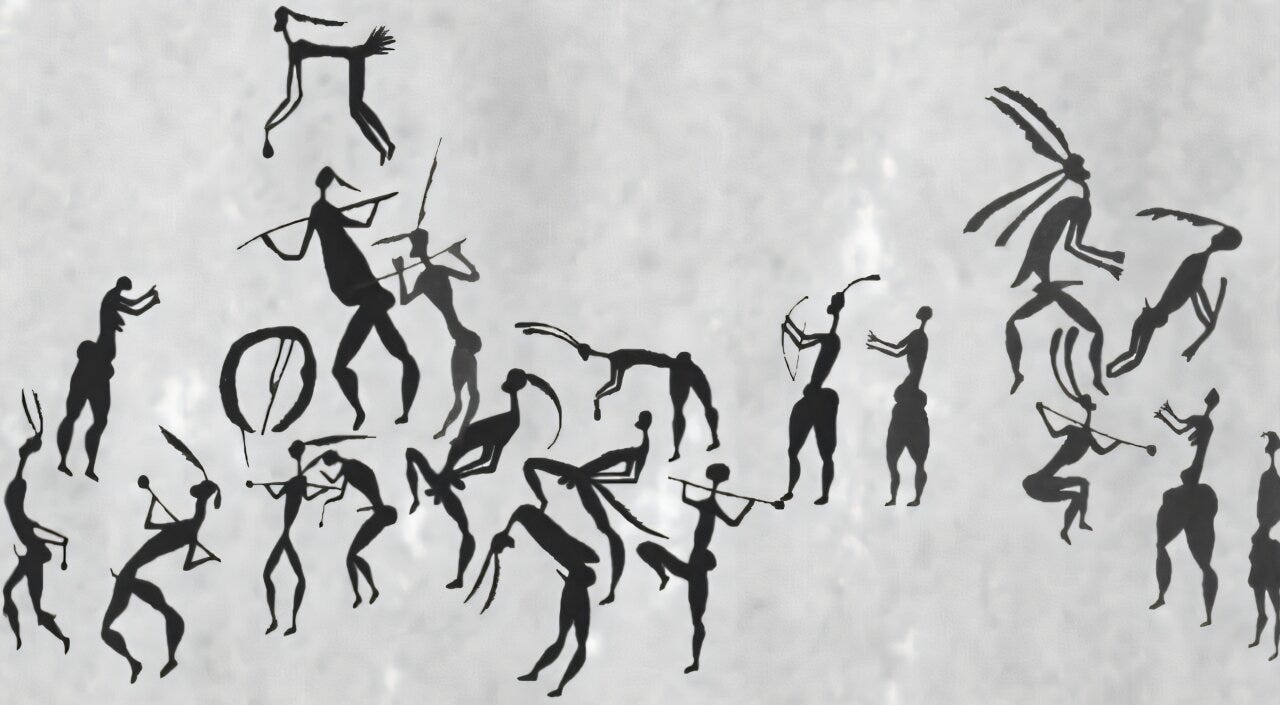
What emerges is a portrait of San life where movement, sound, and altered states were not marginal. They were central to how communities healed, marked life transitions, and held themselves together.


