

Stonehenge has always invited large explanations. Ice sheets grinding south. Rivers carrying boulders like driftwood. Or human communities coordinating feats of transport that strain modern intuition. For more than a century, scholars have toggled between those options, often splitting along disciplinary lines. Geologists pointed to glaciers. Archaeologists pointed to people.
A recent study published in Communications Earth & Environment1 nudges that long argument toward a reckoning. By tracking the chemical fingerprints of minerals no wider than a grain of sand, the authors arrive at a stark conclusion: the glaciers that once shaped much of Britain never reached Salisbury Plain. If ice did not arrive, then neither did Stonehenge’s stones. Humans, almost certainly Homo sapiens, are left holding the rope.
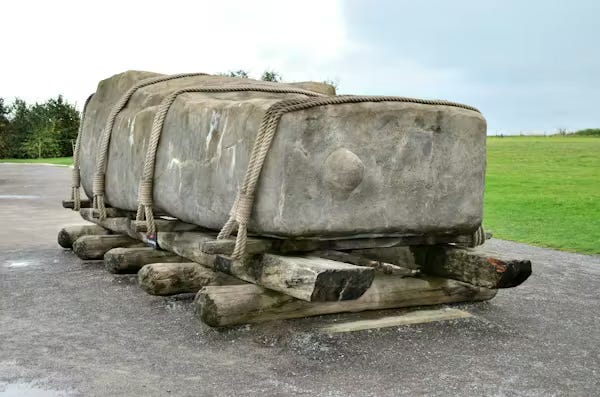
This is not a romantic claim about heroic builders hauling megaliths across the countryside. It is a careful, skeptical argument built from zircon and apatite crystals pulled from modern river sediments. The absence of evidence, in this case, is the evidence.


