
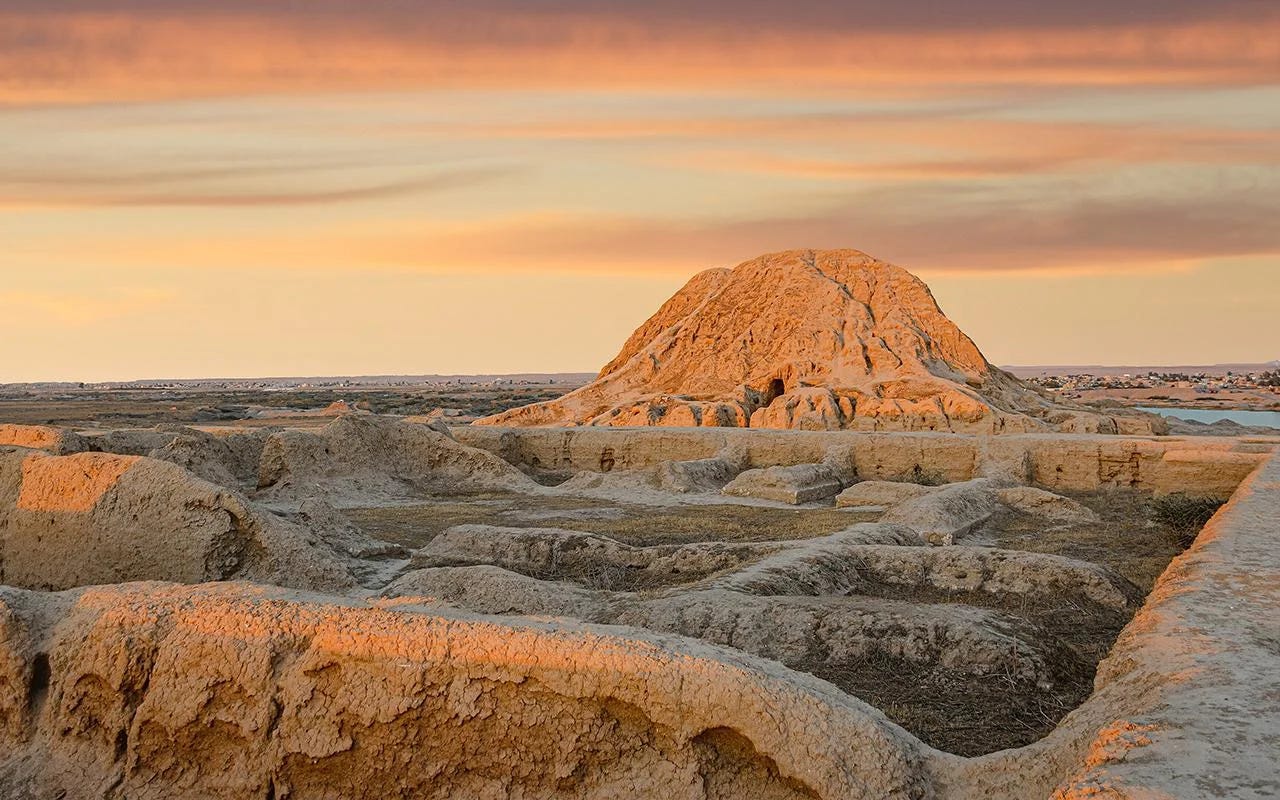
On the west bank of the Tigris, the ruins of Assur rise from the Iraqi plain with the confidence of a city that once ruled an empire. Kings carved their names into stone. Gods received temples, offerings, hymns. Yet for all that grandeur, Assur’s earliest chapter remained oddly elusive. Archaeologists knew the city mattered early, but exactly when and how it became sacred ground was uncertain.
That uncertainty has now narrowed to a single, deliberate act.1 Beneath the foundations of Assur’s Ishtar Temple lies a meter-thick layer of sand, carefully placed nearly five thousand years ago. It is not construction debris. It is not a flood deposit. It is a ritual statement, and it anchors the city’s origin in both time and belief.


