
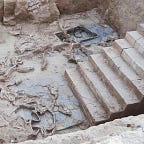
On a bend of the Guadiana River, in what is now western Spain, an Iron Age building was deliberately erased from the landscape. Not abandoned. Not repurposed. It was closed with fire, ceremony, and blood.
About 2,500 years ago, people gathered at Casas del Turuñuelo, a monumental adobe structure linked to the Tartessian world of southwestern Iberia. They feasted. They led animals into a courtyard. One by one, dozens were killed. Horses dominated the scene. When it was over, the building was burned and entombed beneath earth, sealing its final act in remarkable detail.
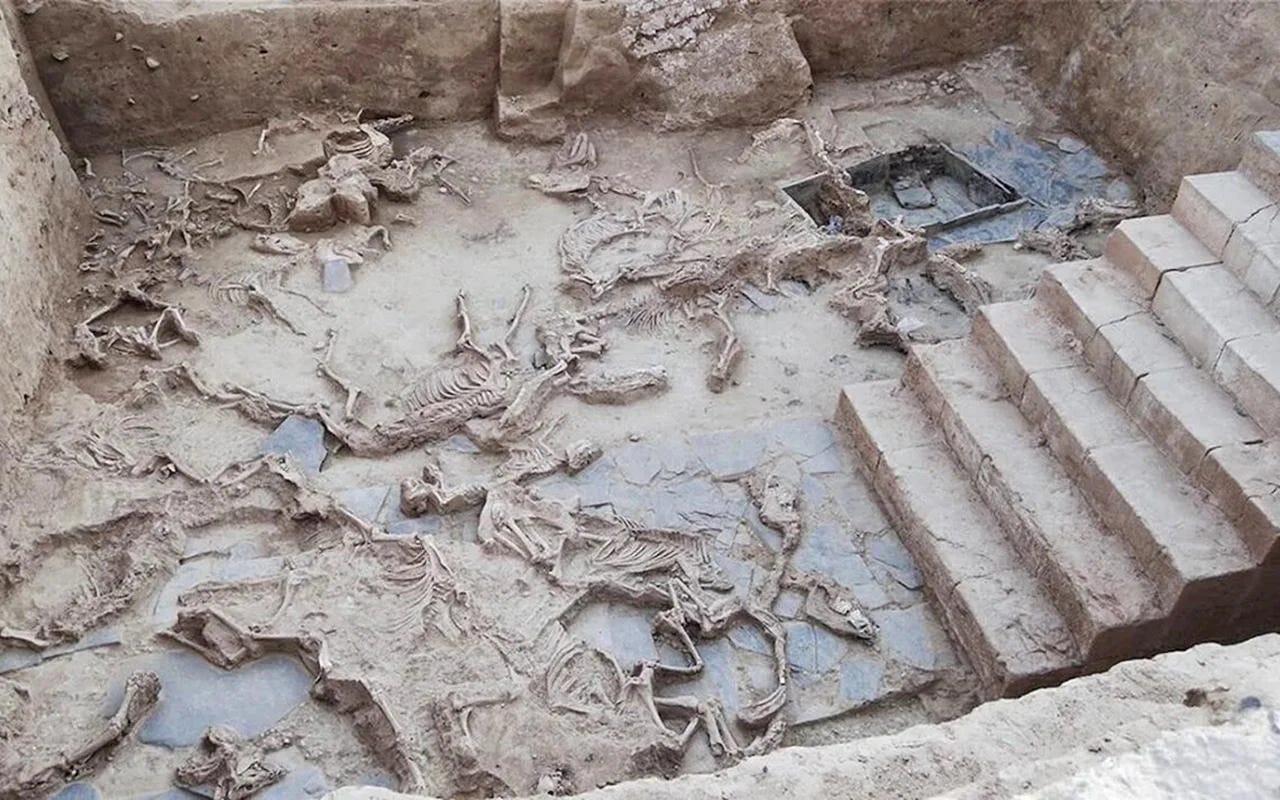
For years, the spectacle itself drew attention. More than fifty animals sacrificed, many of them prime-age equids, arranged with care. What remained unclear was where these animals came from, how they had been raised, and what their presence might say about the people who orchestrated the event.
Now, a close reading1 of chemical signatures locked inside animal teeth offers a sharper picture. These animals were not simply drawn from a nearby herd. They were assembled.


