
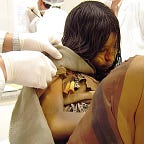
In 1999, a team led by Johan Reinhard and Constanza Ceruti reached the summit platform of Llullaillaco, a 6,739-meter volcano on the Argentina-Chile border, and found three children who had been dead for centuries but did not look it. The cold and the dryness had done what Andean conditions sometimes do: preserved skin, hair, organs, the contents of stomachs, the weave of textiles. Among the three was a teenage girl, roughly fourteen years old, who became known as the Llullaillaco Maiden. She had been interred with an extraordinary assemblage of offerings: ceramic vessels, a feathered headdress, small female statues, bags of food, and a scatter of plant remains that nobody thought much about for the first couple of decades after the discovery.
Those plant remains just became the most informative objects in the burial.
A new study1 by Dominika Sieczkowska-Jacyna and colleagues took three short-lived botanical samples from the Maiden’s grave goods, coca leaves, manioc seeds, and maize, and ran them through radiocarbon dating alongside a battery of isotope measurements. The goal was straightforward: get a tighter date on when the capacocha ritual at Llullaillaco actually happened. The previous estimate, based on radiocarbon dating of the children’s hair back in 2007, had placed the event somewhere between 1430 and 1520 CE. That’s an 90-year window, which in practical terms means it covers almost the entire span of documented Inca presence in the region. You can’t build an argument about why something happened politically if your date for when spans three or four successive rulers.
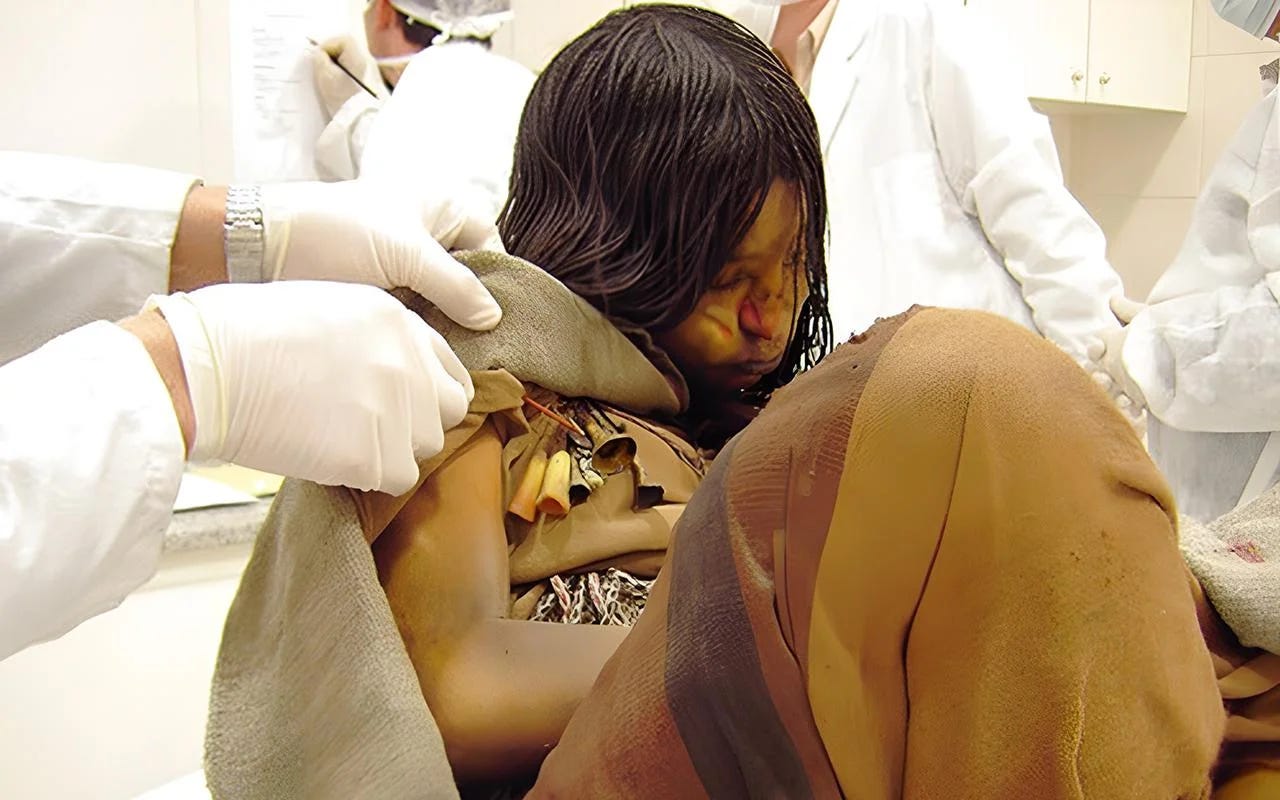
The new analysis narrows that window to 1462–1507 CE, with a statistical center of gravity around 1499. And the way the researchers got there is, frankly, a more interesting story than the date itself.


.jpg)