

There is a cave in Ladakh called Abi Srinjamo Bao, the Old Lady Spider Cave, sitting in pastureland above the village of Yogma Kharbu at an altitude where the air itself starts to feel thin and unfamiliar. Inside, past a narrow tunnel, bones are scattered across the floor of a second chamber in two dense clusters, some of them still carrying scraps of mummified skin, ligament, and muscle. People have been walking into this cave for centuries, which means the skeletal material inside it has been disturbed, shuffled, picked through. But the bones themselves turned out to hold something none of that disturbance could erase: a genetic signature that doesn’t match anything common in South Asia today.
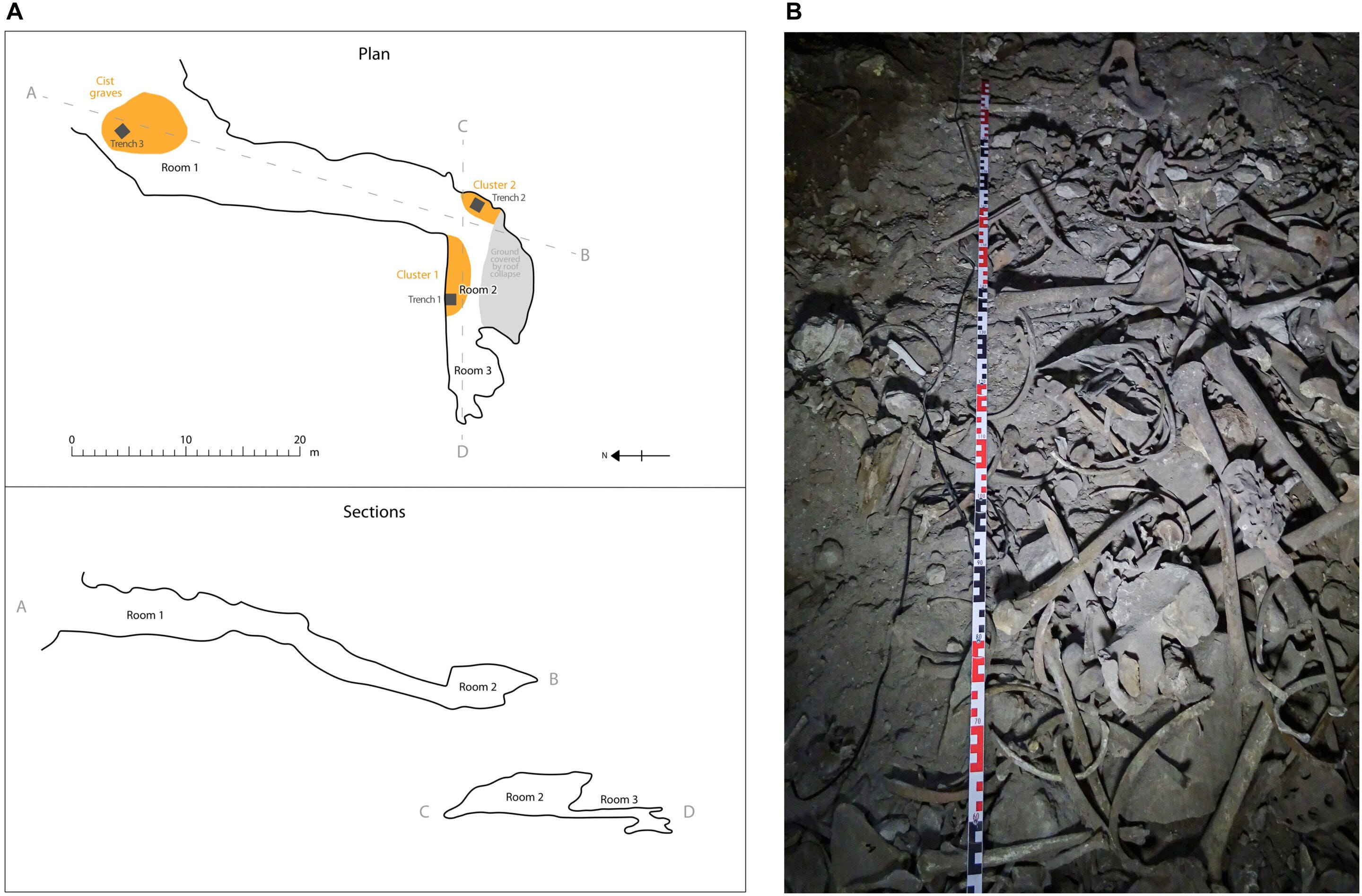
A team led by researchers from Harvard and the Deccan College Post-Graduate and Research Institute extracted DNA from ten individuals recovered during a 2021 excavation, radiocarbon dated to roughly 1,500 years ago. What they found1 was startling in its simplicity. Each of these people carried ancestry that split almost exactly down the middle: about half tracing to a population resembling present-day North Indians, the other half to a population closely related to ancient Tibetans. That kind of near-even split is rare among South Asians living today. A handful of modern Himalayan groups, the Minero and Balti of Ladakh among them, come close. Almost nobody else does.


