

At Sha’ar Hagolan, a Late Neolithic village on the floor of the Jordan Valley south of the Sea of Galilee, excavators once dug a well straight down through the evidence of a landscape recently upended by fire and erosion. The upper layers were reworked soil and gravel, washed down from the surrounding hills before anyone arrived to dig through them. Below that lay the laminated mud of a lake that had already retreated by the time the well was sunk, sometime around 8,400 to 8,200 years ago. The site’s pottery, some of it painted and incised in geometric bands, ranks among the most technically accomplished ceramic work of its era found anywhere in the southern Levant, and it belongs to the broader Yarmukian culture, named for the nearby Yarmuk River.
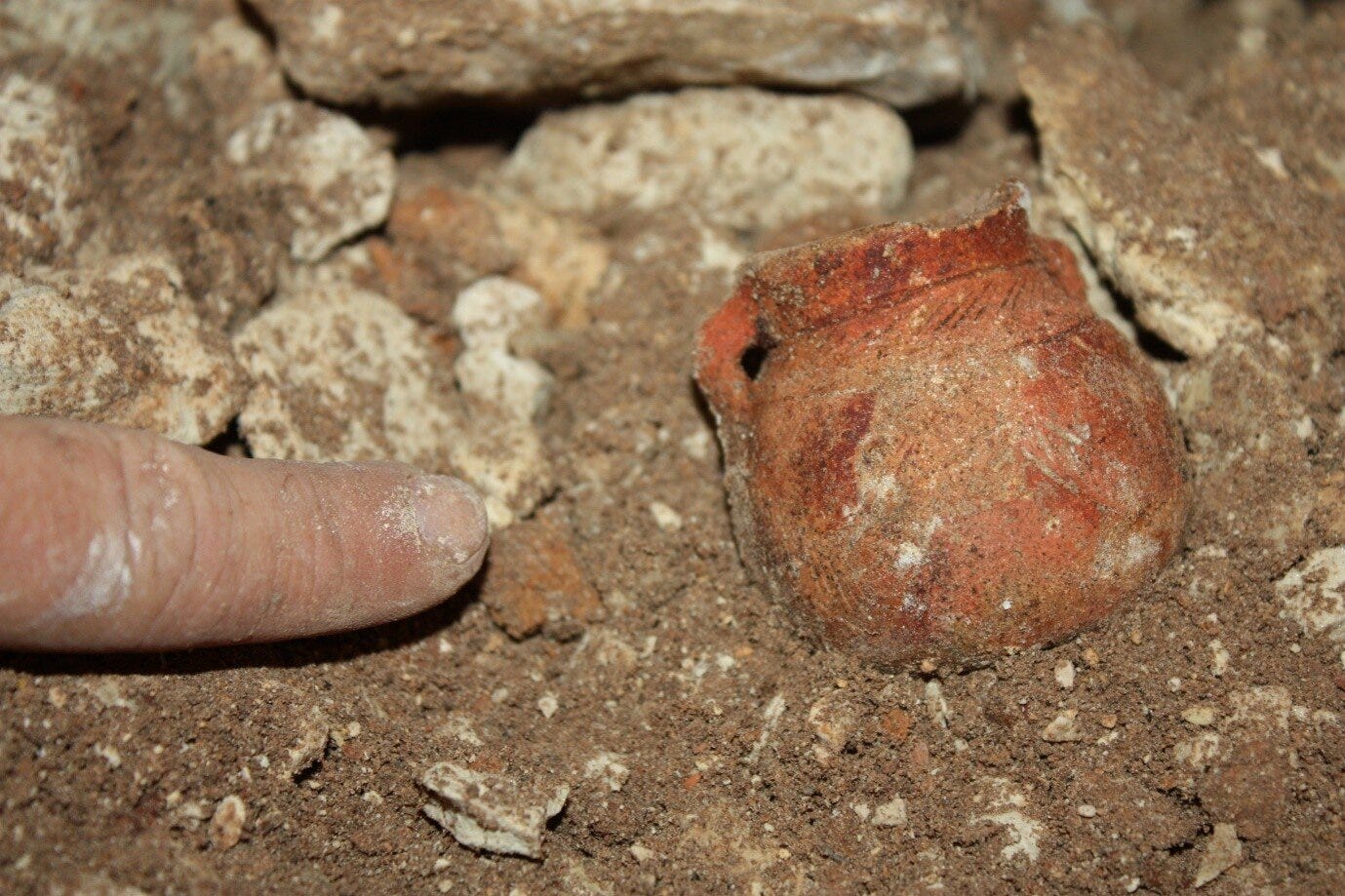
None of that clay traveled far to get there. A 1992 petrographic study of pottery from Munhata, another Yarmukian-culture site in the Jordan Valley, traced its raw material to terra rossa, the reddish soil eroding off the slopes above the valley floor. The archaeologist Yuval Goren found no evidence that anyone had sought out a special deposit; potters were using what had simply washed down to them. The usual explanation for why people started firing that soil at all leans on gradually accumulated motives: the appeal of prestige vessels and feasting displays, the pressure of larger populations needing to store and cook more food, generations of incidental experience lining baskets and hearth-pits with clay before anyone thought to bake it on purpose. A new study by Amos Frumkin, a geomorphologist at the Institute of Earth Sciences at the Hebrew University of Jerusalem, published in the journal Geomorphology,1 argues that something more specific and more sudden may also have been at work: that the same disaster which buried the valley in clay might also have shown its future residents, by accident, exactly what fire does to it.
Frumkin calls this the natural kiln hypothesis, and it is bluntly literal. Deep in the ashes of an intense wildfire, exposed clay can reach the five hundred to seven hundred degrees Celsius needed to harden it permanently, the same transformation a kiln performs on purpose. If wildfires swept the hills above the valley with enough frequency during the right window of time, and the clay that resulted ended up conspicuously baked in places where people were already living, then whoever eventually built the first deliberate kiln may not have invented the underlying principle so much as recognized it.
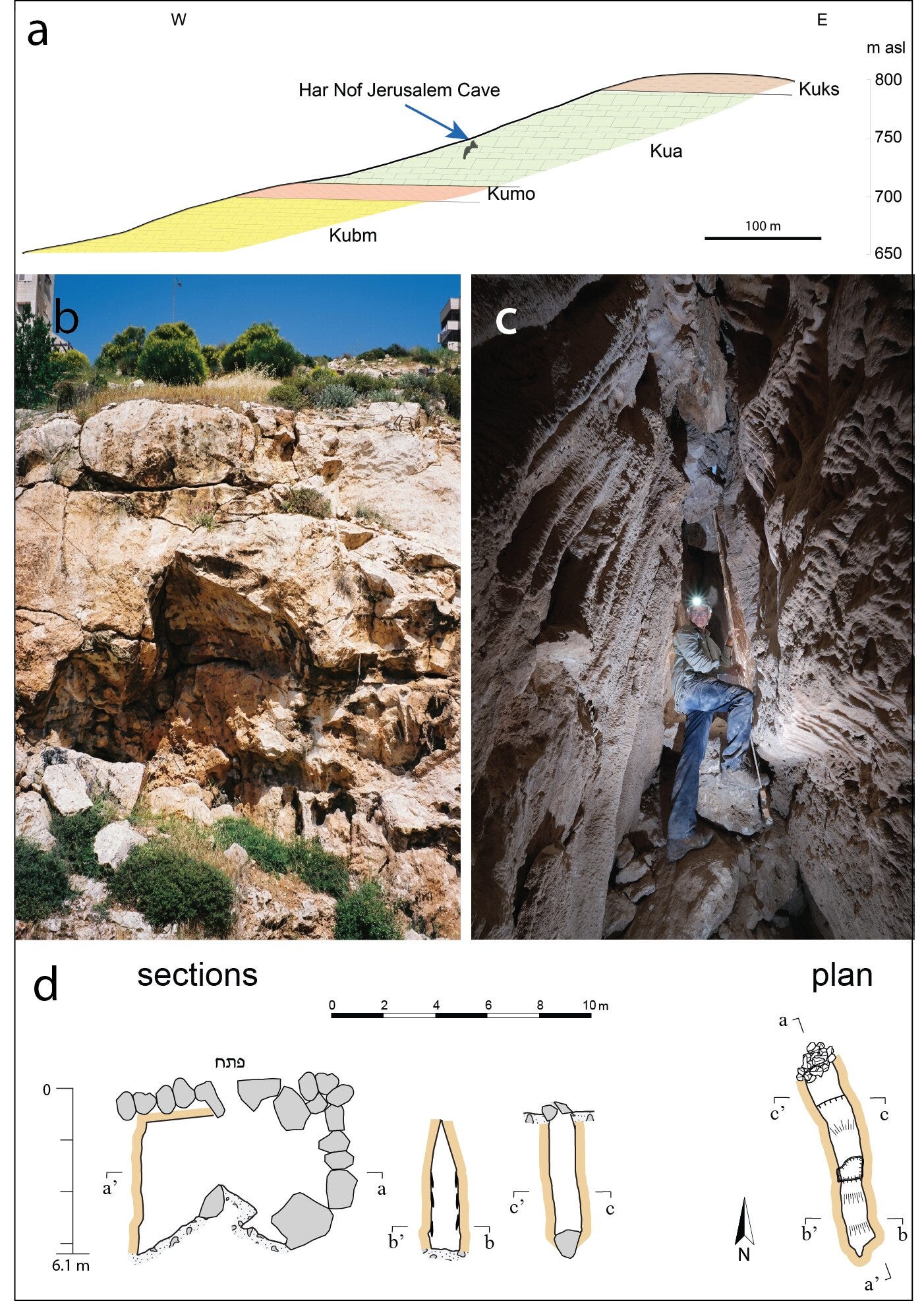
The case for those wildfires rests on unglamorous material: cores of lake mud, and cave formations. In a long core drilled through the bed of the Dead Sea, and in another through Lake Hula, researchers count microscopic charcoal fragments layer by layer, a direct record of how much burned nearby and when. In the Soreq and Har Nof caves near Jerusalem, the carbon and strontium locked into slow-growing speleothems record, less directly but at finer chronological resolution, when the hillsides above them lost their plant cover and their topsoil. Frumkin lines these records up across two intervals separated by more than a hundred thousand years, and in both, the charcoal spikes, the vegetation isotopes swing sharply, and the soil erodes away.
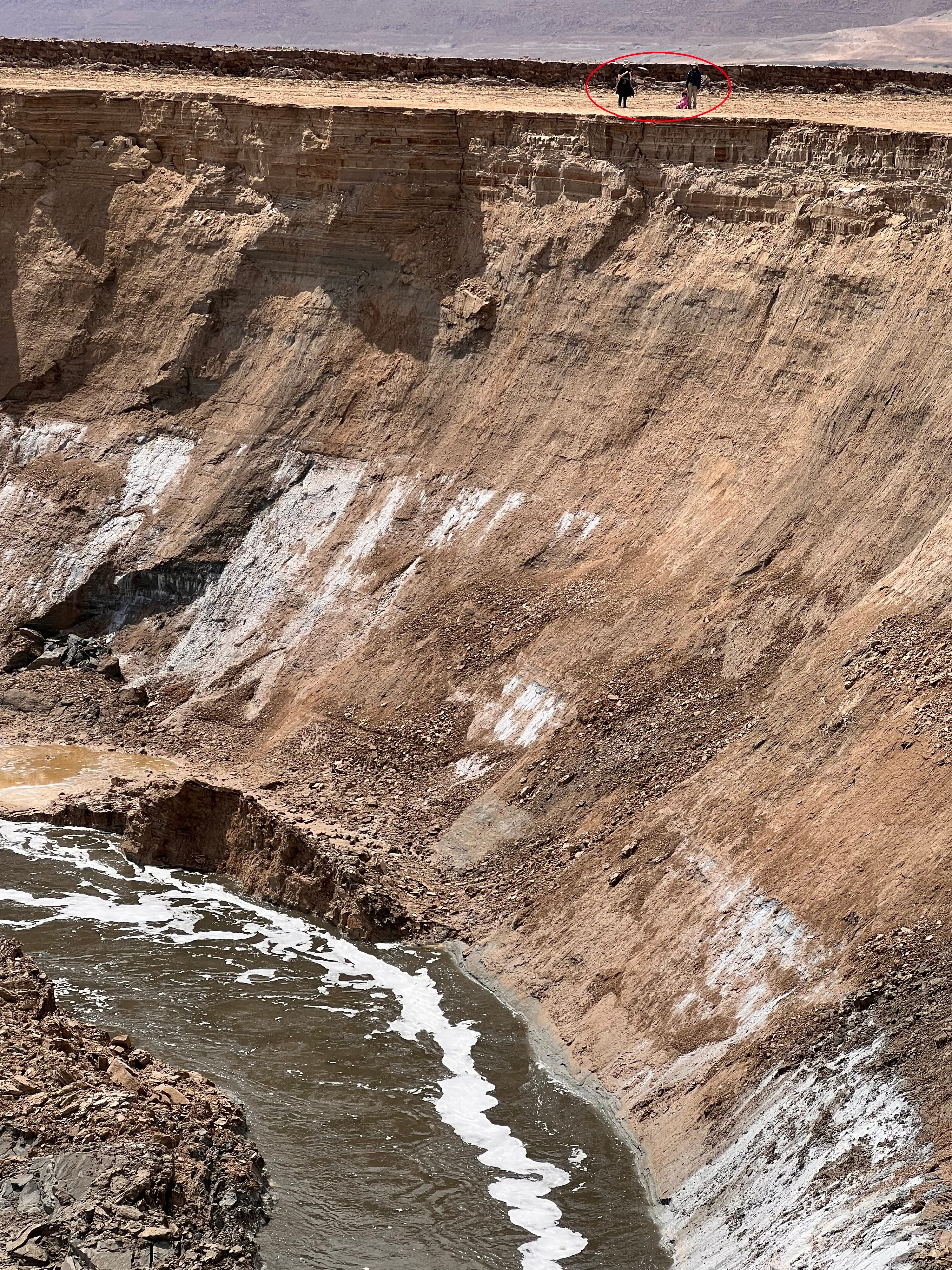
What the fires and erosion left behind in the valleys was clay, in enormous quantity. Thick layers of it, called the Fazael Formation in the Jordan Valley and the Ze’elim Formation around the Dead Sea, pile up in places to tens of meters, recycled wholesale from the stripped hillsides above. Upslope, the effect was closer to eviction: a large Pre-Pottery Neolithic settlement at Motza, in the Judean highlands, appears to have been abandoned right around the peak of the fires, its local soils exhausted. Downslope, the opposite happened. Sha’ar Hagolan, Jericho, Netiv Hagdud, and Gilgal, among the best-known Neolithic villages in the region, all sit on freshly redeposited soil, in exactly the spots where a catastrophe on the hills became a resource in the valley.
The relevant interval here is what geologists call the early Holocene, roughly 11,700 to 7,000 years ago. Its most intense pulse of fire shows up in the Hula core at approximately 9,500 years ago, when charcoal counts roughly tripled over what came before. A charcoal spike dated independently to about 9,600 years ago turns up in a lake core from the Ghab Valley in northwest Syria, hundreds of kilometers to the north, which is the detail Frumkin leans on to argue that the fires were regional and climatic, not a side effect of Neolithic farmers burning off vegetation nearby. The timing at least holds together: a landscape saturated with fire-baked clay well before pottery-makers show up in the archaeological record at Sha’ar Hagolan, rather than after.


