

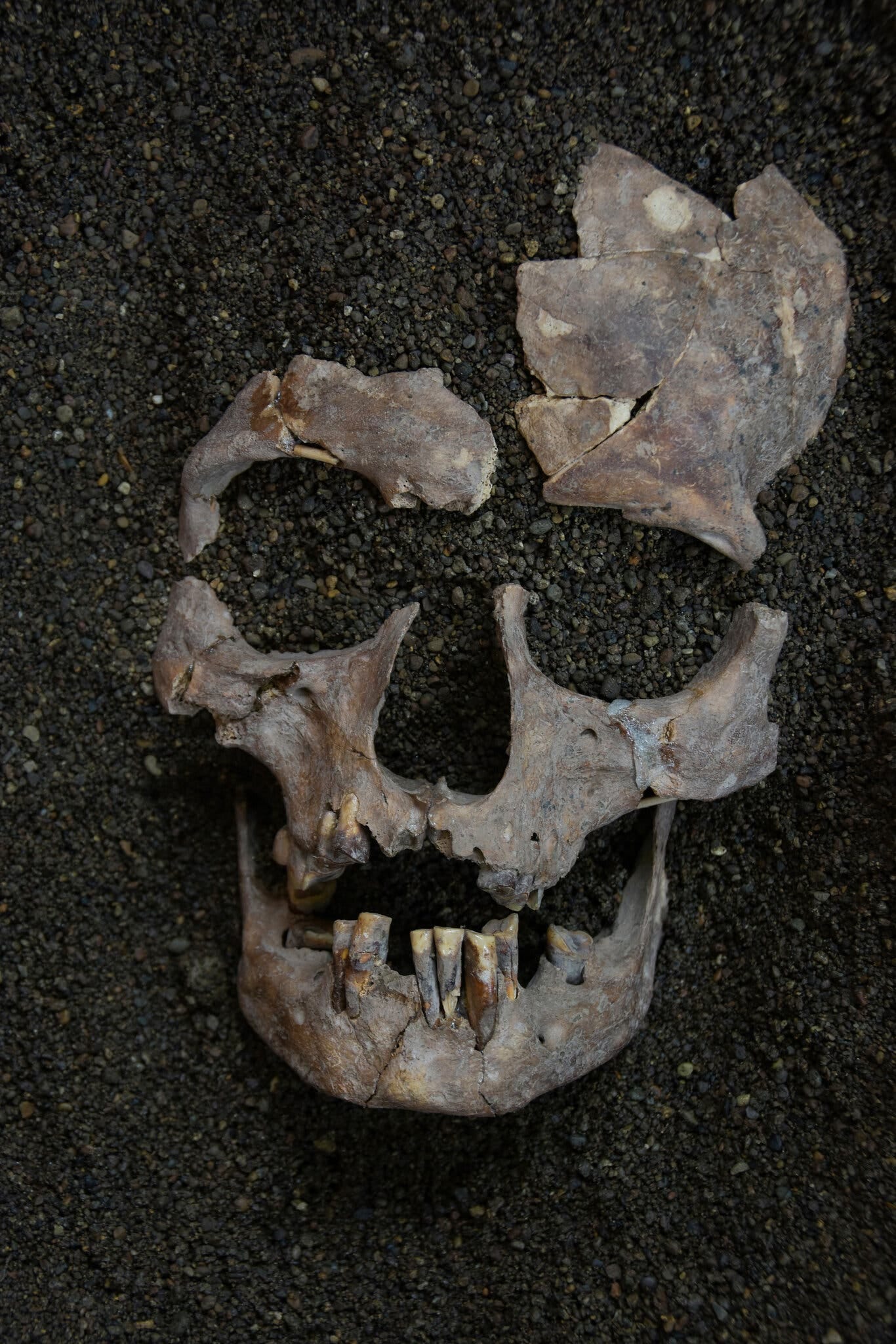
In a limestone cave in the karst lowlands of South Sulawesi, a forager died sometime between 25,000 and 16,000 years ago, leaving behind only a fragment of upper jaw and three molars. What survived of those teeth is strange enough that when Adam Brumm, an archaeologist at Griffith University’s Australian Research Centre for Human Evolution, first examined1 them, he could not immediately account for what he was looking at. Each molar carried a smooth, rounded groove running around it, as if something had been clenched in the mouth and worked against the tooth, year after year, until the enamel gave way.
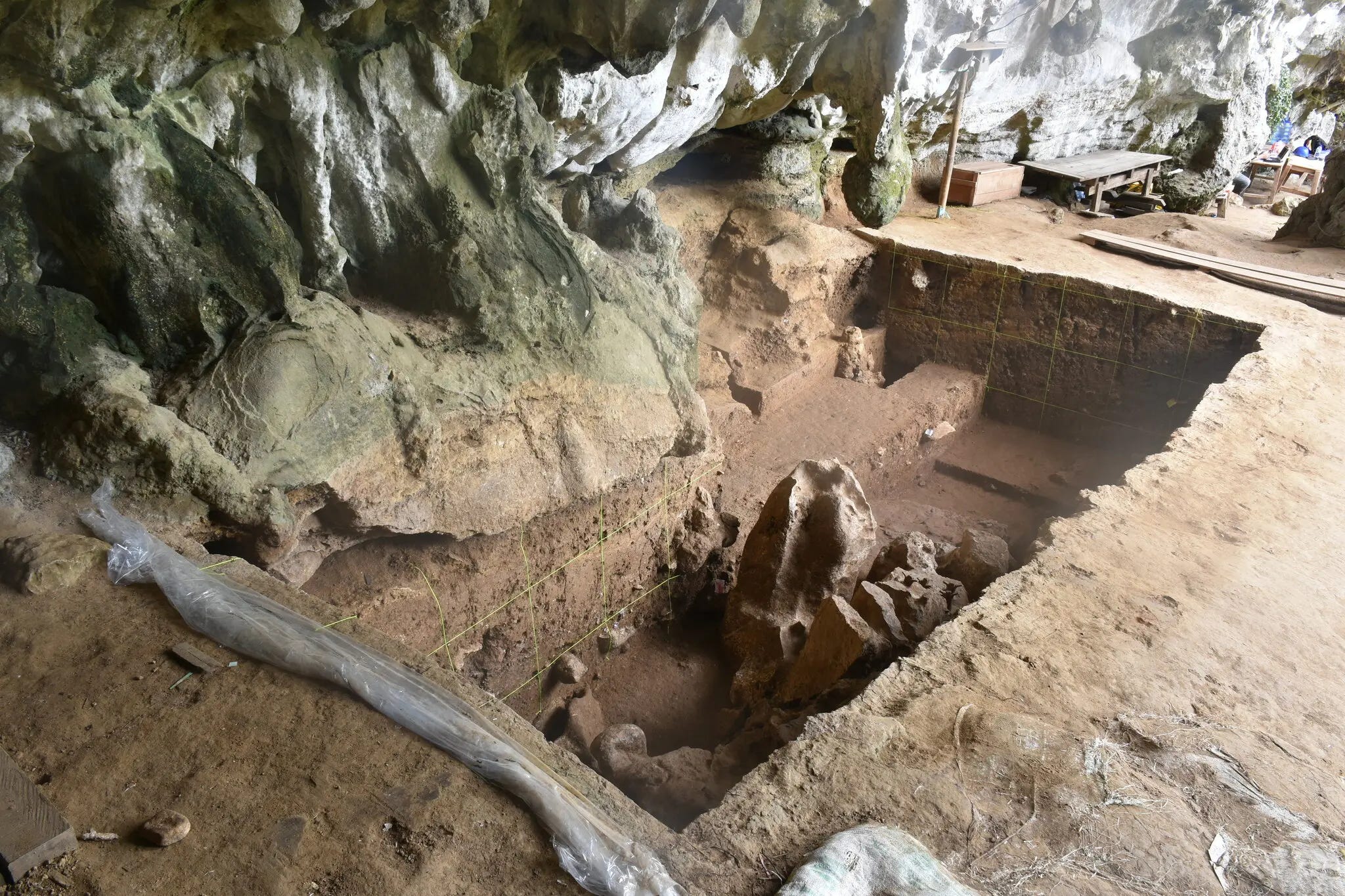
The site is Leang Bulu Bettue, a cave complex in the Maros-Pangkep karst. The jaw fragment is catalogued as Maros-LBB-1a, and it is, at present, the only human skeletal element ever recovered from the Pleistocene of Sulawesi, an island of some 174,000 square kilometers. There was almost nothing to compare it to.
Until now, the working assumption in archaeology has been that people started using mind-altering plants in earnest only after they settled down to farm, somewhere around 12,500 years ago, when barley beer, coca, and psilocybin mushrooms begin turning up in the record. Betel nut, the seed chewed by roughly one in ten people alive today for its buzz, was thought to be younger still: the earliest solid chemical evidence for its use came from a Bronze Age site in Thailand, about 3,500 years old. The wear on the Sulawesi jaw undoes both timelines. Whatever this forager was doing with their mouth, they were doing it before agriculture reached the region at all.
Almost nothing is actually known about how people first found psychoactive plants, or why. Betel nut’s active compound, a muscarinic agonist called arecoline, is generally assumed to need slaked lime, a caustic paste of pulverized shells or limestone, to become bioavailable enough to feel anything from it. Modern users still prepare their quid this way: a sliced areca seed, a smear of lime, wrapped in a leaf of the betel vine, Piper betle. Without the lime, conventional wisdom held, there wasn’t much of a drug there at all.


