

Three of the nine young llamas lying under the floor of Structure 4 at Tambo Viejo had coca leaves caught in their wool. Each animal wore tassels and had red dots and lines painted on its face, and the legs had been folded under the body and tied with rope so that the llamas looked to be resting. Radiocarbon dating places the burial between A.D. 1450 and 1500, which means the leaves stayed in that wool for more than five centuries, in a site on Peru’s south coast where the climate is dry enough to keep fragile plant tissue intact.
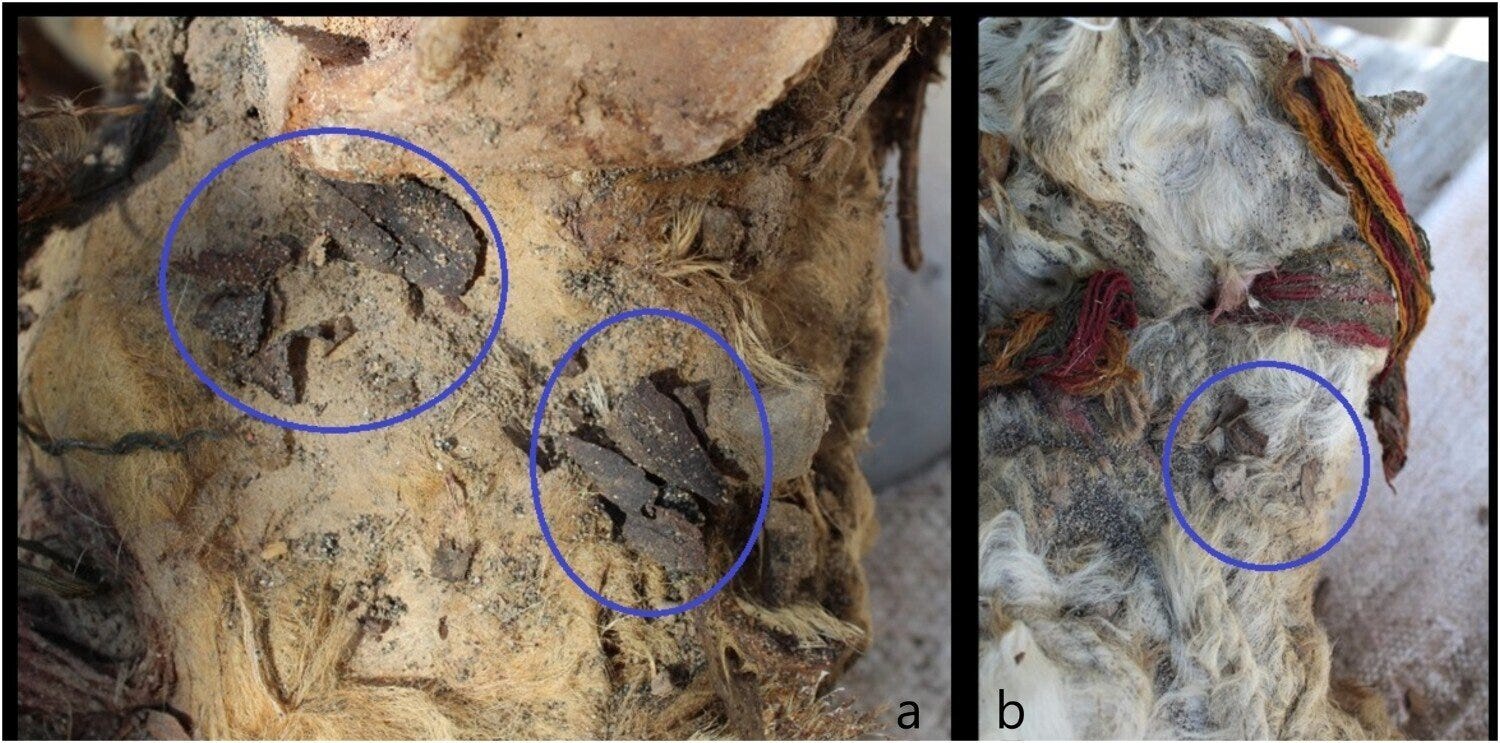
The usual picture of an Inka coca ritual comes from Spanish chroniclers, who described leaves being burned or bundled as offerings to spirits and deities. Most readers who know anything about the Inka carry that picture without noticing its source. The Inka left no writing, so every account of what they did with coca in a ceremony was set down by someone else, in Spanish, after the fact, and the leaves in the llama wool are the first direct evidence of coca in ritual at Tambo Viejo. Lidio Valdez of the University of Calgary and his co-authors Katrina Bettcher (Trent University) and M. Soledad Gutiérrez report the find in Ñawpa Pacha,1 where it appeared online on September 7, 2026. Their abstract is blunt about the mismatch: the written sources say the coca was burned, and the archaeological evidence consists of the actual leaves.


