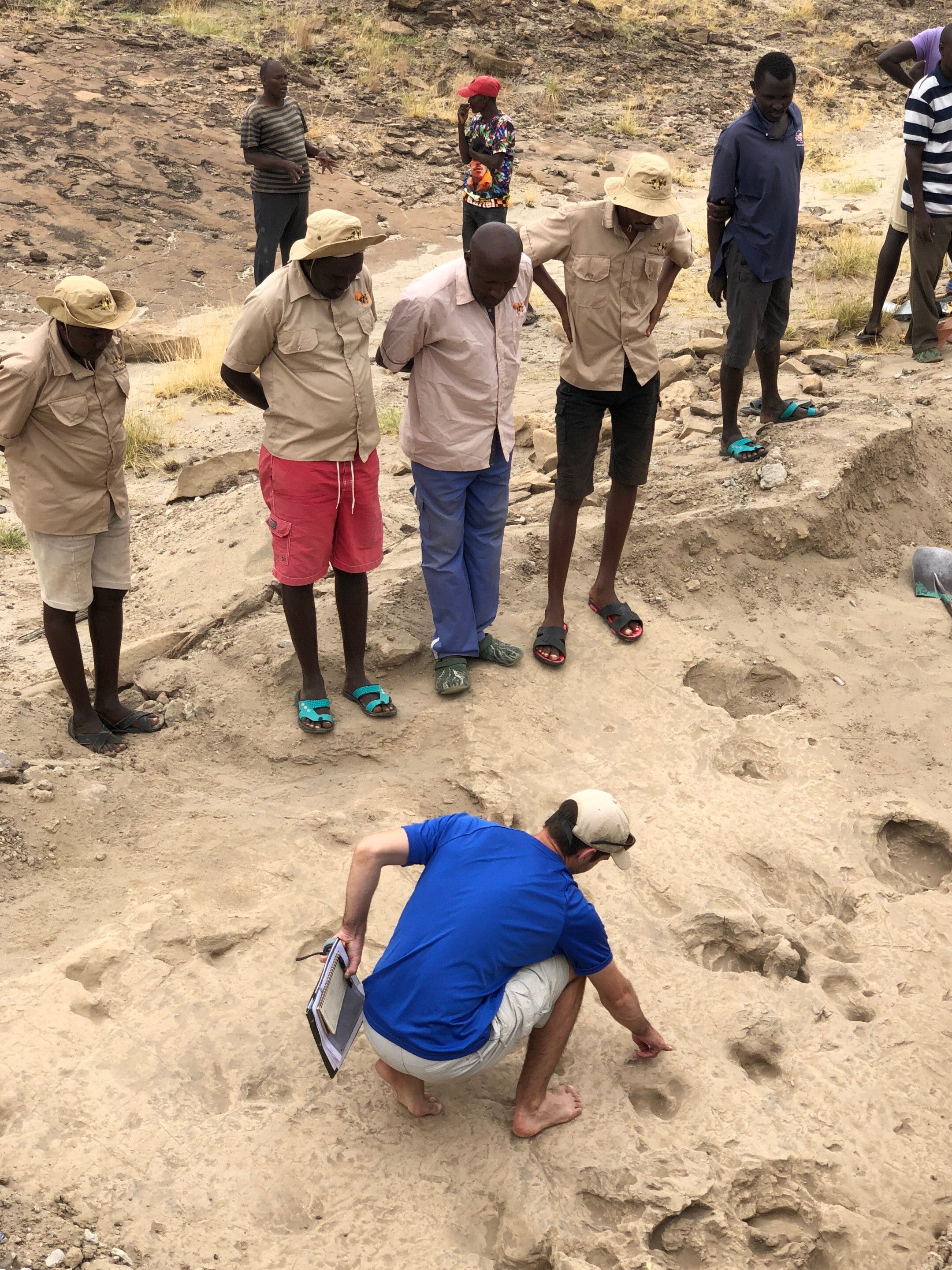
In 1978, Kay Behrensmeyer was watching Kenyan colleagues cut a trench through sediment layers near Lake Turkana when something round and deep caught her eye. It turned out to be a hippo footprint. When the crew cleared the surface around it, two more prints appeared, this time from something walking on two legs.
Behrensmeyer had no way of knowing it then, but she’d found the edge of something much bigger. The site got buried in sand for protection, the way these things often go, and it would be decades before anyone came back to see how far it extended. When they finally did, in 2016 and again in 2023, the answer1 turned out to be: much further than anyone guessed. The layer held 21 footprints from eight different individuals, laid down alongside tracks from hippos, antelope, and other animals moving across the same stretch of mud roughly 1.43 million years ago.
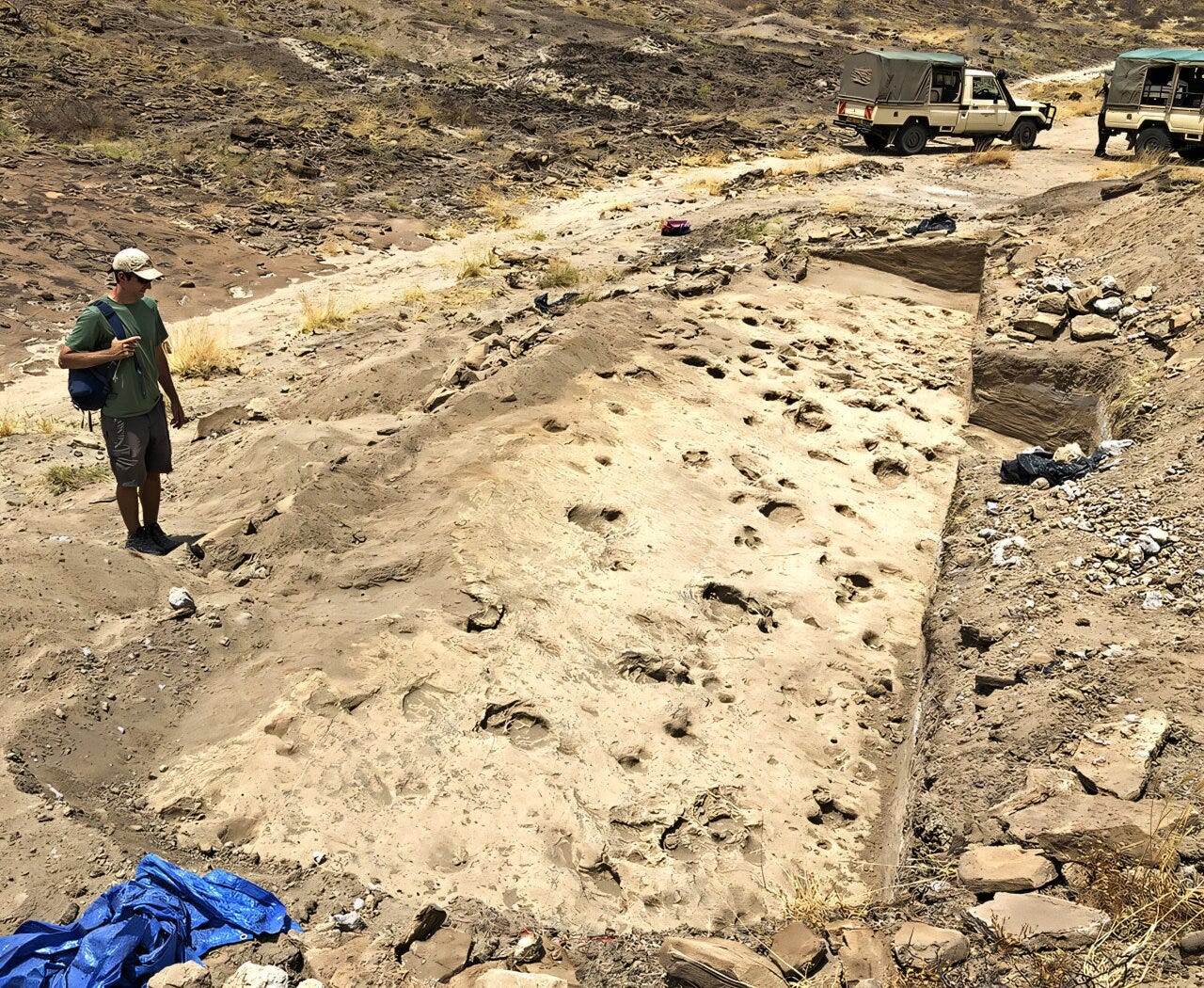
The site is called GaJi10, and the group that made those prints has turned out to be something other than what the researchers expected.