
High in the Pollino massif of southern Italy, a cave opens into darkness. For millennia, Grotta della Monaca has absorbed the traces of human lives: smoke, minerals, bones, rituals repeated and forgotten. Now, fragments of DNA extracted from those bones have given the cave a voice. What it says is not simple, and it is not comforting. It tells a story of intimacy, isolation, mobility, and social choices that sit uneasily with modern expectations about prehistoric life.
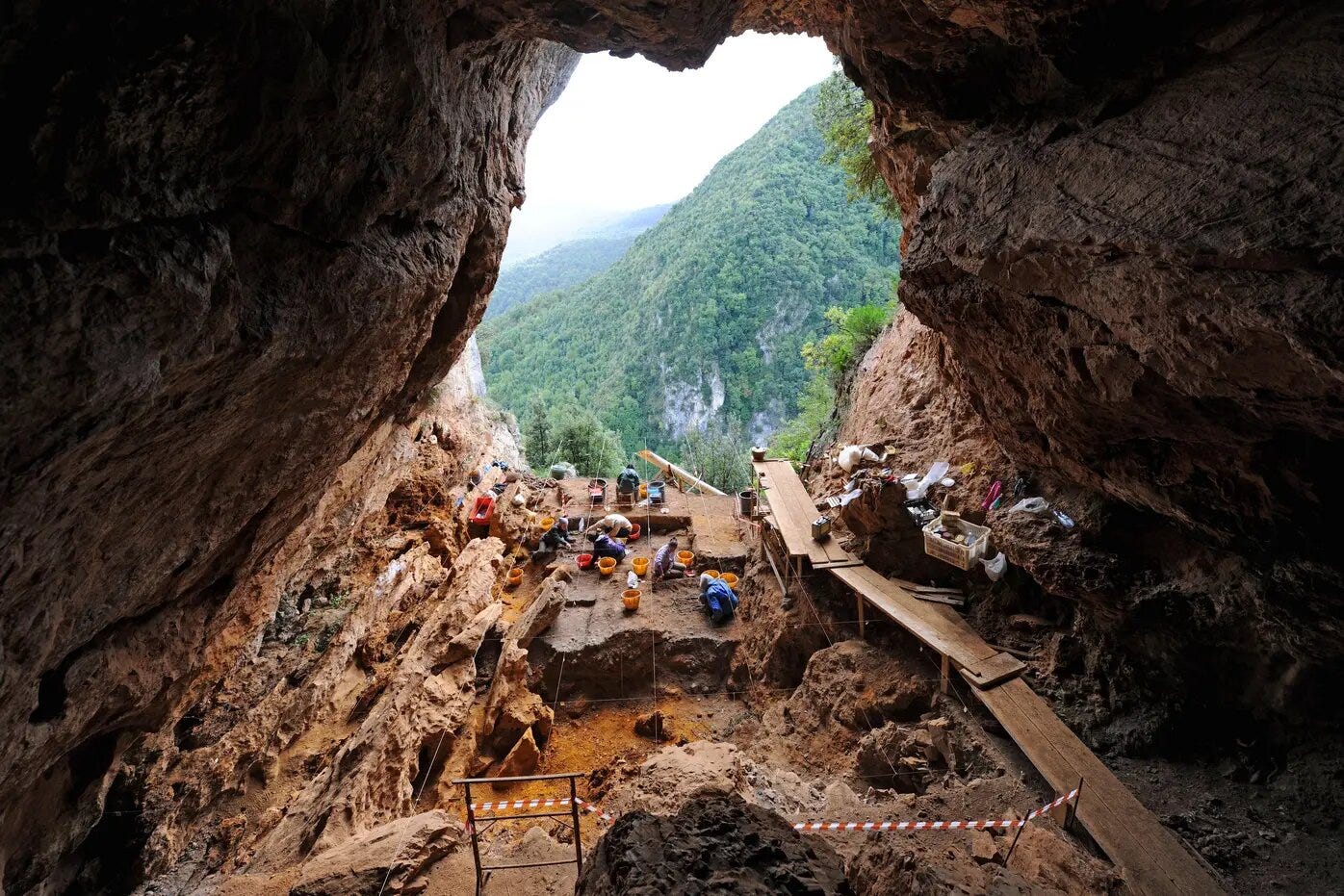
A recent archaeogenetic study1 of this site reconstructs the demographic and social fabric of a Middle Bronze Age community in northwestern Calabria, dated to roughly 1780 to 1380 BCE. The results suggest a small, cohesive mountain population whose genetic profile, kinship practices, and burial customs set it apart from its neighbors, even as it remained loosely connected to the wider Mediterranean world.


