

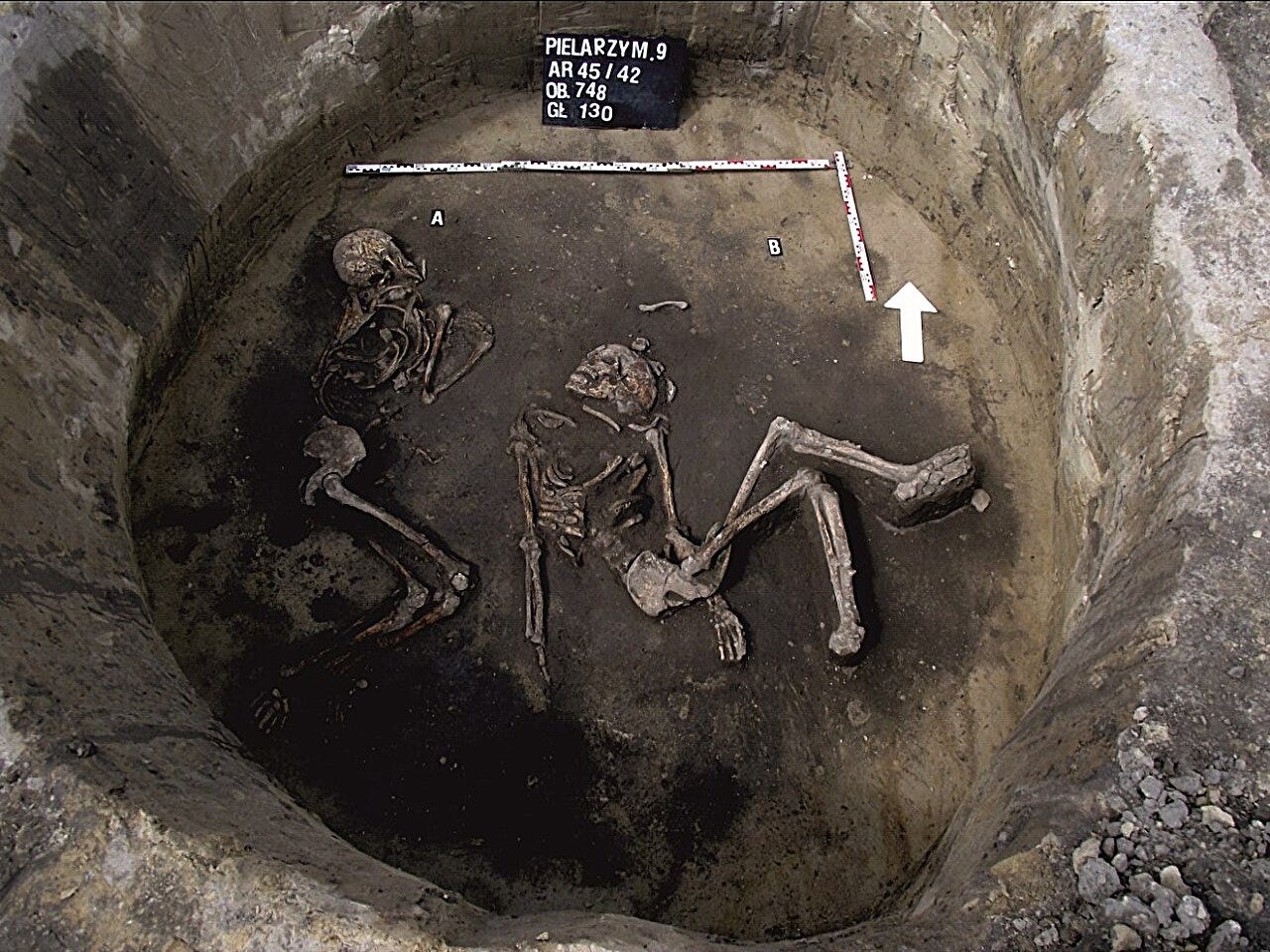
In grave 748 at Pielgrzymowice 9, a Bronze Age cemetery in southeastern Poland, archaeologists found the skeleton of a woman who died somewhere between forty and fifty. Her petrous bone, the dense wedge of skull that finishes forming before birth, and her first molar, sampled for both dentin and enamel, all carry an isotopic signature typical of a childhood spent on wheat and barley, with no trace of millet up to about age ten. Her bone collagen, the tissue that keeps rebuilding itself for as long as a person is alive, tells a different story: at some point between childhood and death, she started eating broomcorn millet, and kept eating enough of it that the crop left a permanent chemical mark on her skeleton.
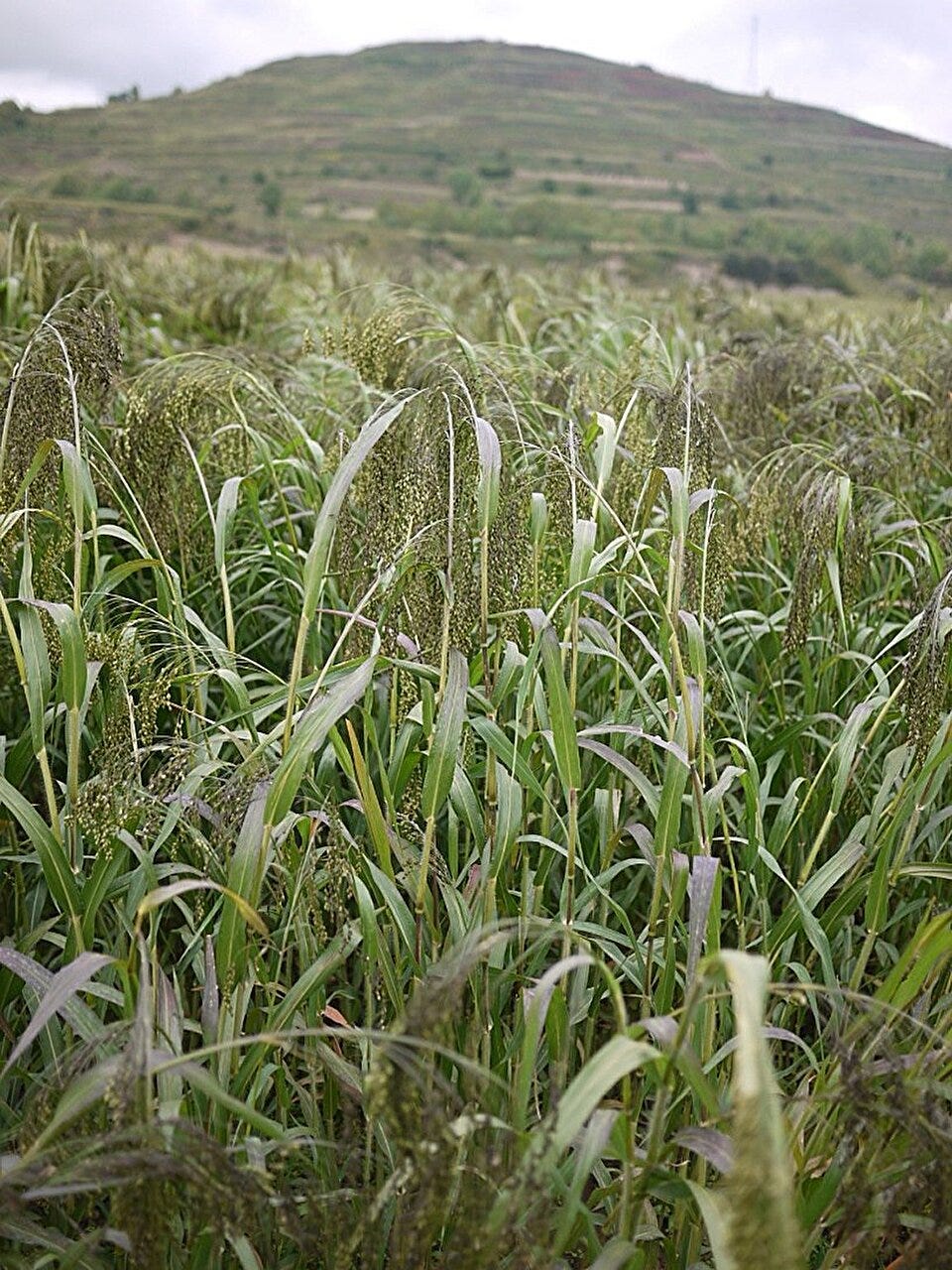
Isotope chemists can read this because different tissues in the body stop recording diet at different points in a life. A tooth crown mineralizes in childhood and then goes chemically silent, a small frozen archive of what a kid ate. Bone keeps remodeling for decades, so its isotope signature is a rolling average of a person’s more recent years. Panicum miliaceum, broomcorn millet, uses a different, more efficient photosynthetic pathway than wheat or barley (C4 rather than C3), one that leaves a distinctly heavier carbon isotope signature in the tissue of whoever eats it regularly. Comparing tooth against bone lets researchers catch a dietary shift that happened somewhere in the gap between them, even without knowing exactly when.
This woman, cataloged in the new study as MIL1_234, is one of 192 individuals from more than a dozen Bronze Age cemeteries in southern Poland whose remains were analyzed for the project, published in the journal Science Advances,1 which combined freshly generated isotope data with everything previously published on these sites. Her case matters because of the date attached to it. Her bone collagen carbon value, -16.03 per mil, sits well above the -18.0 per mil threshold Polish researchers use to flag millet in the diet, and her radiocarbon date centers on roughly 1588 BCE, plus or minus 48 years. The previous benchmark for the earliest substantial millet consumption in this part of Europe, established in 2021 from carbon isotope work at these same sites, stood at 1460 BCE, give or take 40 years. MIL1_234 pushes that back by more than a century, past even the oldest millet grains yet dug out of Polish soil, found at Lipnik and dated to around 1303 BCE. Her date also lands close to the earliest millet remains found anywhere in Europe, a set of charred grains from Vinogradnyi Sad in southern Ukraine dated to roughly 1546 BCE, hinting that the crop reached Central Europe from the east earlier than the physical seeds alone had suggested.
She isn’t alone in this pattern. A man buried in a separate grave at the same site, feature 631, cataloged as MIL1_233 and radiocarbon dated to about 1468 BCE, shows the same signature: a childhood on wheat and barley, with the shift to millet occurring sometime in his adult life, at the latest within five years of his death. His case comes with its own small complication. A protein test on his tooth enamel, run for this study to determine biological sex, failed to detect the male-specific peptide researchers normally look for, which would technically classify him as female. Earlier DNA analysis and the shape of his bones both say male. The team kept the DNA-based call, and noted, almost in passing, that this is not the first time protein-based sex testing has disagreed with genetic testing on the same skeleton.
The same pattern, a childhood on wheat and barley followed by millet later in life, turns up in at least one person at nearly every cemetery in the study with isotopic evidence of the crop. The lone exception is Kraków Nowa Huta Mogiła, where only two people were tested, too few to say either way.


