
Dzhankent sits on the northeastern shore of the Aral Sea, in a stretch of Kazakhstan that gets maybe five inches of rain a year and swings from -40°F winters to summers pushing 80°F. It is not a place that forgives sloppy food planning. And yet by the 10th century CE, this settlement, known to Arab geographers as Yengi-kent, had become the fortified capital of the Turkic Oghuz polity, a walled city dense enough with foreign and local residents that Khorezmian architects were brought in to redesign the whole interior.
Cities like that need feeding constantly, not seasonally. That’s the puzzle a team1 led by Kara Larson and Alicia Ventresca-Miller set out to solve, using a method that sounds almost too simple to work: cutting into sheep teeth.
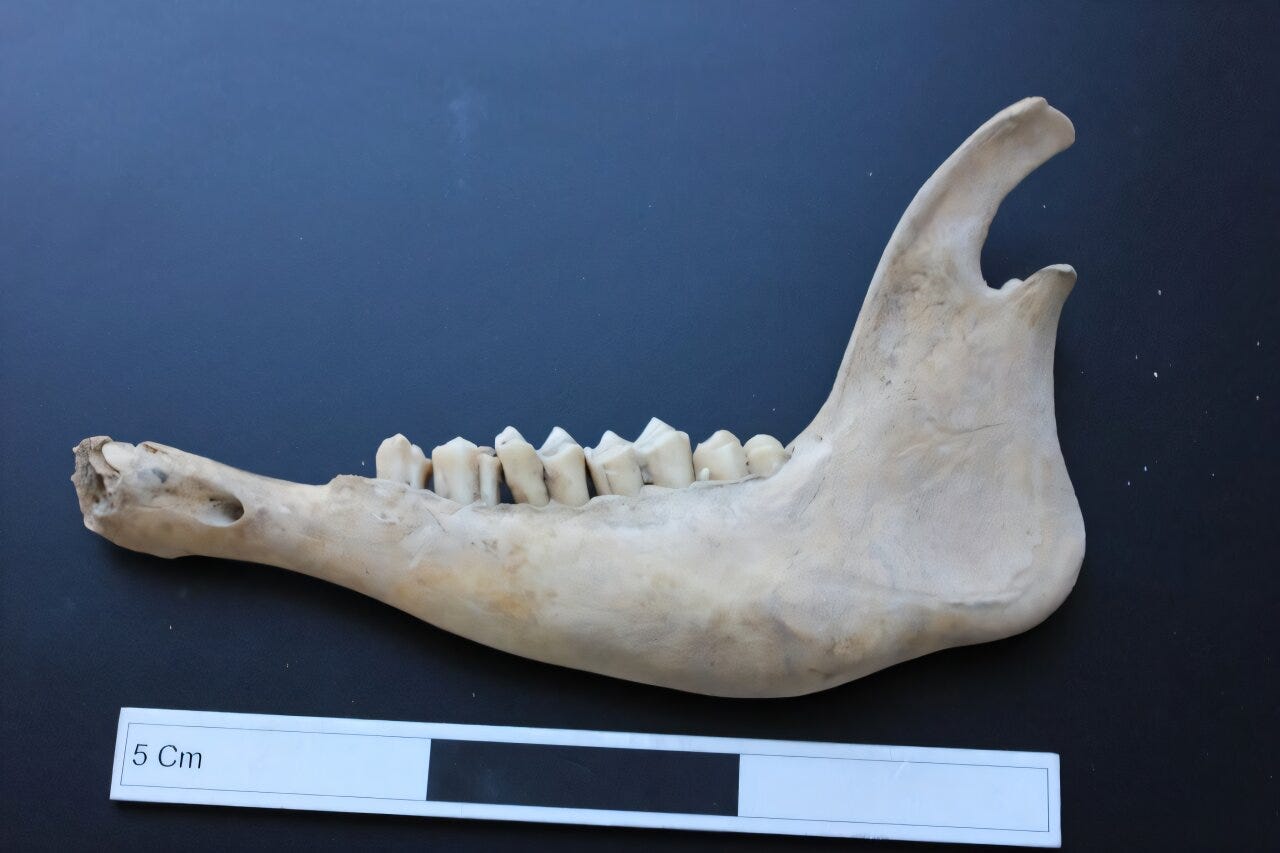
Here’s the logic. As a sheep eats and drinks over its lifetime, the isotopes in its food and water get locked into the enamel of its molars, layer by layer, like tree rings. Carbon isotopes track what kind of plants it was grazing (different photosynthetic pathways leave different chemical signatures) while oxygen isotopes track the water it drank, which itself shifts with the seasons since summer precipitation and winter precipitation carry different oxygen signatures. Drill a series of samples along a single tooth, from the root to the chewing surface, and you get a chronological record. Not a broad average of what the animal ate over its whole life, but a month-by-month diary.
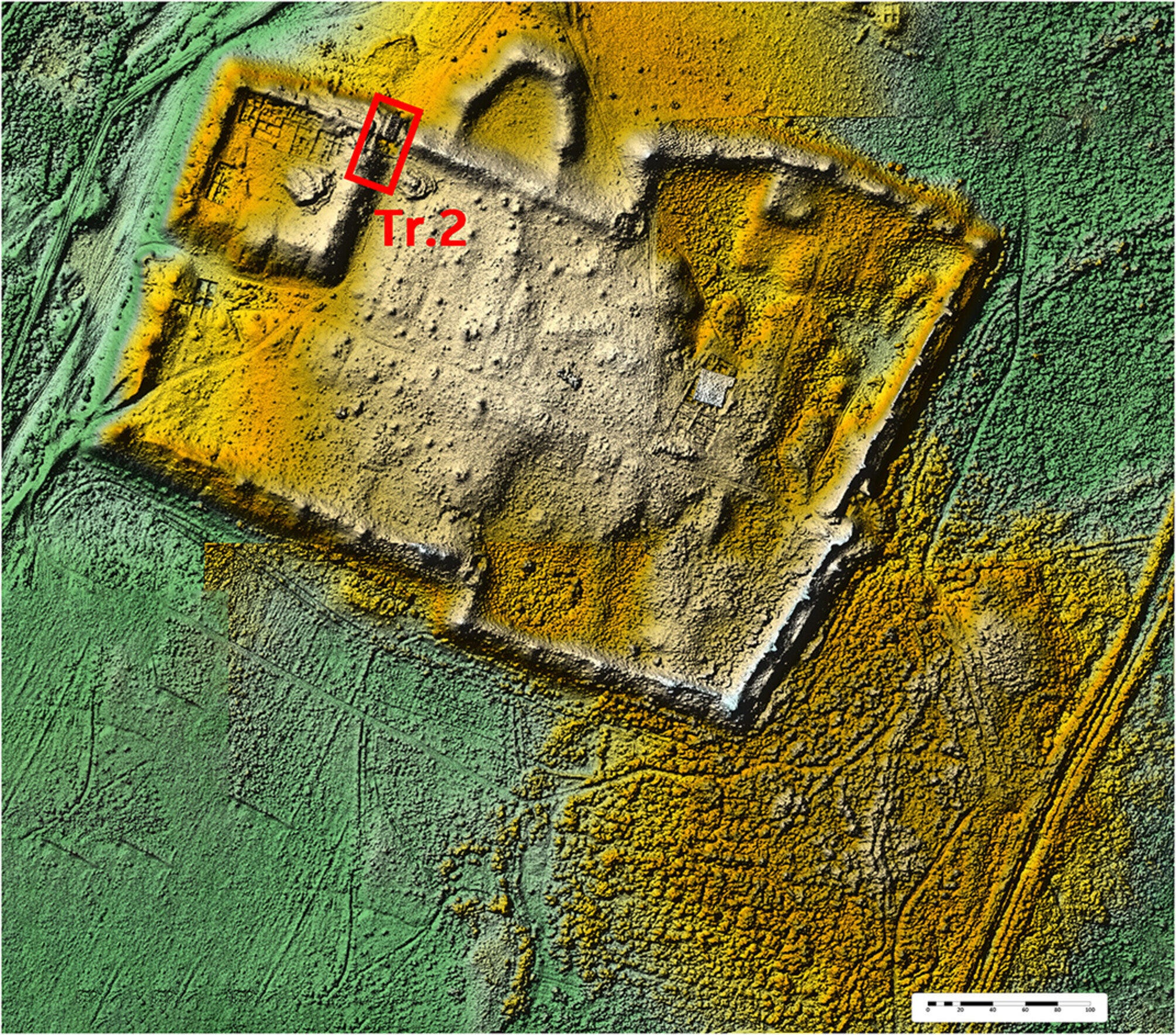
The team applied this to the second molars of 16 sheep (Ovis aries) recovered from Trench 2 at Dzhankent, the deepest and most thoroughly dated excavation at the site, running through the 9th and 10th centuries. What they found was not one herding strategy but six.


