

About 80,000 years ago, a brown bear died in what is now Furninha Cave on the Portuguese coast. It weighed somewhere close to 385 kilograms, heavier than almost any brown bear alive in Europe today, built with a robustness that made researchers examining its bones think, more than once, of cave bears. Except there were no cave bears in Portugal. Decades of excavation have never turned one up. The cavities the country offers apparently weren’t large enough to support the multigenerational hibernation colonies the species needed, so Ursus spelaeus simply never moved in.
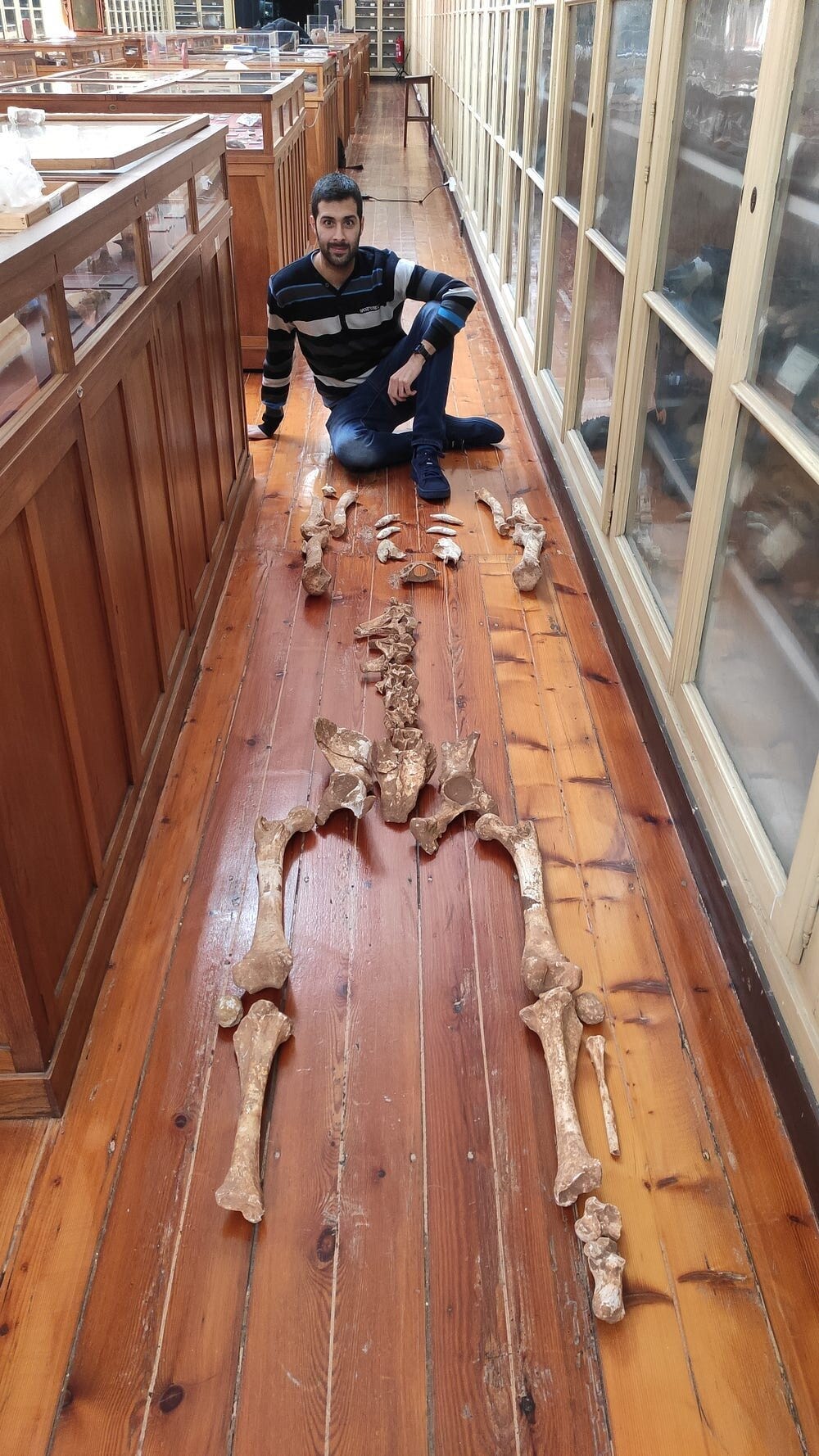
That absence left something open. And a new study1 of over 500 bear bones from six Portuguese sites, led by Darío Estraviz-López at NOVA School of Science and Technology, suggests Iberian brown bears may have expanded into it, growing large and robust in a way that converges, at least superficially, on the cave bear body plan. It’s a hypothesis, not a settled fact, and testing it will need ancient DNA and isotope work still to come. But it points at something worth sitting with: the “natural” community of Pleistocene Portugal wasn’t a fixed cast of species filling predetermined roles. It was contingent, shaped by which species happened to be present, which happened to be absent, and how the ones present responded to the gap.
That contingency, and how badly it gets scrambled by human activity, is also the subject of a much larger review published the same year in Science Advances,2 led by Thomas Matthews at the University of Birmingham along with dozens of co-authors. Their focus is islands rather than caves, extinction and introduction rather than body size, but the underlying argument rhymes with the Portuguese bear story closely enough that reading them together changes how each one lands.


