
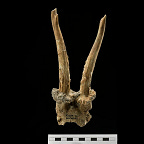
Around 5375 BCE, a group of people built a village in what is now Saxony-Anhalt, Germany. They planted crops, raised animals, made pottery with linear designs. They belonged to the Linear Pottery Culture, named for the patterns on their ceramics, and they were part of the first wave of farming communities moving into Central Europe from the southeast. Eilsleben was their northernmost settlement. Beyond it lay the territories of people who still hunted wild game and gathered plant foods. The frontier.
Archaeologists have known about Eilsleben since excavations began in the 1970s. But recent work at the site has uncovered something strange. Mixed in with the stone axes, grinding stones, and pottery you would expect from an early farming village, the team found objects that belong to a different tradition entirely.1 Antler tools. Flint arrowheads of a type used by hunters. And most striking: a roe deer skull modified into a headdress or mask, its antlers still attached.
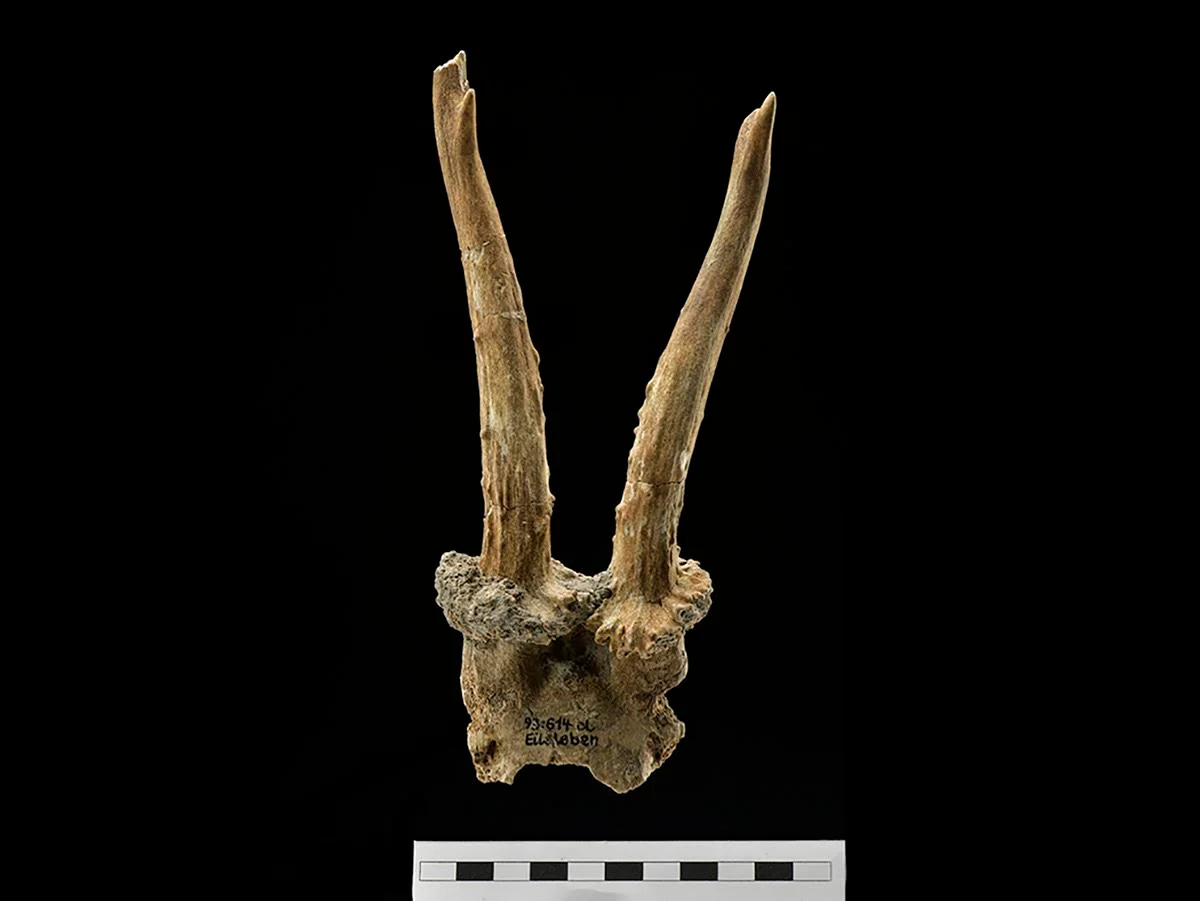
That last object has a direct parallel. At Bad Dürrenberg, about 100 kilometers south, archaeologists excavated a Mesolithic burial dated to around 7000 BCE. The grave held a woman, a baby, and a collection of ritual items including an antler headdress nearly identical to the one found at Eilsleben. The Bad Dürrenberg burial predates the farming settlement by more than a millennium. It belongs to the world of Late Mesolithic hunter-gatherers. Yet here, in a village built by people who came from farming societies to the south, that same symbolic object appears again.
The presence of the deer mask raises a question that cannot be answered with simple models of replacement or diffusion. What happens when two fundamentally different ways of organizing human life meet at a boundary that lasts for centuries?


