
The Oldest Sewn Hide in the World Came from an Oregon Cave
When you can’t survive winter without complex clothing, everything about how you live changes.
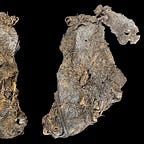
A fragment of elk hide found in Cougar Mountain Cave in central Oregon has a cord running through its margin. The cord, made from a mix of plant fiber and animal hair, exits the edge of the larger hide piece and extends into a smaller fragment, where it’s knotted to keep from pulling through. The item dates to between 12,600 and 12,060 years ago, during a climatic interval called the Younger Dryas. As far as anyone knows, it’s the oldest sewn hide ever recovered.
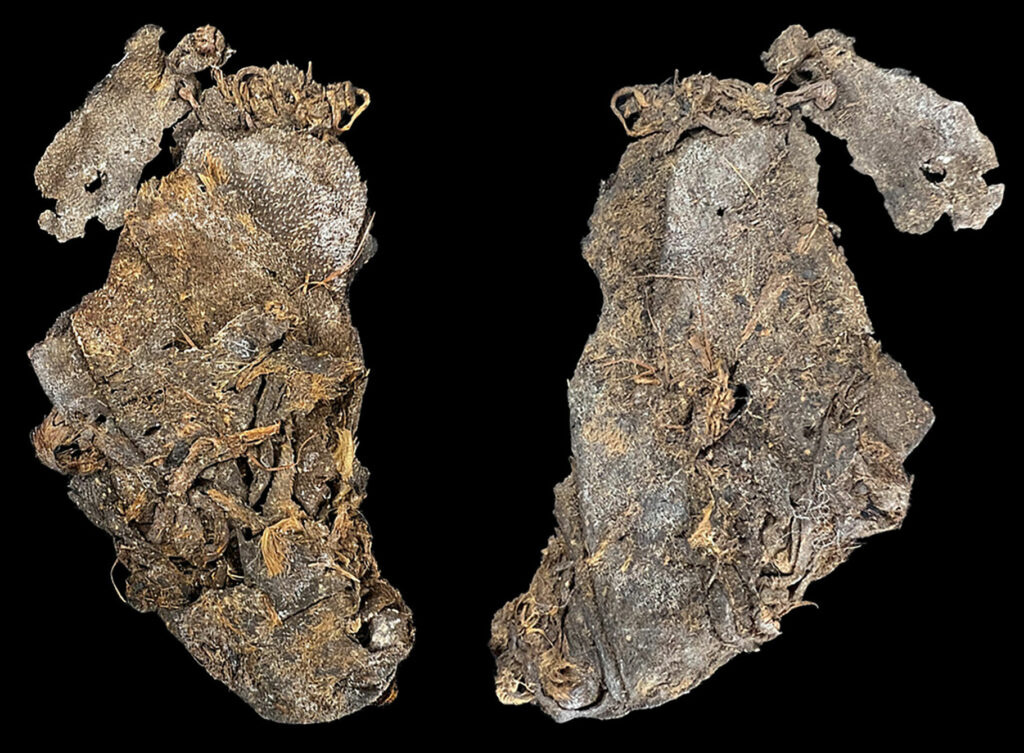
It might have been clothing. It might have been a moccasin. It might have been part of a bag or a portable shelter. The researchers who published 1the find can’t say for certain. What they can say is that someone went to considerable effort to prepare that hide, remove the hair, pierce the margin, and attach two pieces with cordage strong enough to hold them together across 12,000 years.
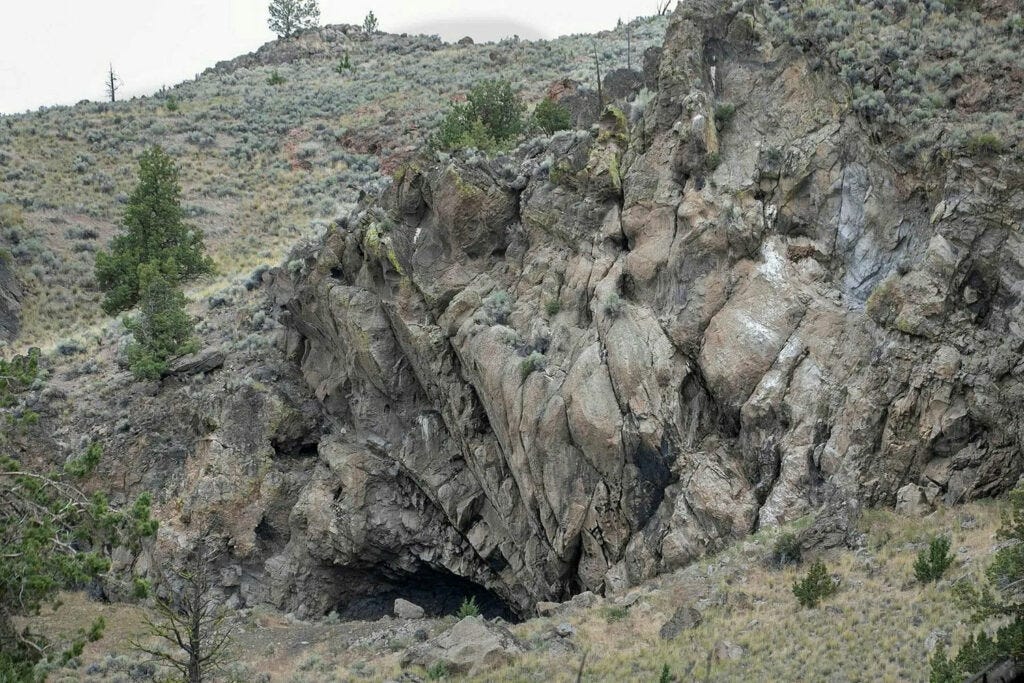
The find comes from a broader analysis of perishable technologies in the northern Great Basin, specifically from Cougar Mountain Cave and the nearby Paisley Caves. Together, these two sites have produced 66 radiocarbon dates on 55 items made from 15 different plant and animal taxa. That includes cordage, wooden tools, twined basketry, hide, and some of the finest bone needles ever made during the Pleistocene. It’s a rare archive. Most organic material from this period is gone.
The physical record of Pleistocene technology is overwhelmingly lithic. Stone tools survive. Stone tells you something, but not everything. It doesn’t tell you what people wore, how they carried water, what they used to trap rabbits, or how they sewed their shoes. The team behind the new study, led by Richard Rosencrance of the University of Nevada, Reno, has spent years trying to correct that imbalance.


