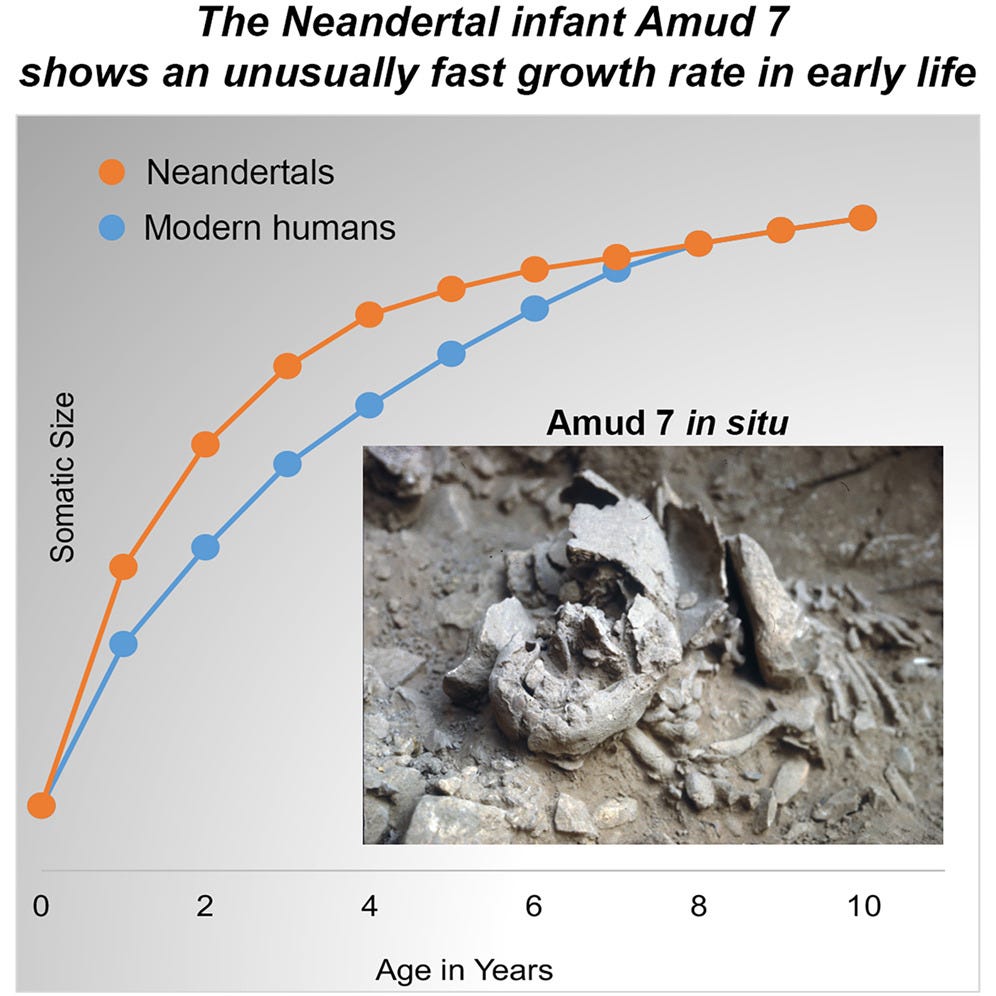
The infant died sometime in the first year of life. The teeth say so. Enamel growth lines, those microscopic records laid down daily like tree rings, put the age at roughly six months. But the bones tell a different story. The humerus, the femur, the overall postcranial development: by modern human standards, they belong to a child about twice that age. Fourteen months, not six.
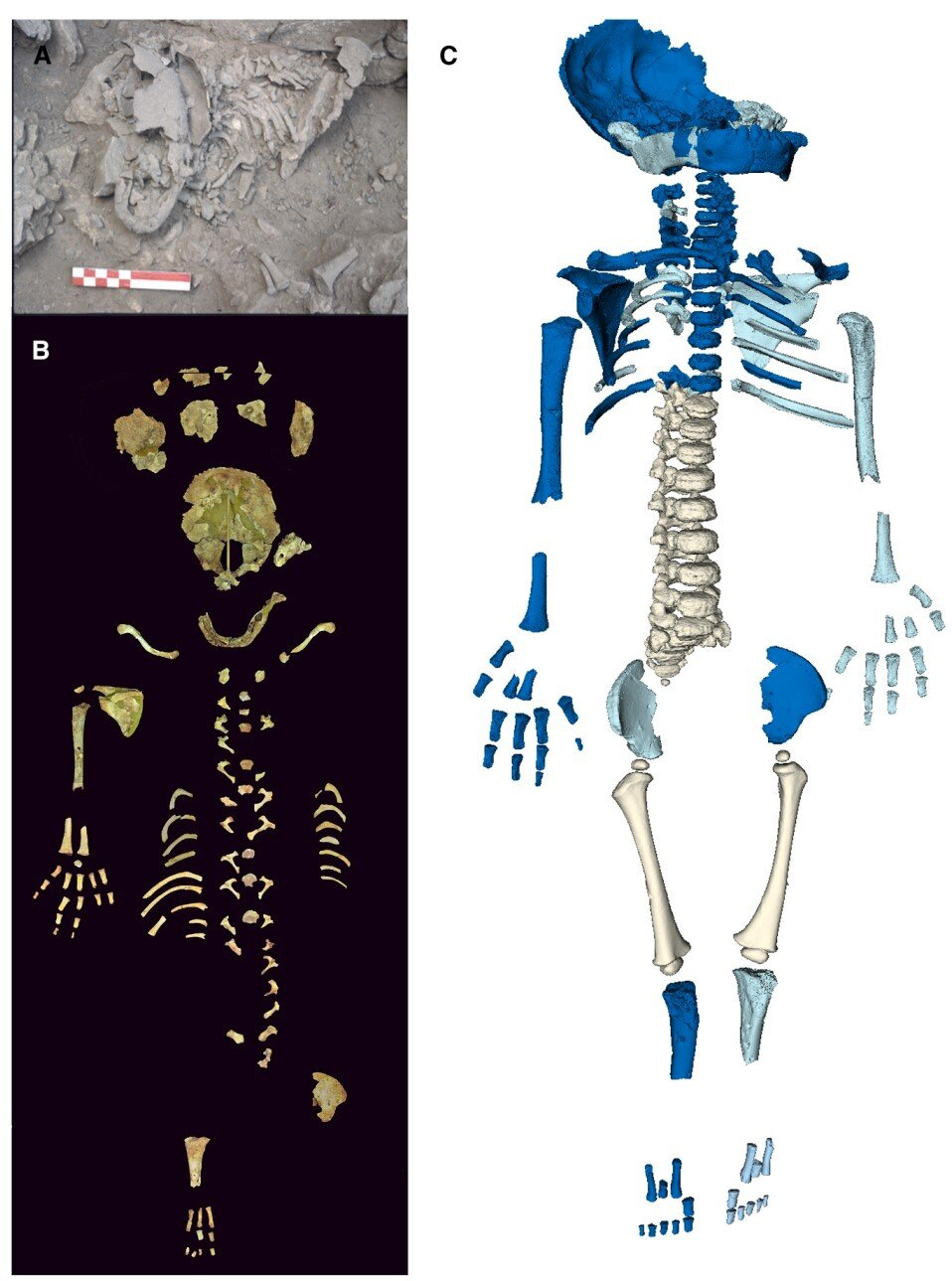
This is the central puzzle of a new study of Amud 7, a nearly complete Homo neanderthalensis infant skeleton excavated from Amud Cave in northern Israel. The remains date to between 51,000 and 56,000 years ago. When the research team, led by Ella Been and colleagues, analyzed 111 skeletal pieces and published their findings in Current Biology,1 the conclusion was striking: Neanderthal infants appear to have grown substantially faster in early life than modern human infants do, and the biological cost of sustaining that pace would have been considerable.