

Somewhere around 1300 BCE, cremation became the thing to do in Central Europe. Communities across a vast swath of the continent began burning their dead, placing the remains in ceramic urns, and burying them in flat cemeteries. The practice spread widely enough, and consistently enough, that archaeologists named this entire cultural horizon after it: the Urnfield period. For five centuries, fire was how you said goodbye.
This created a problem for anyone trying to understand who these people actually were.
Cremation destroys the biological material researchers rely on. Ancient DNA doesn’t survive the heat. Teeth, which record strontium and oxygen isotopes that can tell you where a person grew up, don’t come through calcination in a form that’s easy to interpret. The Urnfield period, which coincides with one of the most culturally dynamic stretches of the European Bronze Age, has therefore remained largely opaque to the biomolecular methods that have transformed our understanding of earlier periods.
But not everyone cremated.
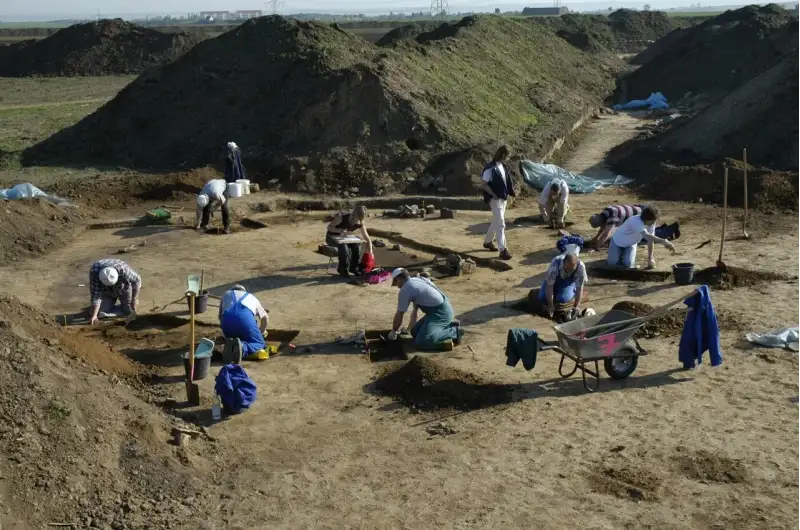
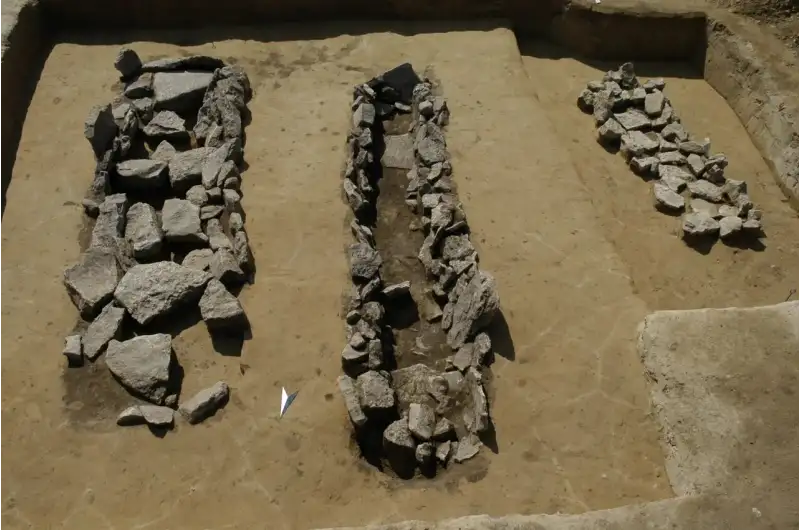
In a valley in what is now Saxony-Anhalt, in Central Germany, a group called the Unstrut kept burying their dead in the ground for nearly 500 years, even as neighbors to the north and south shifted to cremation. This is either cultural stubbornness or cultural commitment, depending on how you look at it. Either way, it left bones.
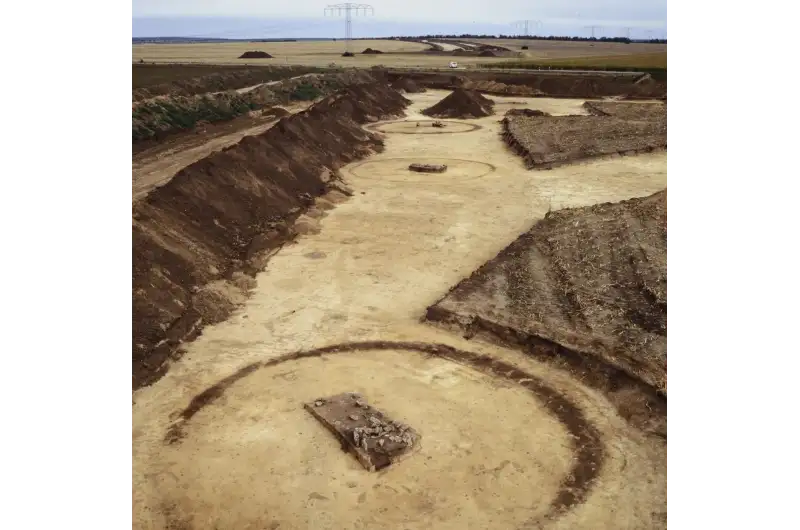
A team led by Eleftheria Orfanou at the Max Planck Institute for Evolutionary Anthropology in Leipzig spent years extracting ancient DNA, running isotope analyses, and examining skeletal remains from two sites associated with this group: a hilltop settlement called Kuckenburg and a nearby site at Esperstedt, both situated along a small river called the Weida. Together, the sites form a compact complex of fortified settlements and a graveyard positioned just outside a surrounding ditch. They then compared what they found to contemporaneous individuals from South Germany, Bohemia, and southwestern Poland. The results, published in Nature Communications1 in 2026, offer the most detailed biomolecular portrait yet of Central European communities during the Urnfield period.
What emerges is a picture that resists simple narratives about migration or cultural replacement. These were people who changed gradually, locally, and on their own terms.


