

The skeleton doesn’t lie about status. What a person ate over their lifetime leaves a chemical signature in their bones, and that signature reflects something more than individual preference—it encodes the hierarchies, taboos, and social arrangements that governed who got fed well and who did not.
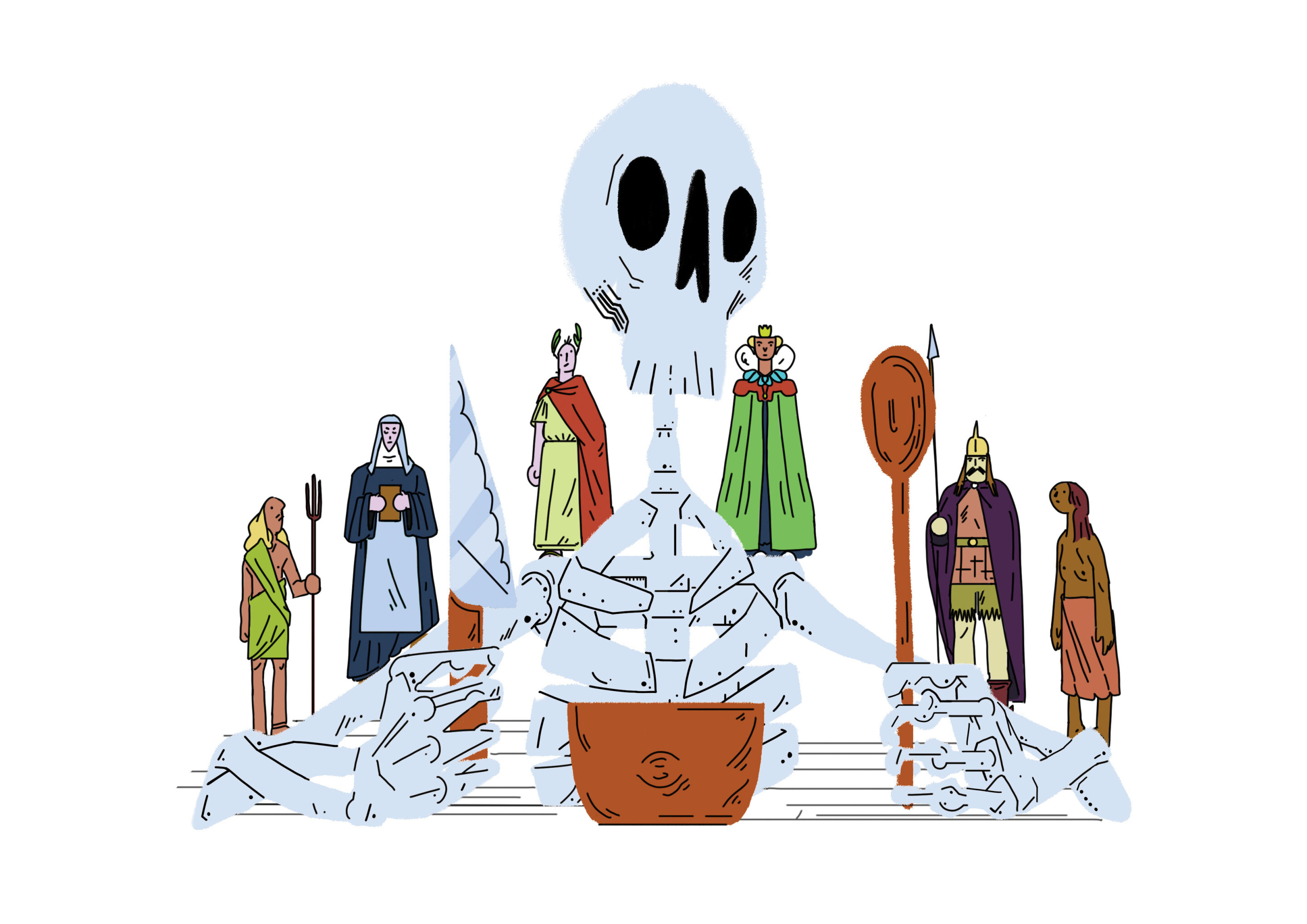
A study published this month in PNAS Nexus1 brings that argument to its largest scale yet. Rozenn Colleter, Michael P. Richards, and colleagues analyzed stable carbon and nitrogen isotopes from 12,281 adult Europeans spanning 393 sites and roughly 10,000 years of history, from Mesolithic hunter-gatherers to the early modern period. Their central finding: men have been consistently overrepresented among high meat-consumers across virtually every period and culture in the dataset. Women dominate the low end. That pattern is not continuous or invariant, but it is persistent enough to constitute something structurally significant.
The methodological innovation here deserves attention before the findings do. Comparing isotope values across sites is notoriously difficult. Nitrogen isotope ratios in bone collagen track animal protein intake, but those ratios reflect local environmental baselines—the degree to which farmers used manure fertilizer, the presence of freshwater food chains, climate variation, even metabolic stress during pregnancy. A high δ¹⁵N value in a coastal medieval Danish site means something different than the same value from an inland Roman-period Italian one. Direct comparison produces noise rather than signal.


