

There is a long-standing story about how Pleistocene hunter-gatherers obtained their stone tools. It goes like this: people moved through the landscape for reasons of their own — tracking prey, gathering food, relocating camp — and when they happened across a good piece of flint or quartzite, they picked it up. Stone collection was incidental, woven into everything else. This model, called embedded procurement, has dominated paleoanthropological thinking since the 1970s and 80s, when influential ethnographic studies of recent foragers codified it. Deliberate quarrying trips — planned expeditions undertaken specifically to obtain a particular rock from a known location — were considered a later development, something that left clear evidence only in the Neolithic and the Upper Paleolithic, and before that appeared rarely if at all.
A stratified open-air site in the grasslands of KwaZulu-Natal has now disrupted that picture in a significant way.
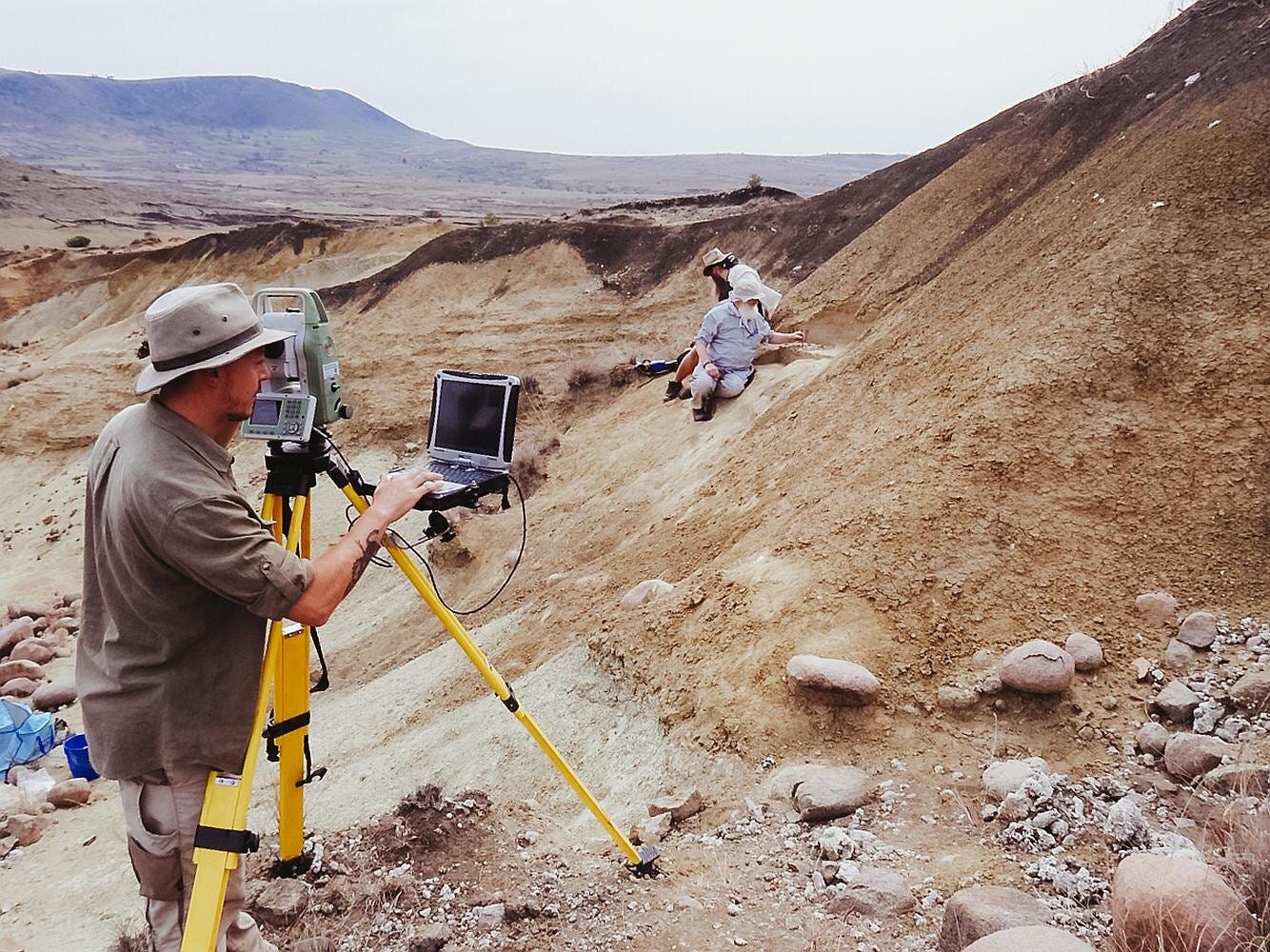
Jojosi sits roughly 140 kilometers from the Indian Ocean coast in eastern South Africa, a landscape of eroded gullies cut by the Jojosi River through a dolerite foot slope. The terrain is geologically active: cut-and-fill cycles have been reshaping it since at least 600,000 years ago, alternately burying and exposing sediment. Since 2022, an interdisciplinary team led by Manuel Will at the University of Tübingen has been excavating five artefact lenses at three locations within these gullies. What they found, and what they have now published in Nature Communications,1 challenges the embedded procurement model directly.
Every single stone artefact recovered from the stratified assemblages at Jojosi — across all lenses, across all sites, totalling more than 20,000 lithic pieces from the excavations alone — is made from hornfels. Not dolerite, which outcrops immediately adjacent to the site. Not quartz or quartzite, available as river gravels in the Jojosi River. Only hornfels: a fine-grained metamorphic rock formed when argillaceous siltstone is baked by contact with hot igneous intrusions, yielding a grey to dark grey material with low knapping force requirements and excellent flake quality.
The site also contains large primary hornfels outcrops, roughly 500 meters from the excavated lenses, as well as angular blocks that have been washed down into the alluvial gravels and gully fills. What it does not contain — in the stratified deposits or in the extensive surface record covering approximately one square kilometer — is meaningful evidence of anything else. No retouched tools. No retouching flakes (which would indicate tool finishing on-site). Almost no end products at all: large blades and preferential flakes were the apparent goal of the knapping, but they are largely absent. Use-wear analysis of 40 non-cortical blanks found traces of use on exactly one piece. There is no substantial faunal assemblage, no evidence of hearths, no indication of the broad range of activities associated with residential occupation.
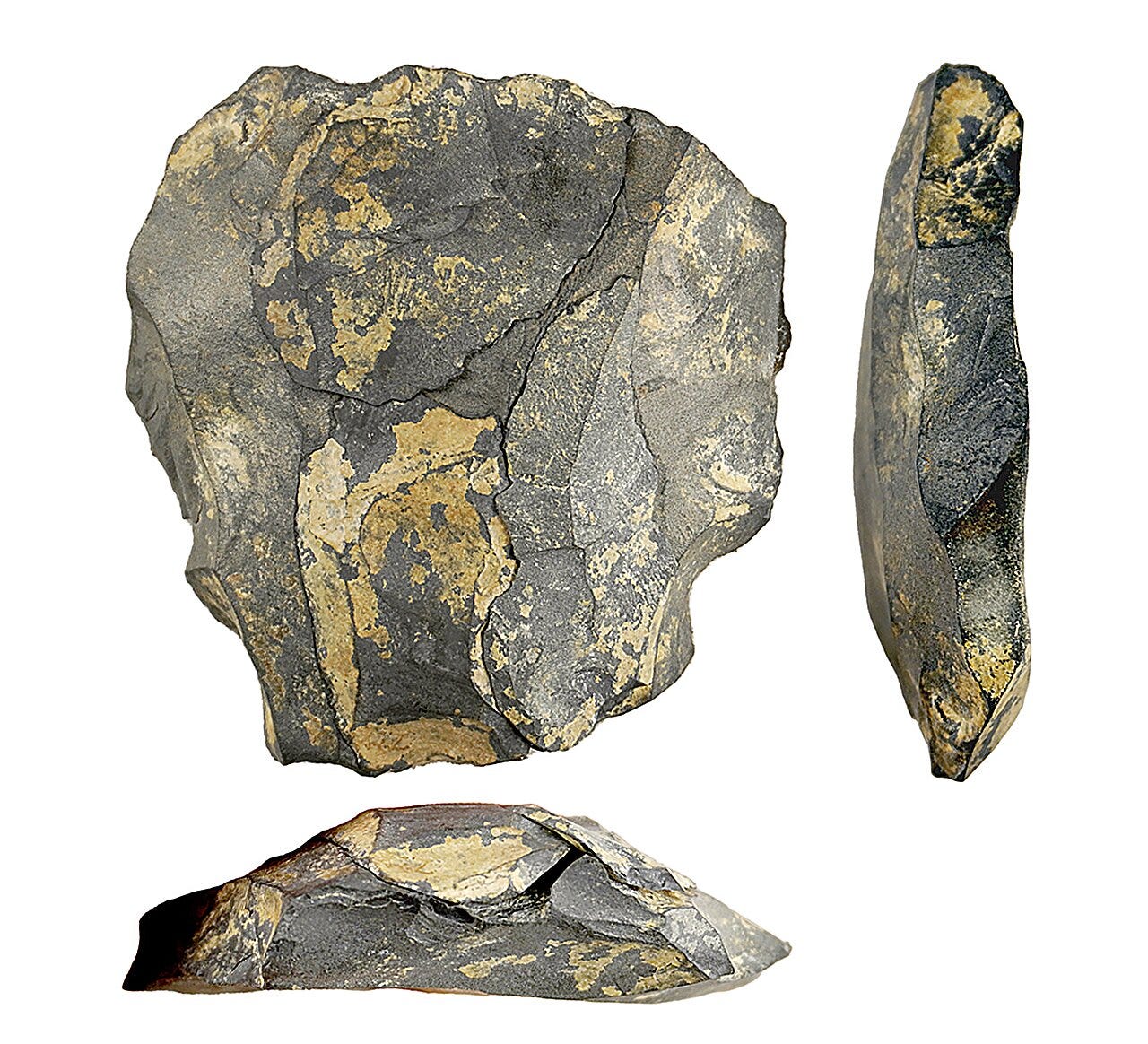
What the assemblages do contain is abundant cortical material, core preparation and rejuvenation flakes, and vast quantities of microdebris: at Jojosi 6 alone, two lenses yielded nearly 5,000 and 3,800 pieces of material under 5 millimeters respectively, a size distribution that matches experimental hornfels knapping workshops. Refitting work on 353 artefacts across all sites, producing 123 refit groups with spatial extents under 30 centimeters, confirmed that the lenses represent short, discrete knapping events with high stratigraphic integrity. Pieces fit back together into reduction sequences — decortification of large blocks, core preparation, blank production — that end with the blanks gone. Knappers came, reduced hornfels, took the products, and left.


