Most of what we know about the Middle Stone Age comes from the dark. We look for our ancestors in caves because caves are excellent at holding onto things. They shield bone and stone from the wind, the sun, and the scatter of scavengers. But humans did not evolve in caves. We lived out in the open, under the sun, moving across landscapes that are usually scrubbed clean by time.
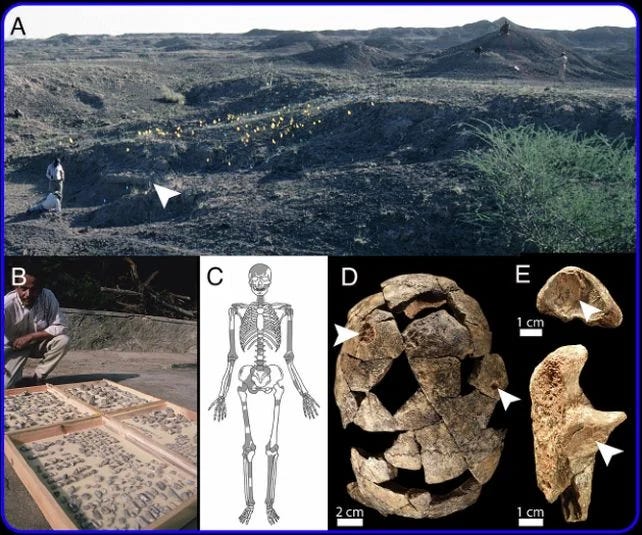
Finding a 100,000-year-old open-air site that actually preserves the fine details of a single afternoon is a rarity. Yet, in the Afar Rift of Ethiopia, a team of researchers led by Yonas Beyene1 has spent years excavating a landscape known as the Halibee member. Specifically, a spot called Faro Daba. This was not a permanent village, but a wooded refuge on a flood-prone plain. It was a place where Homo sapiens returned again and can be seen with startling clarity because the paleo-Awash River acted as a giant preserving machine. Every time the river breached its banks, it dumped fine silts over whatever the humans had left behind, sealing their tools and their bones into the earth before they could be lost to the elements.
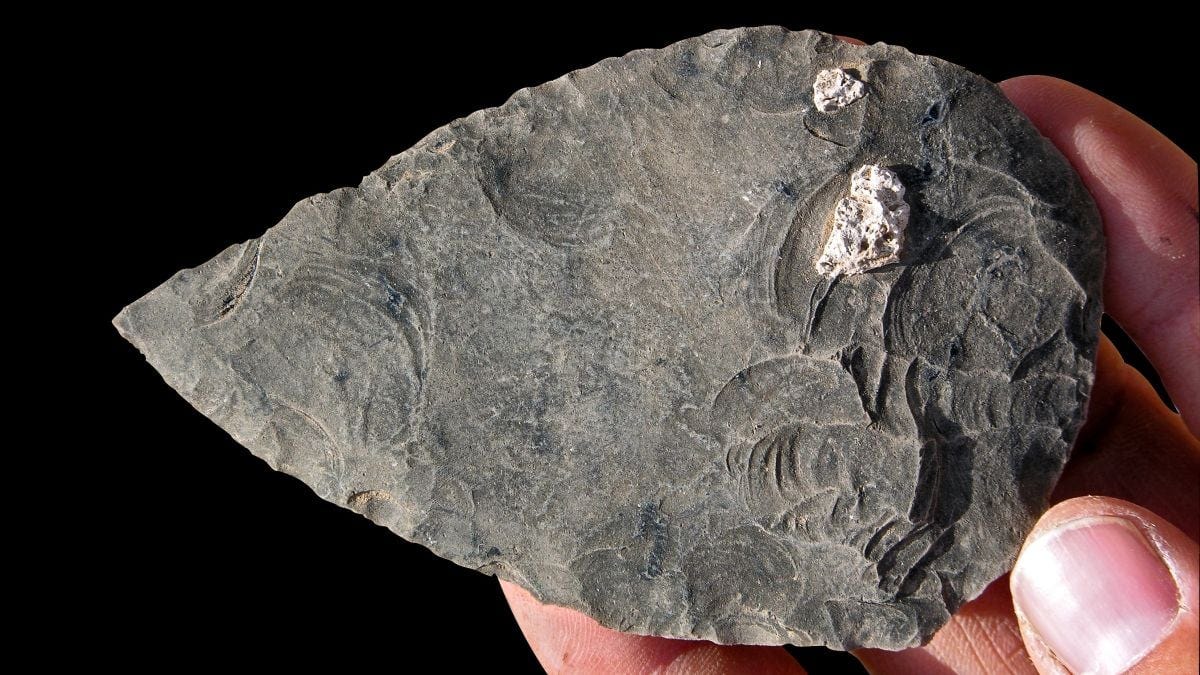
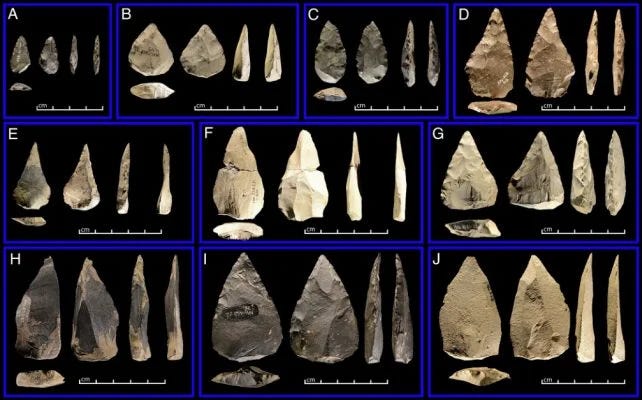
The artifacts suggest a people who were deeply familiar with their immediate surroundings. They weren’t just passing through; they were working. Between 65 and 82 percent of the stone tools found at the site were fashioned from local basalt. These were heavy-duty implements, made for the hard work of living on the savannah. But there are also hints of a wider world. About 2 percent of the tools were made of obsidian, a volcanic glass that doesn’t occur naturally at Faro Daba. Someone carried that glass there from somewhere else, or traded for it, bringing a piece of the distant landscape into this wooded sanctuary.