

The megalithic tombs of Central Europe were built to last. Some are still standing. Massive stone chambers, erected between roughly 3600 and 2800 BCE, they were constructed before domesticated horses moved people across the continent. Whatever these structures meant to the communities that built them, they meant enough to justify enormous collective effort.
The working assumption, for a long time, was that they held families. Biological families, bound by blood, buried together in monuments that also defined territory and ancestry. That assumption made a certain kind of sense. Megalithic sites in Ireland and Sweden show burial patterns consistent with nuclear families, biologically connected across generations.
But when researchers analyzed ancient DNA from 203 individuals buried across six megalithic grave complexes in Central Europe, the picture that emerged was more complicated, and more interesting.
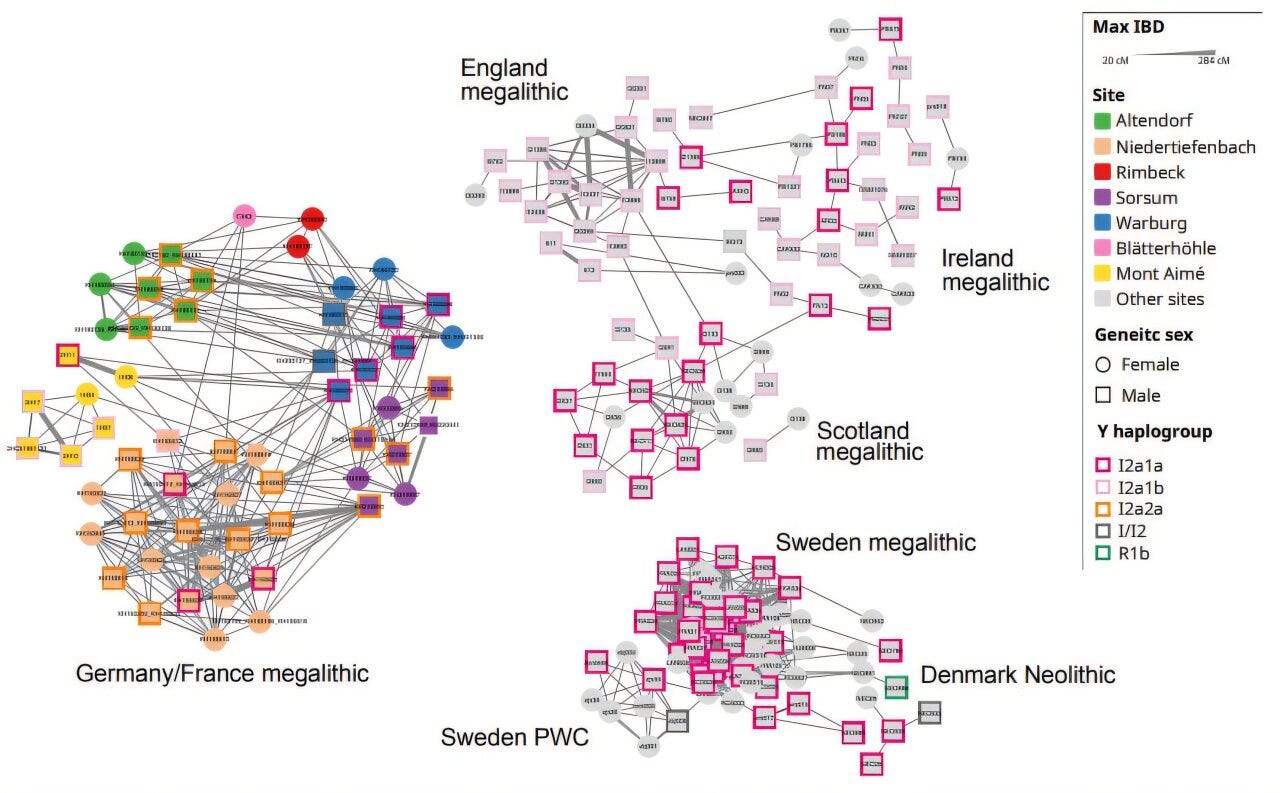
The remains come mainly from sites associated with the Wartberg culture, in what is now Lower Saxony, Hesse, and North Rhine-Westphalia. The team, led by Nicolas da Silva at the Institute of Clinical Molecular Biology at Kiel University, extracted genome-wide data from individuals at these sites and compared results against each other and against broader European populations. Their findings, published in Science,1 challenge long-held assumptions about family structure, mobility, and the spread of monumental architecture.


