

The allée sépulcrale at Bury sits about 50 kilometers north of Paris, a semi-underground rectangular gallery grave built from megalithic slabs and dry-stone walls. It held the bones of at least 316 people. When researchers from the Lundbeck Foundation GeoGenetics Centre at the University of Copenhagen extracted and sequenced ancient DNA from 132 of them, they found1 something that shouldn’t be possible inside a single monument: two populations with almost nothing genetically in common.
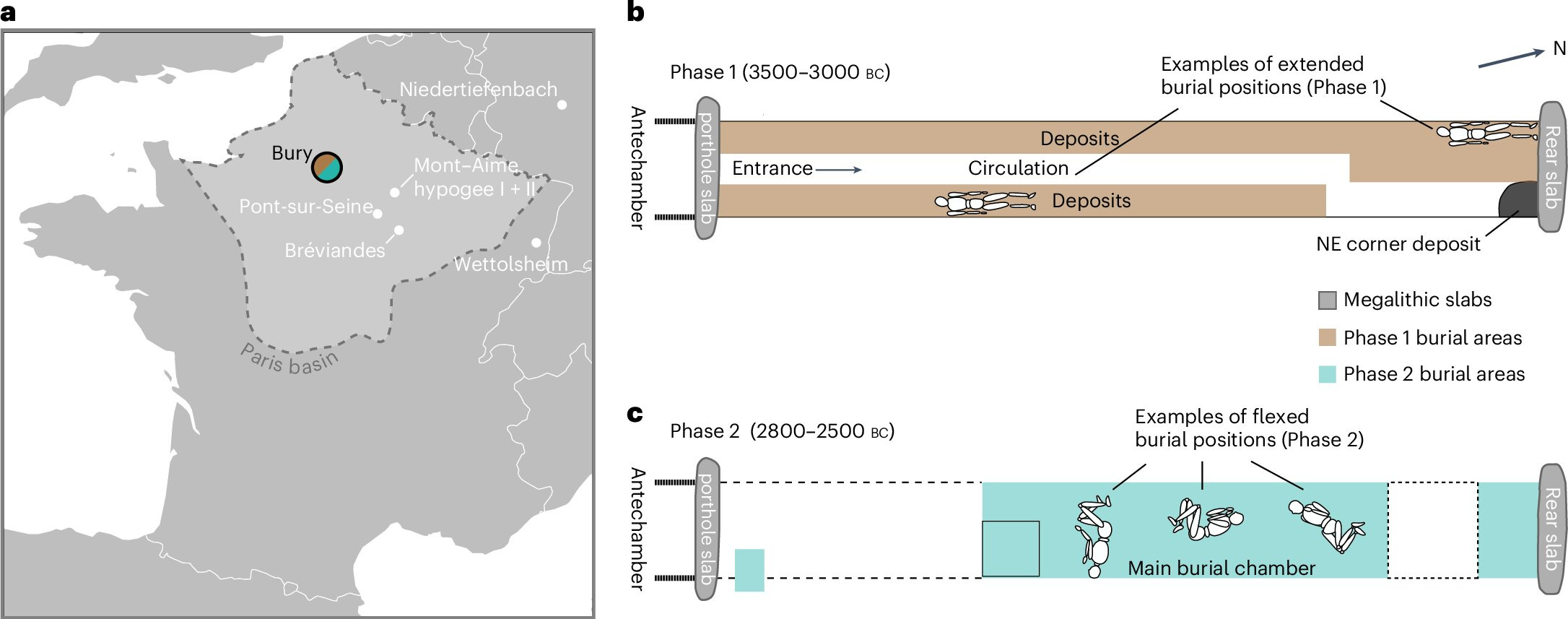
The tomb had been used in two distinct phases. The first, running roughly from 3200 to 3100 BC, was a community burial in the fullest sense. The second, beginning around 2800 BC and continuing until about 2470 BC, was something else entirely. Between them: silence. A gap of several centuries when no one was buried there at all. The people who returned were not the descendants of those who left.
What happened in between is the question the paper is built around, and the answer, insofar as one exists, is multipart, contested at its edges, and deeply strange.


