

The story of how farming spread across Europe has always been told as a story of replacement. Between 6500 and 4000 BCE, descendants of western Anatolian farmers moved into a continent occupied by hunter-gatherers. They brought wheat, cattle, and a completely different way of organizing life. Within a few centuries, the genetic signature of those original European foragers had been diluted to near invisibility. Ancestry turnover reached 70 to 100 percent in most regions. The farmers didn’t just arrive. They became the population.
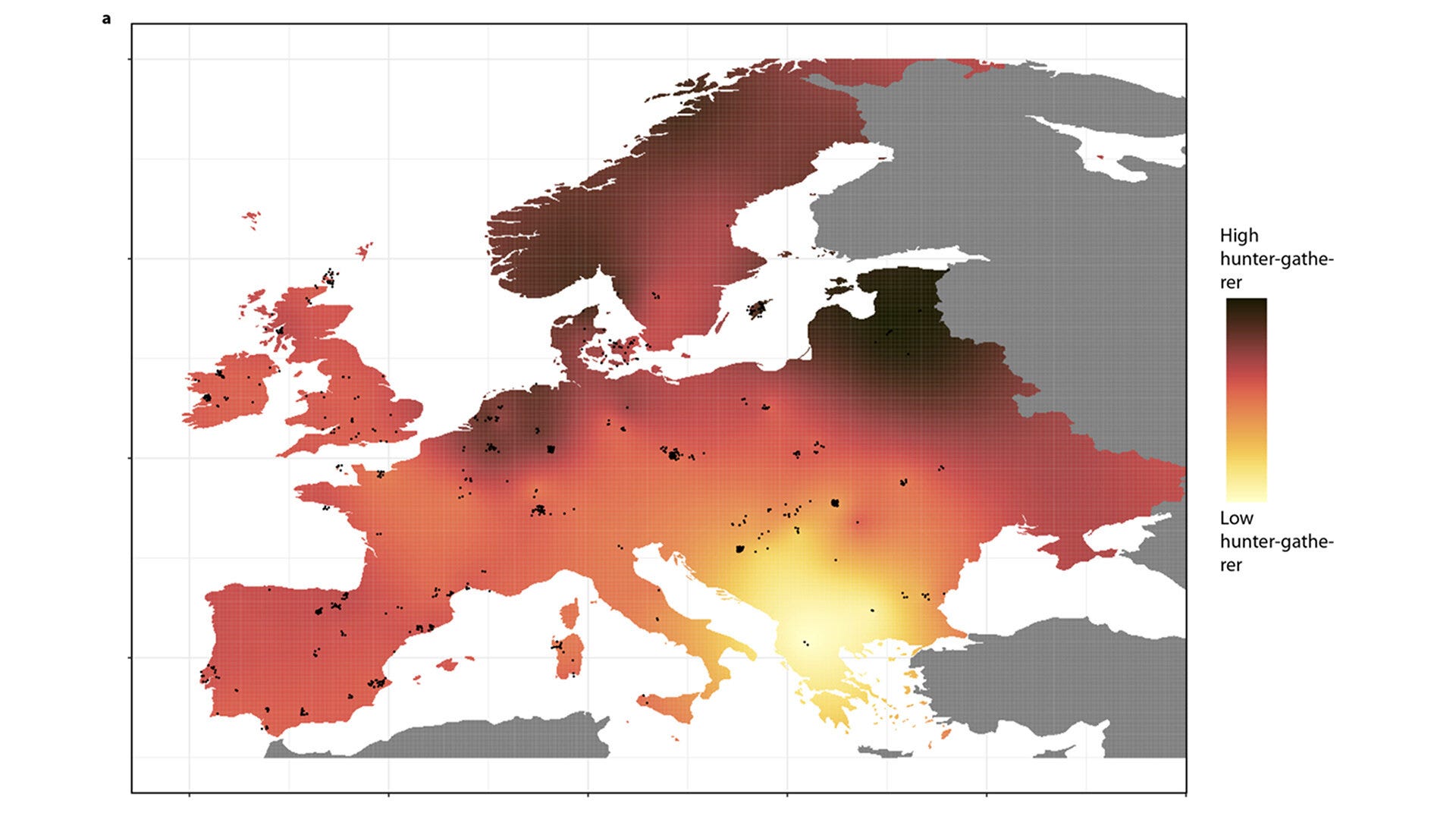
Then, around 3000 to 2500 BCE, a second wave swept in from the steppes, bringing new ancestry, new pottery styles, and probably new languages. The Corded Ware complex spread across central and northern Europe with the same genetic force. By 2500 BCE, the map was clear: modern Europeans inherited their genomes from three major sources. Hunter-gatherers. Neolithic farmers from Anatolia. Steppe pastoralists from the east.
Except in one place, that pattern broke down completely.
A study published in Nature1 by an international team led by David Reich at Harvard, with key contributions from researchers at the University of Huddersfield, reveals something unexpected about the wetlands, rivers, and coastal zones of what is now the Netherlands, Belgium, and western Germany. They sequenced genomes from 112 individuals who lived between 8500 and 1700 BCE. What they found was a population that shouldn’t exist. People living in 2500 BCE with roughly 50 percent hunter-gatherer ancestry. Not 10 or 20 percent, the kind of trace signature you’d expect from distant admixture. Half.
That means the original inhabitants of this region held on for 3,000 years longer than anywhere else in Europe.


