

In a single occupation layer dated to roughly 780,000 years ago, excavated from a sediment sequence along the Jordan River valley in northern Israel, researchers recently found 266 fragments of charcoal. Most of them measure between three and four millimeters across. The kind of material that survives in wet-sieved dirt and gets sorted in a laboratory over years.
The rarity of this is worth sitting with for a moment. Charcoal from sites this old almost never survives in identifiable form. At Wonderwerk Cave in South Africa, there is a single poorly preserved piece from a stratum approaching two million years old. At Zhoukoudian, charcoal has been reported in multiple layers but never systematically analyzed. Fire evidence from the earliest phases of hominin behavior typically comes in the form of one marker at a time: burned sediment, heat-altered flint, scorched bone. Not the botanical residue of the fire itself, identifiable to genus and sometimes to species. Gesher Benot Ya’aqov, known as GBY, is different.
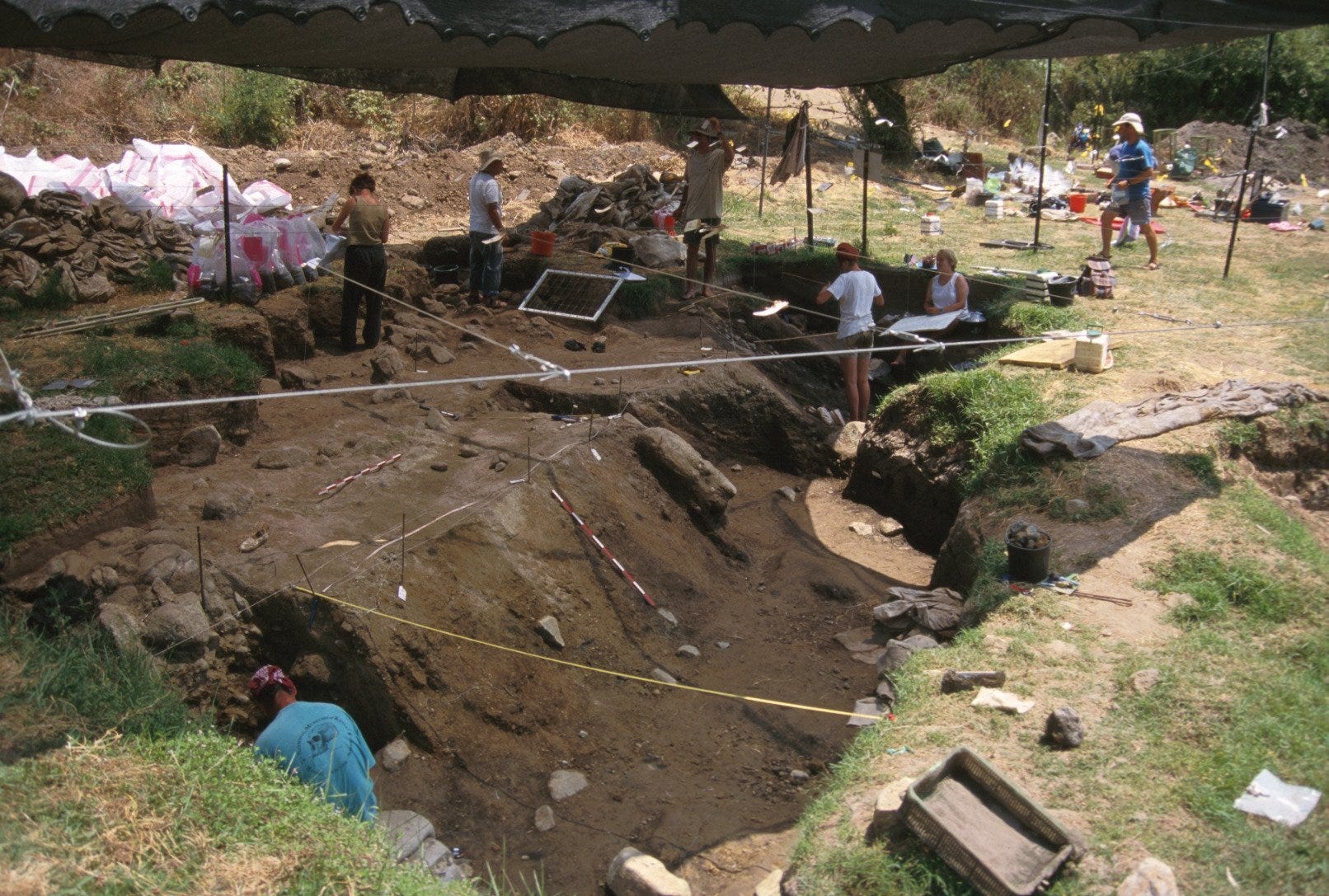
The site has been excavated over decades under the direction of Naama Goren-Inbar of the Hebrew University of Jerusalem. It preserves more than 20 stratigraphic layers of Acheulian occupation, each representing communities of hominins returning to the same lakeshore over tens of thousands of years. From those layers, a detailed record has accumulated: flint, limestone, and basalt tools; the remains of butchered animals; quantities of plant foods including nuts, fruits, and seeds; and persistent, structured evidence of controlled fire.
The new charcoal study, published in Quaternary Science Reviews1 and led by Ethel Allué of the Institut Català de Paleoecologia Humana i Evolució Social, concentrates on one layer in particular: Layer II-6 Level 1, assigned to Marine Isotope Stage 18, approximately 780,000 years ago. This level is already notable for reasons having nothing to do with charcoal. It contains the skull and numerous bone fragments of Palaeoloxodon antiquus, the straight-tusked elephant, in a spatial arrangement interpreted as systematic carcass processing. Portions of the skull’s basicranial region appear to have been deliberately removed, possibly to access the brain. The same layer is the richest in botanical remains across the entire site. The 266 charcoal fragments analyzed here came from sieved sediments of that surface.
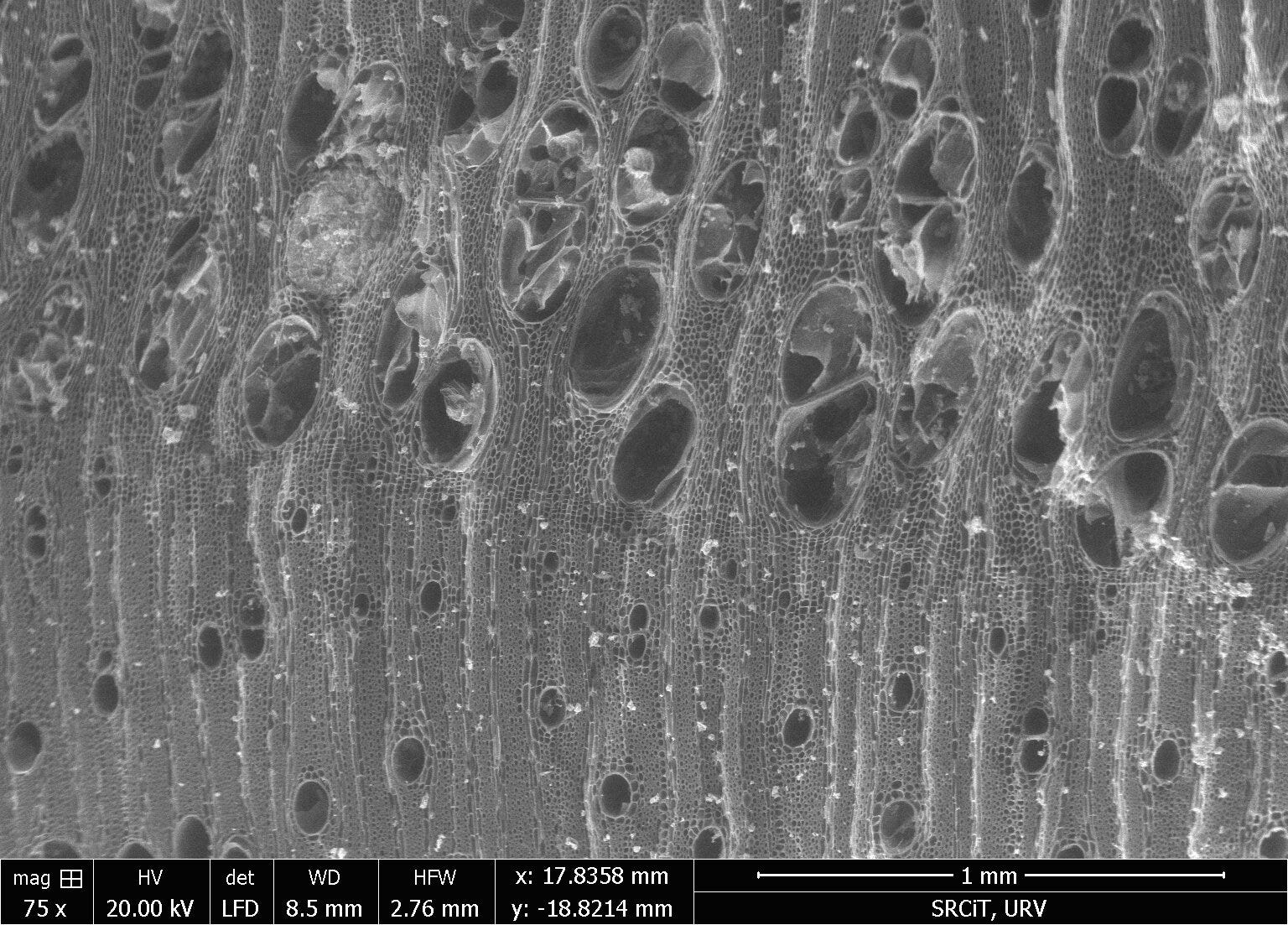
Researchers examined each piece using reflected-light optical microscopy, fracturing them to expose the three anatomical cross-sections required for wood identification. Of the 266 fragments, 188 yielded a taxonomic result.


