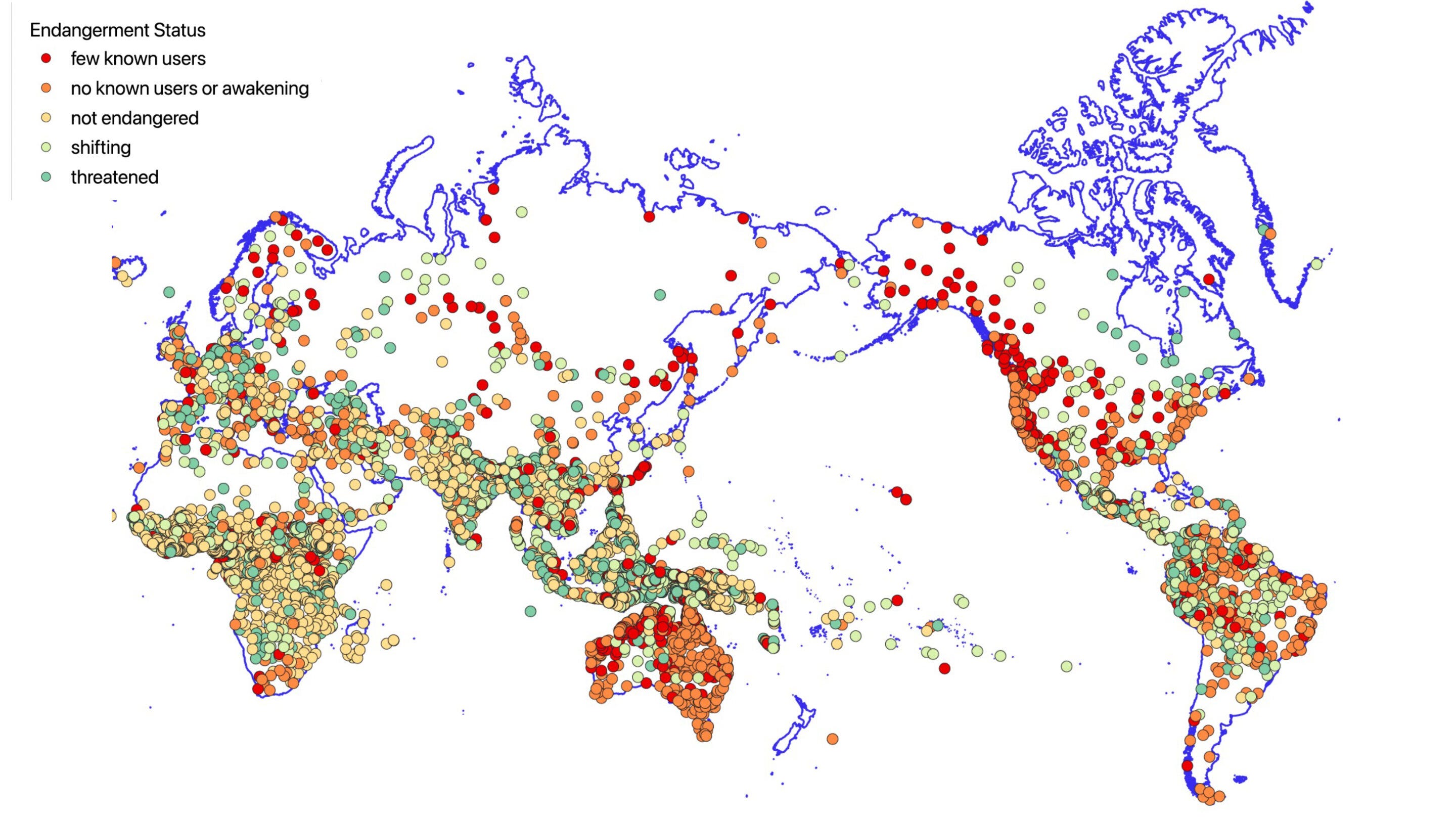
In the highlands of Papua New Guinea, roughly 840 languages are spoken by a population of about 12 million people. Europe, with 745 million people, has a quarter of that number. Nobody who studies language finds this comparison surprising anymore. New Guinea’s fragmented terrain, its isolated valleys and self-sufficient communities, is the textbook case of what linguists call a hotspot: a place where small groups stay small, stay put, and drift apart linguistically because they don’t need each other.
What a team led by Damián Blasi, along with Marcus Hamilton, Russell Gray, and Claire Bowern, has now argued in Science1 is that New Guinea isn’t an anomaly. It’s a relic. A surviving fragment of a linguistic condition that used to be the global default, before most of the planet’s languages were erased.