

Three people died near the paleo-Awash River roughly 100,000 years ago. Their bones ended up in the same sediment layer, a few meters apart, preserved in fine-grained floodplain deposits that would eventually harden and erode out of an Ethiopian hillside over the course of the next hundred millennia. What makes them remarkable isn’t just their age. It’s that the three skeletons appear to tell entirely different stories about what happened after death.
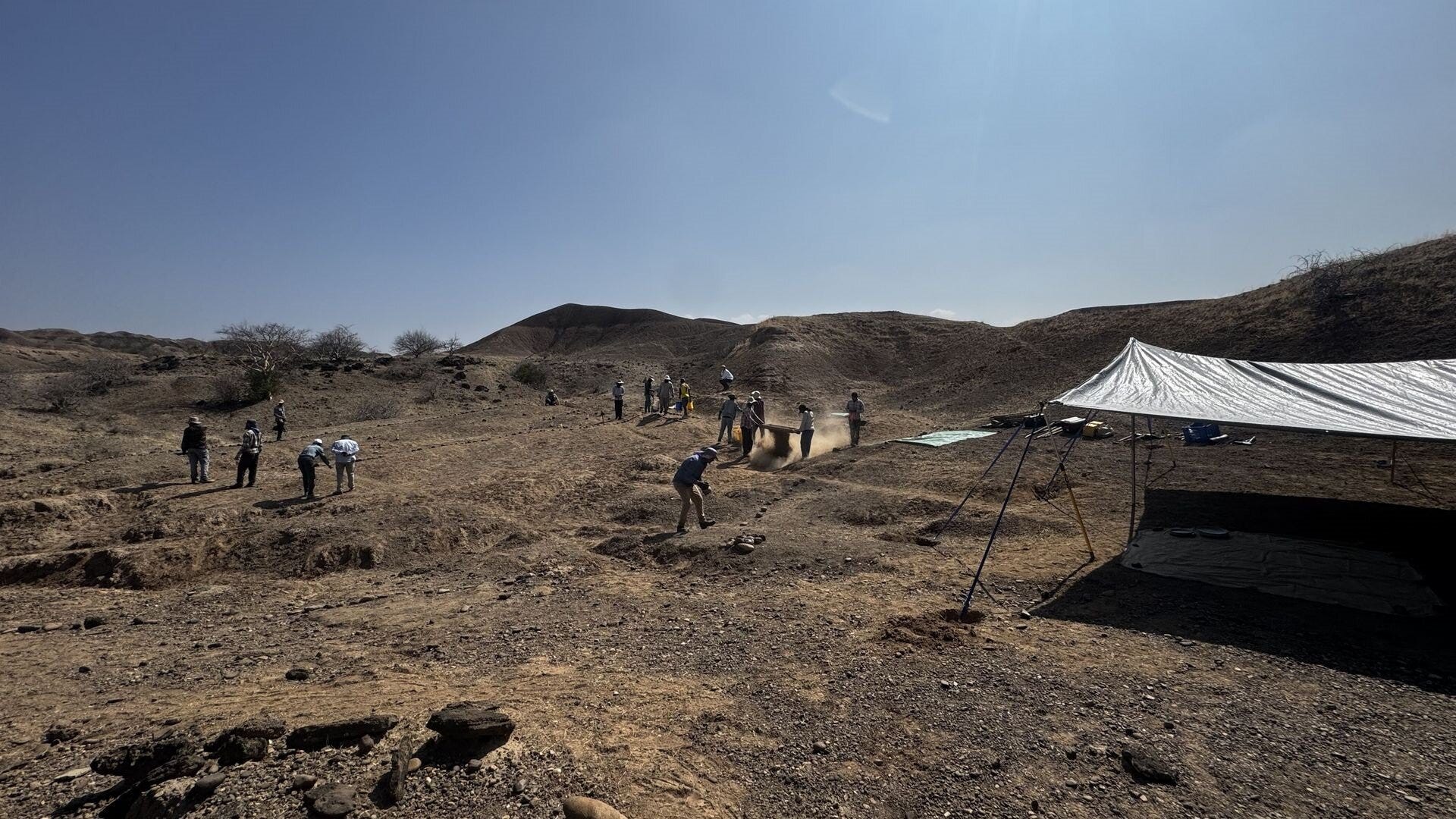
One set of remains bears the bite marks of large predators. Another shows signs of rapid burial, possibly by floodwaters. The third contains bones that were burned at temperatures high enough to suggest something deliberate — what the research team describes as a possible, and potentially earliest known, instance of human cremation.
That word “possible” matters. The evidence for intentional burning is not yet conclusive, and the paper, published in the Proceedings of the National Academy of Sciences1 by Yonas Beyene and colleagues, is careful with its language. But the mere co-occurrence of these three taphonomic pathways — predation, burial, and burning — at a single site, in undisturbed sediment, from a period that remains frustratingly underrepresented in the African fossil record, is enough to make the Halibee member one of the more significant MSA finds in recent years.


