

A region the size of Near Oceania, comprising New Guinea, the Bismarck Archipelago, and the main Solomon Islands, carries more Denisovan DNA per person than anywhere else on Earth. Researchers have known this for years. What they hadn’t known, until a new genomic survey of 177 individuals from twelve populations, is that this DNA didn’t come from a single source.
The team behind the study,1 led by Serena Tucci’s lab at Yale, found evidence for introgression from three genetically distinct Denisovan-like lineages into the ancestors of Near Oceanians. Not one Denisovan population contributing DNA at different points in time, but three separate groups, each with a measurably different genetic affinity to the only Denisovan genome ever sequenced from a fossil, the Altai individual from Siberia. East Asians, by comparison, carry signatures of just two such pulses. Whatever “Denisovan” actually denotes, in genetic terms, it now looks less like a single population and more like a loose federation of related but separate lineages, scattered across Asia, each leaving a different trace depending on who their descendants happened to meet and interbreed with.
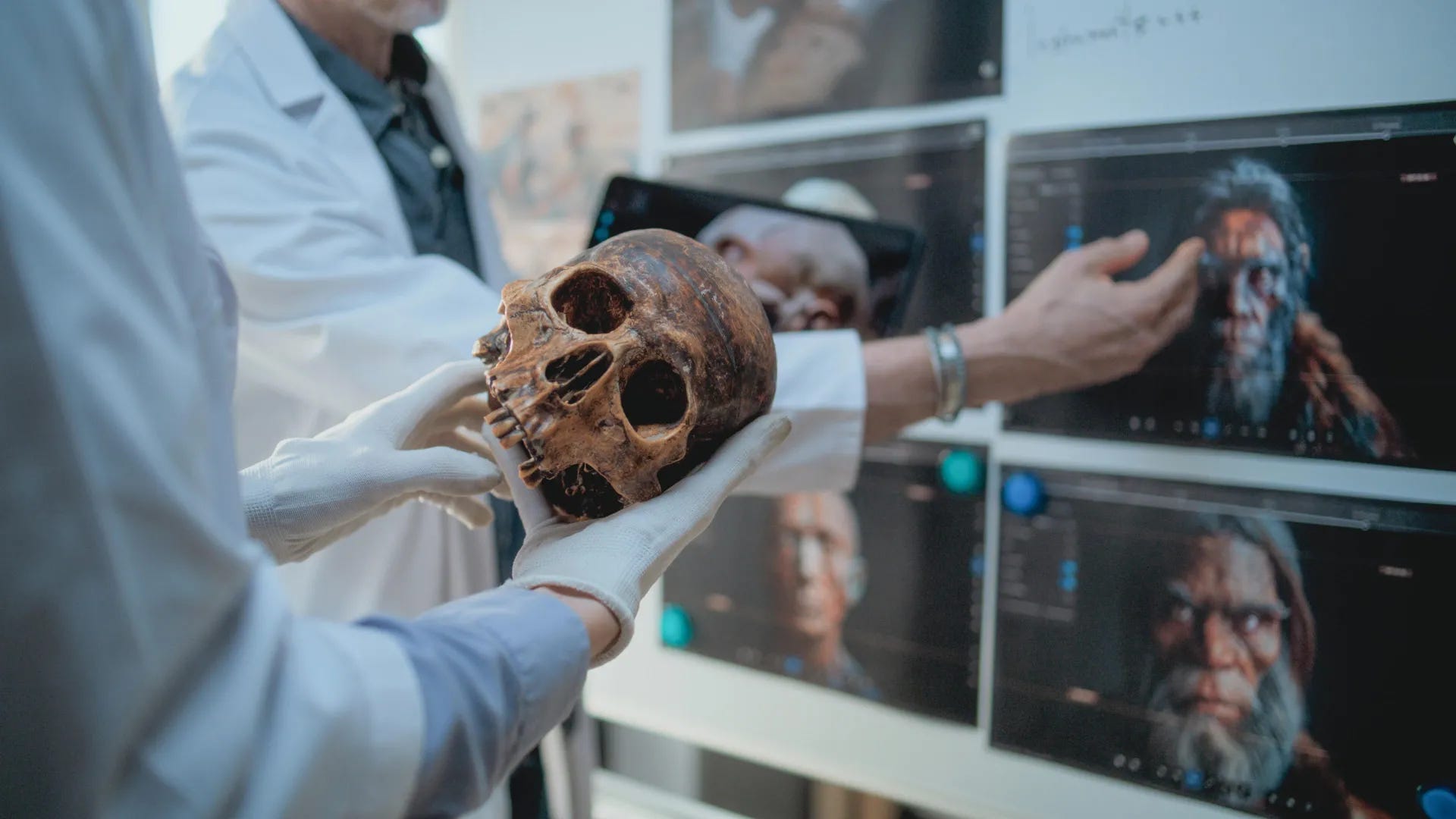
This finding didn’t come cheap. Near Oceania has been one of the most persistently underrepresented regions in human genomics, despite harboring some of the deepest population history outside Africa. The region was settled around 42,000 years ago and then largely left alone, geographically and demographically, for tens of thousands of years. The new dataset, 177 high-coverage genomes sequenced to a median depth of over 31x and analyzed alongside 1,284 genomes from populations worldwide, gave the researchers enough resolution to detect signals that smaller, earlier studies simply couldn’t see.
What they recovered was a genuinely enormous amount of archaic sequence. Altogether, the team reconstructed 1.897 billion base pairs of introgressed DNA spanning over 70% of the parts of the genome where such sequence can reliably be detected. More than a quarter of that, some 505 million base pairs, had never been documented before. And of the Denisovan-derived sequence specifically, the total came to 831.9 million base pairs, nearly three times what had been catalogued previously, with most of it found in the newly sequenced Oceanic samples. Sepik individuals from New Guinea carried the most of any population sampled, with roughly 25 times more Denisovan sequence than is typical in East Asian genomes.


